16,000 Miles, Under $70 in Maintenance: How a Tesla Model Y Proves the Long-Term EV Cost Case (With One Major Catch)
For years, legacy automakers and skeptics have cast doubt on the financial viability of electric vehicles, pointing to high upfront sticker prices and...
Editorial Team
World Of EV
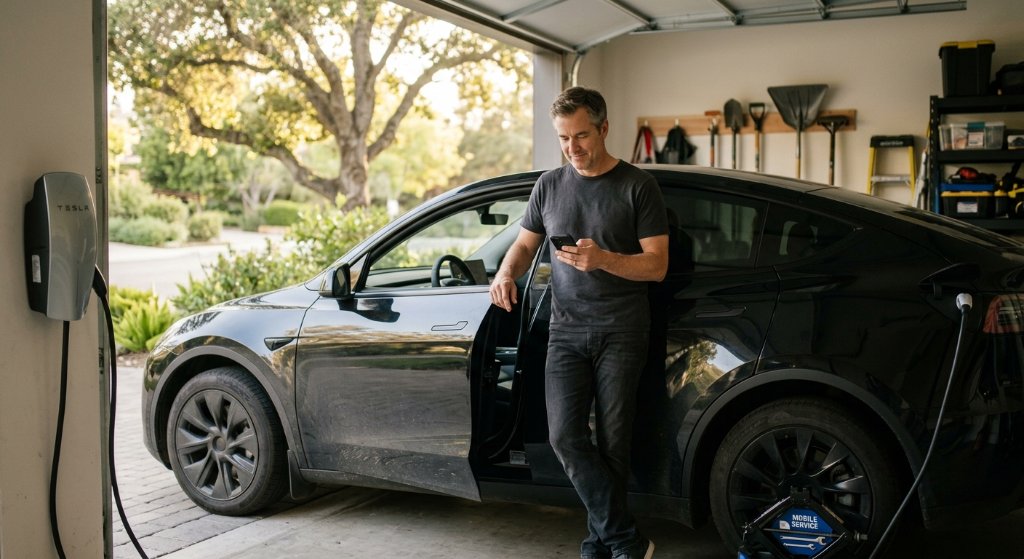
For years, legacy automakers and skeptics have cast doubt on the financial viability of electric vehicles, pointing to high upfront sticker prices and complex battery technology. However, real-world ownership data is rewriting that narrative. A recent long-term owner testimonial of a Tesla Model Y—the world's best-selling vehicle—highlights a staggering reality: after driving over 16,000 miles, the owner spent a grand total of just $67.41 on vehicle maintenance.
This micro-cost milestone exposes the massive gap between traditional internal combustion engine (ICE) vehicles and dedicated electric vehicles. While legacy dealer networks rely on a steady stream of oil changes, belt replacements, and brake pad swaps to stay profitable, the EV powertrain bypasses almost all of it. But while the service savings are absolute, the study also reveals a critical caveat about EV fuel savings that every prospective buyer needs to understand.
The $67 Maintenance Bill: Redefining Vehicle Service
The single maintenance expense incurred over 16,000 miles wasn't even for a mechanical failure; it was for a routine tire rotation. Better yet, Tesla's Mobile Service completed the work right in the owner’s driveway, eliminating the typical hassle of waiting at a dealership.
For comparison, a traditional ICE SUV over the same mileage would easily demand multiple service visits, including:
- Two to three oil and filter changes: Costing between $150 and $300.
- Engine air filter replacements: Costing $30 to $50.
- Multi-point inspections and fluid top-offs: Costing $50 to $100.
- Significantly higher brake wear: Traditional cars rely heavily on friction brakes, whereas the Model Y uses regenerative braking to preserve its brake pads almost indefinitely.
By eliminating these friction points, Tesla not only saves owners cash but also buys back their time—a factor often ignored in cost-of-ownership calculators.
The Charging Equation: The Steep Cost of Convenience
While maintenance costs are a clear win, the fuel savings tell a more nuanced story. According to the Tesla App's built-in charge statistics, the owner saved $836 in fuel costs over the year compared to an equivalent gas vehicle. However, the owner admitted this figure could have been much higher.
Had they transitioned from public Superchargers to L2 home charging earlier in the year, their savings would have skyrocketed to nearly $1,500. This highlights a growing economic divide in the EV community:
- The Home Charging Advantage: Charging overnight on low residential utility rates maximizes the EV cost benefit, delivering the equivalent of $1-per-gallon gasoline.
- The Supercharger Penalty: Relying heavily on public DC fast chargers dramatically increases running costs, as commercial charging rates often mimic or even exceed the cost of fueling a highly efficient hybrid gas vehicle.
Why This Matters:
This real-world testimonial highlights the polarized future of automotive retail and infrastructure.
Who Wins: Tesla and vertically integrated EV makers. By controlling both the vehicle software and the charging/service ecosystem, Tesla delivers a seamless feedback loop. Their Mobile Service fleet acts as a powerful retention tool, bypassing the traditional, painful dealer service bay experience altogether.
Who Loses: Legacy dealership networks. Historically, franchise dealers make their real margins not on new car sales, but on parts and service. As EVs require virtually no maintenance in their first few years of life, the dealership business model faces an existential threat.
The Market Signal: The data proves that home charging is no longer just a convenience; it is the financial linchpin of EV ownership. For the mass market to fully transition, the industry must move past public fast-charging dependency for daily driving. Automakers and policymakers must focus heavily on multi-family housing and workplace charging solutions. Without home or depot charging access, mainstream buyers will look at the premium cost of public fast-charging and stick with hybrids.
Ultimately, 16,000 miles in a Model Y proves that the mechanical promise of the EV revolution is real. The vehicles are incredibly durable, cheap to maintain, and highly efficient. However, the financial jackpot of EV ownership still relies entirely on where you plug in. If you can charge at home, the transition is a financial no-brainer. If you cannot, the legacy ICE paradigm still holds a frustrating amount of leverage.