Affordable EV Boom: Used Chevy Bolts Lead the Charge as Gas Prices and Tax Credits Fuel Demand
The automotive landscape is buzzing with an unexpected development: the dramatic surge in demand and value for used electric vehicles, spearheaded by ...
Editorial Team
World Of EV
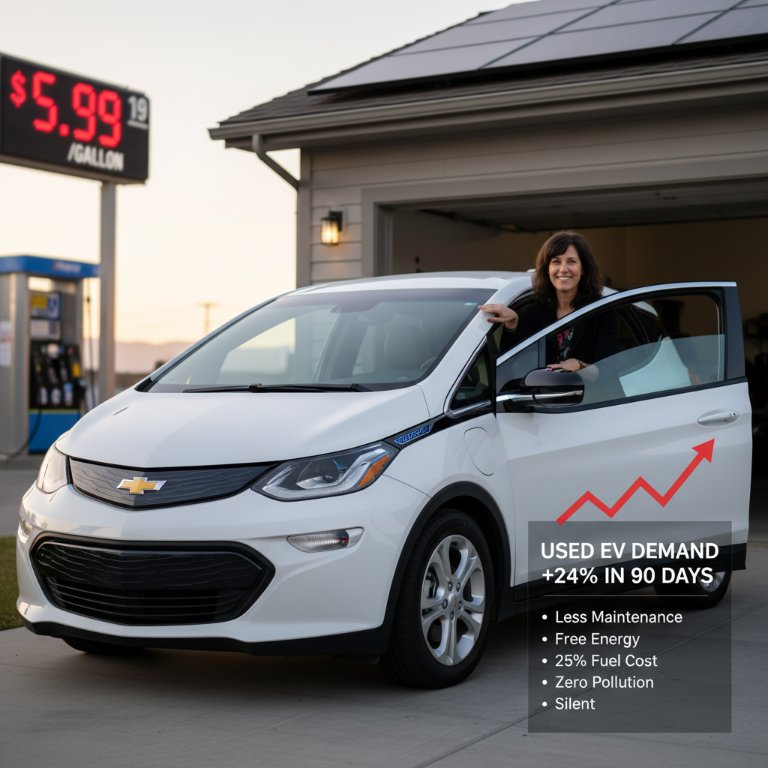
The automotive landscape is buzzing with an unexpected development: the dramatic surge in demand and value for used electric vehicles, spearheaded by the Chevrolet Bolt EV. In a market reeling from persistent fuel price hikes and the recent discontinuation of federal EV tax credits, the humble Bolt has emerged as a beacon of affordable electric mobility, with prices for 2020 models jumping an astounding 24% over just 90 days.
The Affordable EV's Unexpected Comeback
This significant appreciation for the 2020 Chevrolet Bolt EV is no accident; it’s a direct consequence of shifting economic realities and policy changes. As gasoline prices continue their upward trajectory, consumers are actively seeking alternatives to the pump. Simultaneously, the federal EV tax credit landscape has undergone a seismic shift. The 'One Big Beautiful Bill Act,' signed into law in July 2025, effectively eliminated most federal EV tax credits for vehicles purchased after September 30, 2025, including both new and used EV incentives. This sudden removal of incentives for new vehicles has made lower-priced used EVs, like the Bolt, exceptionally attractive, creating a compelling value proposition that new models currently struggle to match. The Bolt, long celebrated as a pioneer of affordable electric transportation in America, now finds itself positioned as the most accessible used EV, underpinning a natural demand floor.
The Enduring Value Proposition of Electric Driving
Beyond external market forces, the Chevrolet Bolt EV's inherent benefits are gaining renewed appreciation from savvy buyers. As highlighted by Forbes contributor Brooke Crothers' personal experience, the practical advantages of EV ownership translate directly into significant long-term savings and an enhanced driving experience. These include:
- Minimal Maintenance: Electric powertrains dramatically reduce the need for routine service, often requiring little more than tire rotations.
- Free Energy from Regenerative Braking: The efficiency of regenerative braking not only extends range but also converts kinetic energy back into usable power, effectively offering 'free' miles.
- Reduced 'Fueling' Costs: Recharging an EV typically costs approximately 25% of what it would take to fuel a comparable gasoline-powered vehicle, presenting substantial savings, especially with fluctuating gas prices.
- Instant Torque and Fast Acceleration: EVs deliver immediate power, offering spirited acceleration that often surpasses their internal combustion engine (ICE) counterparts.
- Zero Tailpipe Emissions and Silent Operation: The environmental benefits are clear, contributing to cleaner air, while the near-silent operation provides a remarkably serene driving experience.
These core benefits, coupled with the Bolt's proven track record (despite its production discontinuation in December 2023), solidify its appeal as a cost-effective and enjoyable mode of transport.
Why This Matters:
This surge in used EV demand, particularly for the Chevrolet Bolt, signals a pivotal moment in the broader transition to electric mobility. It underscores that the economic advantages of EVs are now outweighing initial sticker price concerns and even the absence of new vehicle incentives.
- Who Wins? Consumers looking for an affordable entry point into EV ownership are clear winners, gaining access to proven technology at compelling prices. Early Bolt owners also benefit from significantly stronger resale values, validating their initial investment. The used EV market as a whole gains immense credibility, solidifying its role as a crucial segment for mass EV adoption. General Motors, despite discontinuing Bolt production, sees its product's residual value validated, which could influence future affordable EV strategies.
- Who Loses? Manufacturers heavily reliant on high-priced new EVs, especially those without new federal tax credit eligibility, may face increased pressure as the value proposition of new vehicles is scrutinized against a surging used market. Consumers who waited for new incentives are also at a disadvantage, having missed a window of opportunity. The traditional ICE vehicle market will continue to see erosion as consumers prioritize total cost of ownership.
- What Does This Signal? This trend is more than a fleeting market anomaly; it’s a robust signal that the EV market is maturing. It proves that practical, affordable electric vehicles, even without hefty government subsidies, hold immense appeal when operational costs (like fuel) become prohibitive. It emphasizes total cost of ownership (TCO) as a primary driver for adoption, a metric where EVs consistently outperform ICE vehicles. Furthermore, with the Bolt's finite supply now that production has ceased, its position as an affordable used EV is likely to ensure sustained demand.
- Is this a 'do-or-die' moment? For legacy automakers, this is a clarion call. It highlights the urgent need to prioritize truly accessible and cost-effective EV development. Relying solely on luxury or high-performance models will leave a significant portion of the market underserved, especially as consumers increasingly look to the used market for value. The industry must recognize that the foundational benefits of EVs are powerful enough to drive demand, even without the tailwind of federal incentives.
This resurgence of the used EV market, led by the steadfast Chevrolet Bolt, marks a significant step towards mainstream electric vehicle adoption. It demonstrates that as the economic tides turn and policy landscapes shift, the inherent advantages of electric driving are finally being recognized and valued by a broader segment of the population. The future of electric mobility is not just in cutting-edge new models, but in the accessible, proven vehicles that offer practical, everyday solutions.