As EV Sales Surge 120%, Broken 'Legacy' Chargers Threaten to Strand a New Wave of Drivers
For years, Australia was labeled a laggard in the global shift toward electrification, plagued by sluggish adoption rates and a distinct lack of feder...
Editorial Team
World Of EV
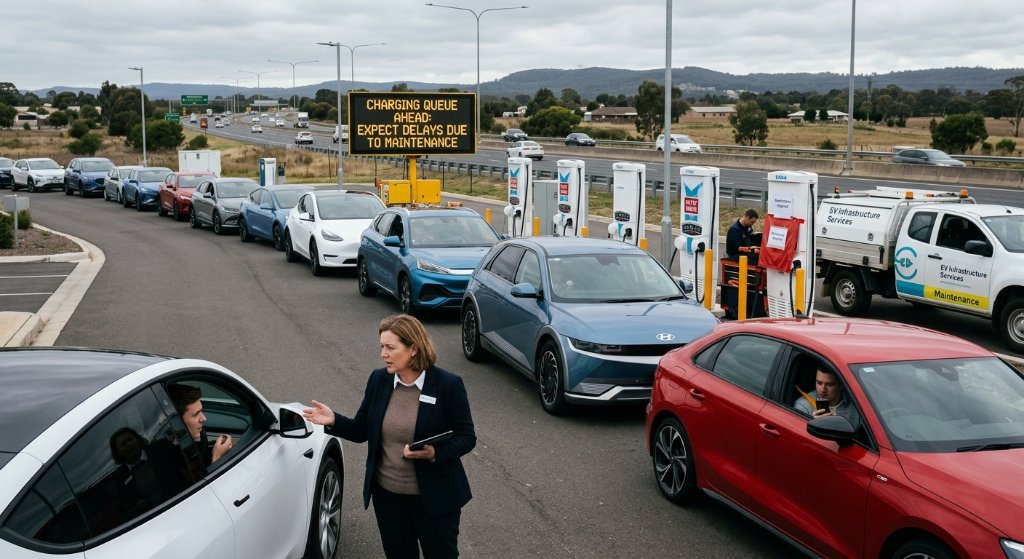
For years, Australia was labeled a laggard in the global shift toward electrification, plagued by sluggish adoption rates and a distinct lack of federal policy support. Today, that picture has done a complete 180. Driven by an influx of affordable models from China and massive organic demand, electric vehicle sales have surged by a jaw-dropping 120%. But as thousands of new EV keys are handed over, a critical problem is emerging: the country’s public charging network is buckling under the weight of this sudden demand, resulting in skyrocketing wait times at highway stations.
While the sheer volume of new EVs on the road is outstripping the pace of new charging site rollouts, the bottleneck is heavily compounded by a quiet crisis of neglect. Early-generation, "legacy" DC fast chargers—deployed years ago in the initial rush to build out pilot networks—are breaking down at an alarming rate. Due to supply chain gaps, manufacturer insolvency, and a historical lack of routine maintenance, these broken chargers are staying offline for weeks or months on end. For drivers venturing beyond the daily commute, the golden promise of the seamless long-distance electric road trip is rapidly turning into a frustrating game of Russian roulette.
The Growing Pain of Rapid Adoption
Australia’s current infrastructure crisis is a textbook study in what happens when demand outpaces critical supply chain planning. While sales have spiked, the physical expansion of charging plazas has moved at a snail's pace. Major highway corridors are routinely bottlenecked, turning what should be quick 20-minute top-ups into multi-hour queues. But the real roadblock isn't just a lack of new plug points—it's the massive failure rate of the chargers already in the ground.
- Soaring Demand: EV sales have climbed 120%, driven by models like the Tesla Model Y, BYD Atto 3, and the budget-friendly MG4.
- Gridlock at the Plugs: Charging infrastructure deployment is failing to keep pace, leaving popular long-distance routes vulnerable to massive queues.
- The Weekend Nightmare: Long holiday weekends and regional road-trip corridors are witnessing unprecedented wait times, forcing drivers to plan trips around charging schedules rather than leisure.
The Ghost of Tritium and the "Legacy" Charger Dilemma
The root of the reliability crisis lies in the early infrastructure boom of the late 2010s. Many of the networks deployed pioneering hardware that is now reaching the end of its operational life. Compounding this, Brisbane-born fast-charging giant Tritium—which supplied a vast portion of Australia's early DC chargers—went into high-profile insolvency in 2024 before being acquired by India's Exicom. This corporate volatility left local network operators struggling to source proprietary spare parts and secure technical support, effectively turning hundreds of early 50kW units into expensive, non-functioning pillars.
- The Spare Parts Black Hole: Without dedicated local manufacturing support, operators are waiting months for basic replacement modules.
- Neglected Maintenance: Early network business models failed to account for the high operational costs of maintaining liquid-cooled fast chargers in harsh climates.
- Orphaned Hardware: Older "legacy" units (like early-generation 50kW chargers) are being left to rot as operators choose to wait for total site upgrades rather than repair outdated machines.
Why This Matters:
This is a critical "do-or-die" inflection point for the EV transition, not just in Australia but in any rapidly emerging EV market. When public charging infrastructure degrades, it directly threatens the mainstreaming of EVs. Early adopters are willing to tolerate broken chargers and long queues, but the pragmatic "majority" buyer will not.
- The Big Losers: Legacy charge point operators (CPOs) who failed to secure long-term service-level agreements are losing customer trust rapidly. Furthermore, non-Tesla brands suffer disproportionately, as their buyers rely entirely on fragmented third-party networks, unlike Tesla drivers who enjoy the relative reliability of the proprietary Supercharger network.
- The Big Winners: Reliable turnkey operators like Tesla (with their increasingly open Supercharger network) and next-gen operators employing highly modular, easily serviceable equipment (such as Kempower).
- The Market Signal: Building a network is cheap; maintaining it is expensive. Up until now, government subsidies focused almost exclusively on funding strong charger installations. To prevent complete public gridlock, future policy must shift toward funding maintenance, mandating 99% uptime SLAs, and penalizing operators who let critical infrastructure sit offline.
Looking Ahead
Australia’s 120% EV sales boom proves that consumers are ready for an electric future, but the charging infrastructure is still stuck in the past. If governments and charging operators do not quickly address the black hole of broken legacy chargers and pivot from "building fast" to "maintaining smart," the momentum of the EV transition risks stalling on the side of the highway.