Australia's EV Service Industry Nears Breaking Point Amidst Widespread Consumer Confusion
Australia's swift embrace of electric vehicles, a commendable stride towards a sustainable future, faces an increasingly critical hurdle: its automoti...
Editorial Team
World Of EV
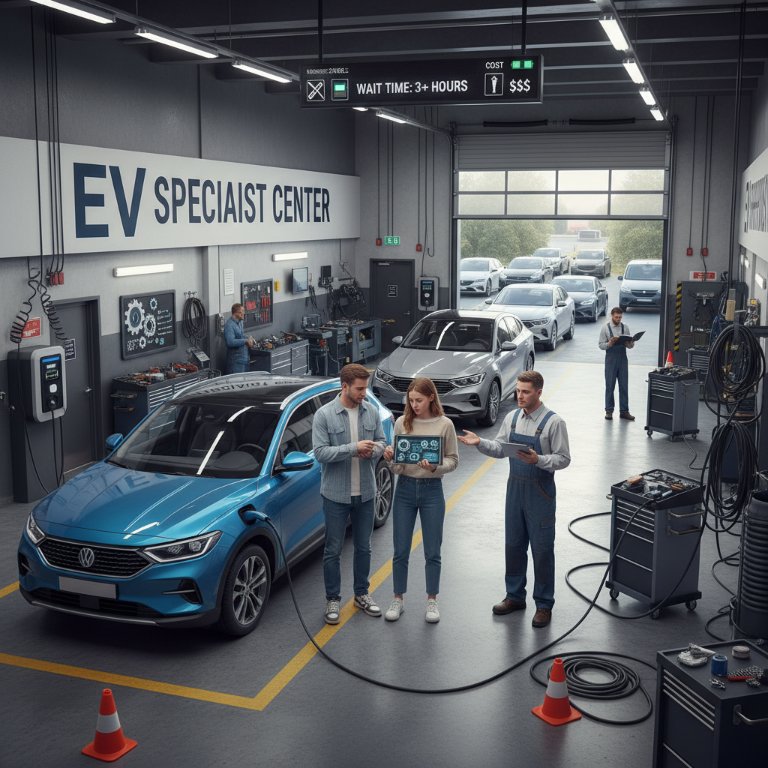
Australia's swift embrace of electric vehicles, a commendable stride towards a sustainable future, faces an increasingly critical hurdle: its automotive service industry. New research paints a concerning picture, revealing that a lack of preparedness and profound consumer confusion could soon bottleneck the nation's EV transition and saddle owners with unnecessary costs.
The Victorian Automotive Chamber of Commerce (VACC), a key industry advocate, commissioned Kantar for a deep dive into the state of EV servicing. The findings are stark: a staggering two-thirds of Australian EV owners mistakenly believe only specialist centers possess the capability to service their vehicles. This pervasive misunderstanding, despite the fact that numerous local workshops are fully equipped and trained for EV maintenance, is creating a silent crisis. Furthermore, roughly one in three motorists has already delayed essential servicing due to perceived inconvenience or exorbitant costs, a trend that could lead to significant future repair expenses and potentially compromise vehicle safety.
The Unseen Strain on Australia's EV Infrastructure
The Kantar research unequivocally highlights a disconnect between the rapid influx of EVs onto Australian roads and the public's understanding of their maintenance needs. This isn't just about technical expertise; it's a communication breakdown. While modern EVs do require different diagnostic tools and safety protocols due to high-voltage systems, much of their routine maintenance—like tire rotations, brake checks, and cabin filter replacements—falls well within the purview of a competent general mechanic. Yet, the perception persists that only a select few can touch an EV. This confusion is directly contributing to:
- Delayed Maintenance: A third of owners are deferring service, potentially leading to accelerated wear and more complex, expensive repairs down the line.
- Bottlenecking Specialist Centers: Overburdening a limited number of perceived 'specialist' workshops, leading to longer wait times and higher service costs.
- Economic Opportunity Missed: Independent workshops, capable but underutilized, miss out on a burgeoning revenue stream while consumers struggle to find convenient service options.
Decoding the Consumer Conundrum
Why this widespread confusion? The blame lies at multiple doors. Automakers have historically emphasized the 'newness' and 'advanced technology' of EVs, inadvertently fostering a mystique around their maintenance. Coupled with a lack of consistent, clear public education campaigns from government bodies or industry associations, consumers are left to navigate a landscape of unknowns. This is a stark contrast to more mature EV markets in Europe and North America, where independent workshops have proactively invested in training and certification, often with the support of national automotive bodies. Australia's EV market, though growing rapidly, is still relatively nascent in its aftermarket support ecosystem.
VACC's Call to Action: Equipping the Future
The VACC isn't just flagging the problem; it's aggressively advocating for solutions. The organization is calling for substantial investment across several critical areas:
- Specialized Tools and Equipment: Ensuring workshops have the necessary high-voltage diagnostic and repair equipment.
- Comprehensive Training Programs: Upskilling the existing automotive workforce to safely and effectively service EVs.
- Targeted Consumer Education: Launching campaigns to inform EV owners about their servicing options, demystifying EV maintenance, and building trust in local workshops.
This proactive stance from the VACC is crucial. Without a robust and accessible service network, the long-term viability of Australia's EV ambitions is genuinely at risk. The market is ripe for disruption, and those workshops that act swiftly to adapt will be perfectly positioned to thrive.
Why This Matters:
This isn't merely a logistical challenge; it's a foundational issue that could dictate the pace and success of Australia's EV revolution. For EV owners, this directly impacts the convenience, cost, and ultimately, the enjoyability of their vehicle ownership experience. If service remains inaccessible or overly expensive, it could temper future enthusiasm for EVs. For independent workshops, this represents a critical juncture. Those who proactively invest in training and equipment now stand to capture a significant market share and future-proof their businesses. Those who delay risk obsolescence as the ICE vehicle fleet dwindles. This situation also signals a profound need for greater collaboration between automotive OEMs, government regulators, and aftermarket service providers. The 'what's next' demands a concerted effort to educate the public, standardize training, and ensure a seamless, affordable service experience. This is a 'do-or-die' moment for many traditional service centers; adapt or face being left behind in the fast-accelerating EV shift.
The path forward for Australia's EV future must include a fully prepared and well-understood service infrastructure. The VACC's research serves as a vital wake-up call, urging immediate action to bridge the knowledge gap and ensure that the convenience and sustainability benefits of EVs are not undermined by an unprepared aftermarket. The industry, government, and consumers must work in concert to forge a robust and reliable service ecosystem that can truly support the accelerating transition to electric mobility.