Beyond Subsidies: How Toyota and Subaru Are Defying Tax Credit Hurdles to Spark the Next EV Wave
The era of relying on government handouts to sell electric vehicles in the United States is drawing to a close, yet the market is refusing to stall. D...
Editorial Team
World Of EV
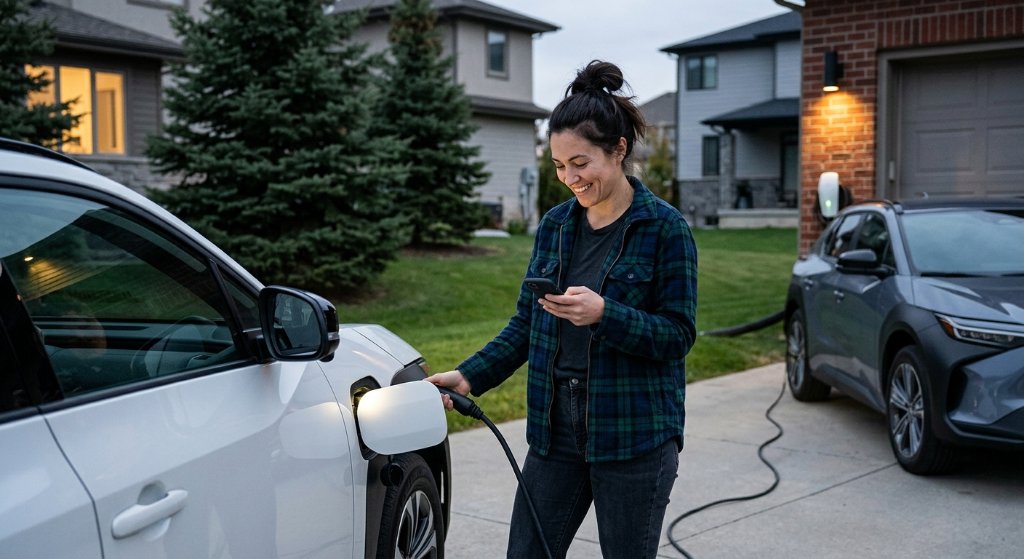
The era of relying on government handouts to sell electric vehicles in the United States is drawing to a close, yet the market is refusing to stall. Despite the expiration of critical federal tax incentives that many doomsayers predicted would crater EV adoption, a new wave of mainstream buyers is driving a surprising sales surge. Leading this charge are two unexpected players: Toyota and Subaru.
Historically, both Japanese automakers have dragged their feet on electrification. Toyota championed hybrids while its leadership openly expressed skepticism about an all-electric future. When the co-developed Toyota bZ4X and Subaru Solterra finally launched on their shared e-TNGA platform, they were plagued by a rocky rollout, including a high-profile wheel-hub recall and mediocre cold-weather charging specs. Yet, today, these very models are anchoring a critical market shift, proving that brand loyalty and the undeniable math of ownership are eclipsing federal policy changes.
Mainstream Trust Powers the e-TNGA Surge
Rather than relying on regulatory tailwinds, Toyota and Subaru have tapped into their massive, loyal customer bases to accelerate sales. By offering dependable, familiar form factors, they are capturing pragmatic buyers who were previously hesitant to jump to pure-play EV brands like Tesla or Rivian. Key drivers of this sudden sales boost include:
- Familiarity Over Novelty: Unlike the futuristic and often polarizing designs of startup EVs, the bZ4X and Solterra look and feel like traditional crossovers (strongly resembling the RAV4 and Forester), lowering the psychological barrier to entry for cautious buyers.
- Manufacturer-Driven Incentives: To offset the loss of federal tax credits, both automakers have aggressively leveraged lease loopholes and promotional APR financing to keep monthly payments highly competitive.
- The Halo Effect of Reliability: With their early teething issues resolved, the Toyota and Subaru badges carry immense weight in long-term reliability—a major comfort for buyers transitioning away from internal combustion engines (ICE).
The Unbeatable Math of EV Ownership
While upfront sticker prices and the lack of tax credits remain hot-button talking points, the financial reality of daily driving is winning the argument. A comprehensive new survey by Plug In America reveals that a staggering 95% of current EV owners find their vehicles significantly cheaper to fuel and maintain than gasoline alternatives.
As fuel prices continue their volatile upward trajectory, the total cost of ownership (TCO) has become the ultimate marketing tool. This operational saving is driven by several inherent advantages:
- Radically Simplified Maintenance: With no engine oil, spark plugs, timing belts, or complex multi-gear transmissions, the mechanical failure points of EVs are drastically reduced.
- Brake Longevity: Regenerative braking systems handle the vast majority of deceleration, allowing brake pads and rotors to last up to three times longer than on conventional cars.
- Immunity to the Pump: Even with rising electricity rates in some regions, charging an EV at home remains a fraction of the cost of filling a gas tank, shielding drivers from geopolitically driven fuel spikes.
Why This Matters:
This shift marks a critical maturation point for the electric vehicle industry. For years, critics argued that EVs were a niche luxury sustained only by government welfare. The fact that sales are rising after the expiration of federal tax incentives—buoyed by traditionally conservative brands like Toyota and Subaru—signals that EV adoption has decoupled from policy and is now driven by market fundamentals.
The clear winners here are mainstream consumers. As the market transitions from tech-obsessed early adopters to budget-conscious pragmatists, the conversation is shifting from "how green is this car?" to "how much money will this save me?"
The losers are legacy automakers who have paused their EV roadmaps to wait out political shifts. Toyota and Subaru's success demonstrates that the demand is there, provided the product comes with a trusted badge and a clear value proposition. This is a warning to the rest of the industry: the transition is no longer a future projection—it is happening on the balance sheet today.
Ultimately, the resilience of the US EV market proves that practical benefits will always triumph over temporary policy changes. As more drivers realize that going electric means keeping more money in their pockets, the momentum will only accelerate, leaving slow-moving competitors further behind in the exhaust of the new electric era.