Beyond the EPA Rating: The Crucial EV ‘Life Hacks’ That Protect Your Battery and Boost Daily Range
For over a decade, early electric vehicle adoption was defined by a rugged compromise. Drivers of compliance cars like the first-generation Nissan Lea...
Editorial Team
World Of EV
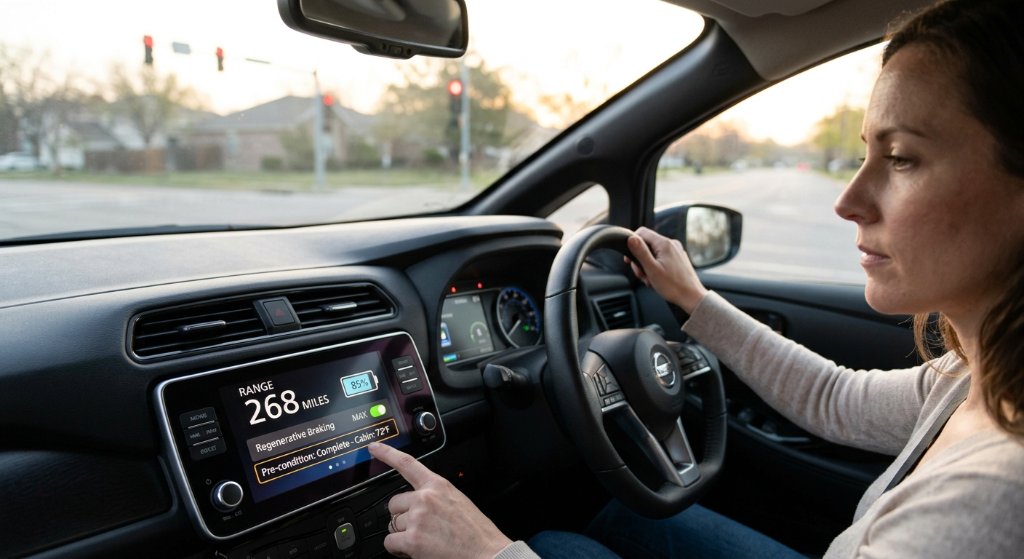
For over a decade, early electric vehicle adoption was defined by a rugged compromise. Drivers of compliance cars like the first-generation Nissan Leaf or the short-range Mazda MX-30 had to micromanage every mile, hampered by primitive thermal management systems and abysmal real-world range. Today, as the industry transitions to sophisticated, software-defined platforms, EV ownership has evolved. The battle for range is no longer just fought in battery chemistry labs—it is being won daily in the driveways of savvy owners.
A wave of modern ownership insights reveals that simple behavioral shifts can dramatically alter an EV's efficiency and lifespan. By moving beyond a "gas car mentality" and adopting strategic daily habits, drivers can unlock hidden range and protect their vehicle's most expensive component: the battery pack.
The Power of Pre-Conditioning: Thermal Management at the Plug
One of the most effective yet underutilized strategies in the EV playbook is cabin and battery pre-conditioning. Traditional internal combustion engine (ICE) vehicles rely on waste heat from the engine to warm the cabin, a luxury EVs do not have. Heating or cooling an EV cabin from scratch using onboard battery power—even with highly efficient modern heat pumps—draws massive amounts of energy. Pre-conditioning solves this by utilizing grid power while the vehicle is still plugged into a home charger.
- Preserves Onboard State of Charge (SoC): By drawing energy directly from your home charger to heat or cool the cabin, you hit the road with a fully charged battery and zero energy wasted on initial climate control.
- Optimizes Battery Chemistry: Pre-conditioning doesn't just prep the cabin; it brings the battery pack to its optimal chemical operating temperature (typically between 60°F and 95°F). This minimizes internal resistance and maximizes efficiency from the very first mile.
- Mitigates Extreme Weather Range Loss: Cold weather can sap up to 30% of an EV's range. Pre-conditioning heavily mitigates this loss by ensuring the battery is warm before it has to perform.
Mastering the One-Pedal Dance: Regenerative Braking as a Power Source
Unlike gas cars, which discard kinetic energy as wasted friction heat during braking, EVs can harvest this energy. Maximizing regenerative braking—essentially using the electric motor in reverse to slow the vehicle down—is a fundamental shift in driving dynamics that pays massive dividends.
- Kinetic Energy Capture: Standard regenerative braking systems can feed up to 70% of lost kinetic energy back into the battery pack as electricity, effectively extending daily driving range on the fly.
- Dramatically Lower Maintenance Costs: Relying on "one-pedal driving" means physical brake pads and rotors are rarely engaged, extending their lifespan to 100,000 miles or more and slashing traditional maintenance costs.
- Reduced Driver Fatigue: Once drivers master the smooth modulation of the accelerator pedal, stop-and-go city traffic becomes far less taxing, creating a seamless and relaxed driving experience.
Why This Matters:
This shift in EV daily practices signals a deeper truth: EVs are not just cars with electric motors; they are software-defined, thermal-managed energy storage units on wheels.
For the consumer, mastering these habits directly translates to a lower Total Cost of Ownership (TCO) and higher resale values. An EV battery that has been consistently pre-conditioned and subjected to less thermal stress will show significantly higher State of Health (SoH) metrics over a five-to-ten-year period. In the used EV market, where battery health is the ultimate deciding factor for valuation, these "life hacks" are worth cold, hard cash.
For legacy automakers, this behavioral shift is a double-edged sword. While it allows their current vehicles to perform better and satisfy customers, it also exposes the flaws in brands that fail to educate their buyers. Dealerships, which traditionally make their margins on mechanical service like brake jobs, will continue to lose lucrative revenue streams as regenerative braking renders physical brake wear nearly obsolete. Ultimately, the winners of this transition are the automakers who build intuitive, automated software features that handle these optimizations for the driver without requiring manual intervention.
As battery technology marches toward next-generation solid-state chemistries, the fundamentals of energy management remain unchanged. Optimizing how we charge, warm, and stop our vehicles is no longer a niche hobby for hypermilers—it is the blueprint for modern automotive efficiency.