Beyond the Plug: Why Payments—Not More Chargers—Will Define the Next Phase of EV Adoption
For years, the narrative surrounding electric vehicle adoption has focused heavily on numbers: battery range, kilowatt-hours, and the physical count o...
Editorial Team
World Of EV
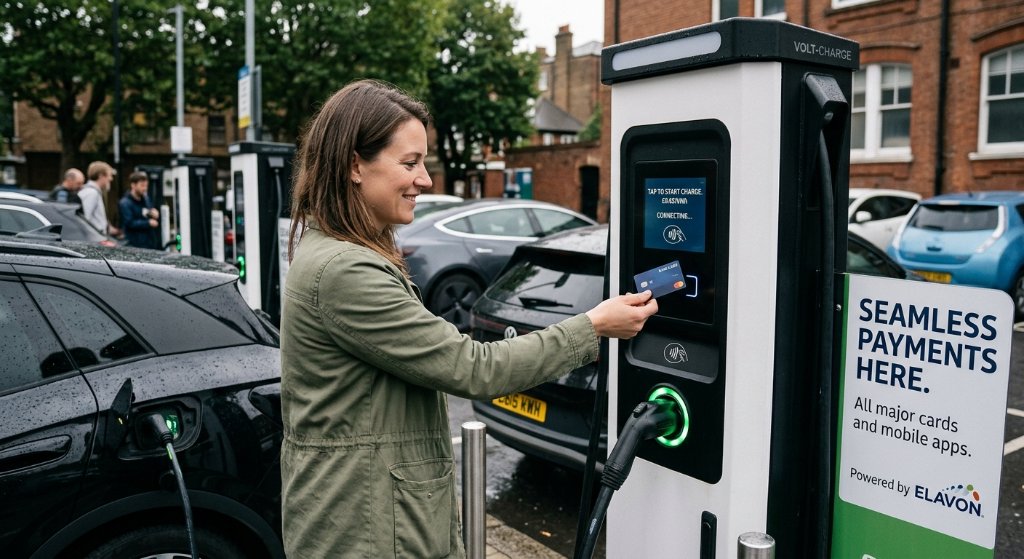
For years, the narrative surrounding electric vehicle adoption has focused heavily on numbers: battery range, kilowatt-hours, and the physical count of public chargers. But as we transition from early adopters to the pragmatic mainstream, the battlefield is shifting. The next phase of EV adoption will be won or lost not on how many physical plugs are installed in the ground, but on the checkout experience.
In a recent industry analysis, Russell Green, Head of Emerging Verticals (Pan-EU) at payment processing giant Elavon, argued that a heavily fragmented payment ecosystem has become the primary friction point for EV drivers. As vehicle costs drop and driving ranges expand, "payment anxiety" is rapidly replacing range anxiety. Drivers now expect a unified, hassle-free charging process that mimics the simplicity of tapping a credit card at a traditional petrol pump.
The Fragmented Chaos of Public Charging
To understand the weight of Green's warning, one only has to look at the history of public charging. Unlike Tesla's seamless, closed-loop Supercharger network—which pioneered "Plug and Charge" by binding payment details natively to the vehicle's VIN—the open, non-Tesla charging landscape has been a digital wild west.
For the average EV driver, taking a road trip has historically meant:
- Juggling dozens of apps: Drivers are forced to download multiple proprietary apps, create accounts, and link credit cards just to initiate a charge on different networks.
- Pre-funded digital wallets: Some networks require users to load a minimum balance into a digital wallet before they can even draw a single kilowatt of electricity.
- Failed QR codes: Broken or fraudulent QR codes on charging units that redirect drivers to insecure or non-functional web browsers.
- A pocketful of RFID cards: An outdated, physical solution to a software-first problem.
Green asserts that this level of friction is simply unacceptable for the mass market. Everyday buyers do not want to become technical project managers just to top up their vehicles.
Standardizing "Tap-and-Go" and the Pressure of AFIR
The European market is already attempting to force the hand of Charge Point Operators (CPOs). Under the EU’s Alternative Fuels Infrastructure Regulation (AFIR), which began rolling out in 2024, the days of walled-garden charging networks are numbered.
The regulatory and payment landscape is shifting in several key ways:
- Mandatory Card Terminals: AFIR mandates that all newly installed DC fast chargers (50 kW and above) must offer ad-hoc payment options, specifically contactless debit/credit card readers. By the end of 2026, existing fast-charging networks must be retrofitted to comply.
- Price Transparency: Operators must display clear, comparable pricing models (either per kWh, per minute, or flat session fees) before a transaction begins.
- Simplified Digital Checkouts: For lower-powered AC chargers where physical card readers are cost-prohibitive, any QR code payment option must lead directly to a secure, instant checkout without requiring an account registration.
By eliminating forced subscriptions and proprietary apps, standardizing seamless "tap-and-go" capabilities bridges the massive gap between driver expectations and current charging realities.
Why This Matters:
The transition from physical infrastructure expansion to payment integration signals a critical maturity phase for the EV sector. This is a do-or-die moment for Charge Point Operators and payment providers alike.
- Who Wins? Consumers and Payment Tech Giants. The obvious winners are everyday EV drivers who can finally cross borders and networks without worrying about whether they have the right app or subscription. Payment processors like Elavon also stand to secure massive transaction volumes as open-loop payments become the legal and practical standard.
- Who Loses? Legacy "Walled Garden" CPOs. Operators who built business models around predatory subscription tiers, membership lock-ins, and high ad-hoc charging penalties will face immediate churn. They must quickly adapt their legacy infrastructure to meet compliance or risk losing public funding and consumer trust.
- The Broader Market Impact: Standardizing the payment layer commoditizes charging, turning it into a true utility. It forces CPOs to compete on what actually matters to drivers: charger reliability, charging speeds, location safety, and fair pricing. Ultimately, solving the payment puzzle is the final hurdle to unlocking mass-market EV adoption among buyers who demand that charging an EV be just as boring—and straightforward—as filling up a petrol tank.
Moving Into a Frictionless Future
The physical charging network is finally reaching a state of maturity where density is no longer the sole metric of success. As Russell Green points out, success looks like a driver who never thinks about payment because it has already worked flawlessly behind the scenes. If the EV industry can successfully implement universal tap-and-go and Plug-and-Charge systems, it will remove one of the last true psychological barriers holding back the mainstream electric revolution.