Beyond the Sticker Price: Three Hidden Habits That Can Slash Your True Cost of EV Ownership
While buying an electric vehicle is often framed around the initial purchase price or federal tax credits, the real battle for your wallet happens aft...
Editorial Team
World Of EV
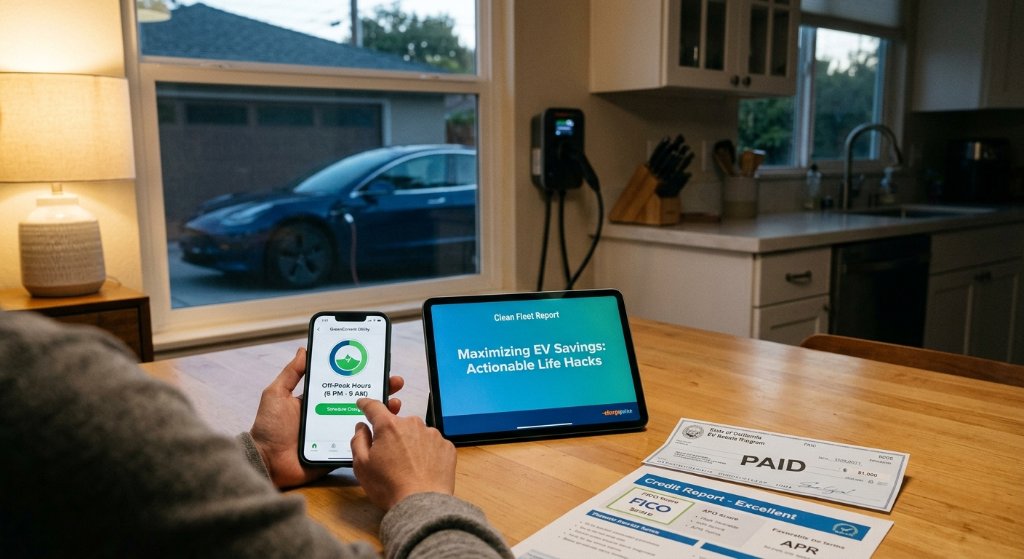
While buying an electric vehicle is often framed around the initial purchase price or federal tax credits, the real battle for your wallet happens after you drive off the lot. In an era where rising utility rates and stubborn interest rates threaten to erode the operating cost advantages of going electric, mastering the economics of daily ownership has never been more critical.
This shift comes as electricity grids face unprecedented strain and the federal incentives landscape remains in constant flux. A new guide from Clean Fleet Report reminds us that EV savings aren't automatic; they require a deliberate, strategic approach to charging, infrastructure, and financing to truly unlock the financial promise of electrification. Here is how savvy owners can maximize their return on investment.
Timing the Grid: The Art of Off-Peak Home Charging
Home charging is the bedrock of EV convenience, but plugging in blindly at 6:00 PM when you get home from work is a financial trap. Utility companies across the nation are aggressively shifting to Time-of-Use (TOU) rate structures, penalizing energy consumption during peak evening hours when grid demand spikes.
- Set-and-Forget Scheduling: Utilize your vehicle’s infotainment system or your smart charger's companion app to schedule charging exclusively during off-peak hours (typically midnight to 6:00 AM).
- Dramatically Lower Rates: In some regions, off-peak rates can slash electricity costs by up to 70% compared to peak evening hours, bringing the per-mile cost of driving an EV down to pennies.
- Grid Relief: Shifting your load helps stabilize the local power grid, reducing the need for expensive and dirty fossil-fuel "peaker" plants.
Hunting Down Hyper-Local Infrastructure Rebates
The federal tax credit on vehicles gets all the headlines, but the massive savings available for Level 2 home installation are often left on the table. Savvy buyers need to look beyond federal incentives to state, municipal, and utility-level perks to offset their upfront costs.
- Hardware and Installation Subsidies: Many local utilities offer direct rebates of $500 to $1,000 to offset the cost of purchasing and installing a smart Level 2 wall charger.
- Panel Upgrade Assistance: Older homes often require electrical panel upgrades to handle 50-amp EV circuits; local programs frequently subsidize these expensive upgrades.
- Stacking Incentives: Combining municipal grants with utility-specific rewards can sometimes render the hardware and installation virtually free.
Financial Engineering: Credit Optimization and Refinancing
With auto loan interest rates remaining stubbornly high, your credit score is the single most powerful lever you have to control your monthly payment. Optimizing your financial profile before stepping into a dealership—or refinancing an existing high-APR loan—can save thousands over the life of the vehicle.
- Proactive Credit Grooming: Ensure your credit utilization ratio is below 10% and dispute any credit report errors at least three months before applying for financing to secure top-tier APR rates.
- The Power of Refinancing: If you were forced to accept a high APR at the dealership, monitor interest rates and your credit profile to refinance into a lower-rate credit union loan within the first year.
- Total Cost of Borrowing: A 2% reduction in APR on a $45,000 EV loan can save over $2,500 in interest alone over a 60-month term.
Why This Matters:
This shift in ownership strategy signals a maturing EV market. We are moving past the early-adopter phase where buyers shrugged off high charging costs or premium interest rates as part of the "cool factor." Today’s mainstream buyers are highly price-sensitive. Utilities are the big winners if they can successfully incentivize off-peak charging, as it smooths out demand curves and allows them to sell more energy without upgrading physical grid infrastructure. Conversely, traditional dealership finance departments lose their leverage when buyers arrive pre-approved with optimized credit profiles. Ultimately, the burden of proof has shifted: EVs are cheaper to run than gas cars, but only if you actively manage the ecosystem. Those who fail to optimize their charging and financing are leaving thousands of dollars on the table, effectively neutralizing the EV's primary cost advantage.
Owning an EV remains one of the smartest financial and environmental decisions a driver can make, but it is no longer a passive endeavor. By turning home charging into a scheduled routine, treating local utility websites like coupon books for hardware, and ruthlessly optimizing personal credit, drivers can maximize the return on their electric investment. The future of driving isn't just about zero emissions; it's about smart financial management.