Boston's Largest Multifamily EV Charging Hub Signals Breakthrough for Urban Adoption
A significant stride in making electric vehicle ownership accessible in dense urban environments just unfolded in Boston, where Loop Global announced ...
Editorial Team
World Of EV
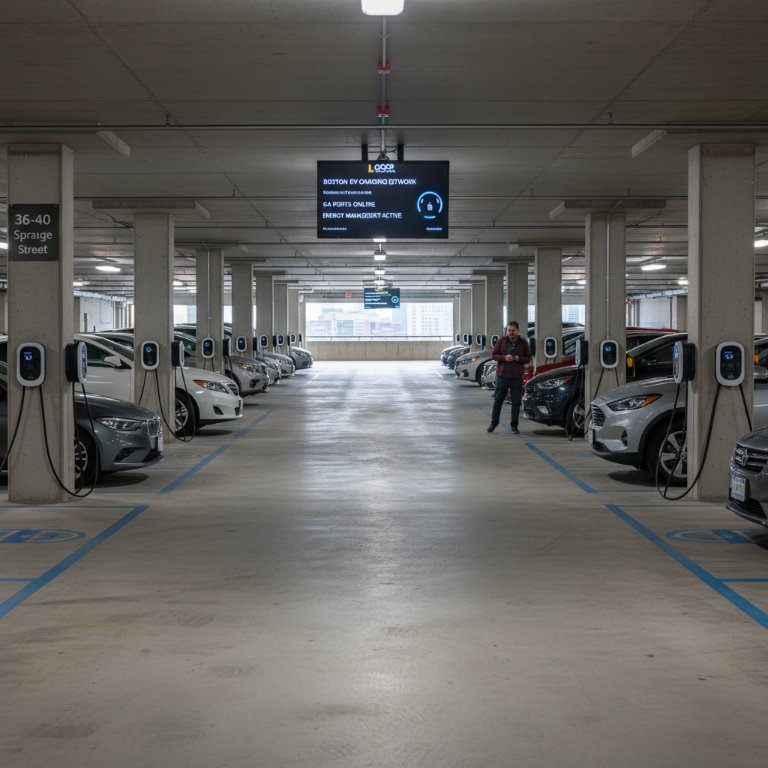
A significant stride in making electric vehicle ownership accessible in dense urban environments just unfolded in Boston, where Loop Global announced the completion of a massive 64-port Level 2 EV charging installation. This landmark project, situated at a new multifamily development at 36-40 Sprague Street in Hyde Park, immediately becomes the largest of its kind in Boston, directly addressing one of the most persistent hurdles for EV adoption: reliable, at-home charging for apartment dwellers.
For years, the dream of EV ownership has often been a more straightforward reality for homeowners with dedicated garages. Multifamily residences, particularly in sprawling cities like Boston, have presented a complex web of challenges, from limited electrical infrastructure to the sheer logistics of shared parking. This collaboration between Loop Global, Commonwealth Development Partners, DMH Electric, and Eversource demonstrates a viable and scalable pathway forward, offering residents unprecedented convenience and removing a major psychological barrier to going electric.
Powering Urban EV Adoption at Scale
The Hyde Park installation is far from a token gesture. It represents a substantial commitment to supporting electric mobility in a crucial segment of the population. Key details of this ambitious project include:
- 64 Level 2 Charging Ports: Deploying a significant number of chargers, covering 25% of the available parking spaces, ensures broad accessibility for residents.
- Loop Flex 32A Chargers: The chosen hardware provides robust Level 2 charging capabilities, ideal for overnight charging that comfortably replenishes vehicle batteries.
- Networked Charging Platform: Loop Global's integrated platform allows for real-time monitoring, energy management, and efficient utilization of the charging infrastructure, a critical feature for large-scale deployments where demand can fluctuate.
- Strategic Location: Hyde Park’s new development serves a growing residential community, placing essential EV infrastructure where it's most needed.
A Collaborative Model for Growth
What truly elevates this project beyond a simple installation is the synergistic partnership that brought it to fruition. Commonwealth Development Partners led the development, while DMH Electric handled the intricate electrical work. Crucially, Eversource, the local utility, played an instrumental role in facilitating the project, securing substantial utility incentives that covered approximately 70% of the total project costs. This financial support underscores the growing recognition by utilities and municipalities that fostering EV infrastructure is not just an environmental imperative but a critical component of modern urban planning and energy grids.
Why This Matters:
This project isn't merely news; it's a strategic blueprint that could redefine EV adoption in urban centers nationwide. For World Of EV readers – savvy enthusiasts, prospective buyers, and industry professionals alike – this signals a monumental shift in tackling the 'last mile' problem of EV charging. Who wins? Primarily, urban EV owners and those considering the switch, who now see a tangible pathway to practical ownership without the stress of public charger hunting. Developers who embrace similar models will gain a competitive edge, attracting environmentally conscious tenants and future-proofing their properties. Loop Global solidifies its position as a key enabler of large-scale EV infrastructure, showcasing its full-stack solution from hardware to management software. The broader market wins by gaining a proven, incentivized model for deploying significant charging capacity in challenging multifamily settings. This initiative is a clear signal to the industry: the era of fragmented and insufficient urban charging is slowly but surely giving way to comprehensive, supported solutions. It demonstrates that with the right partnerships and critical utility backing, the perceived barriers to widespread EV adoption in cities can be systematically dismantled.
This Boston landmark project sets a powerful precedent, illustrating how strategic partnerships and robust utility incentives can accelerate the transition to electric mobility in high-density urban environments. We anticipate this model will inspire similar initiatives, paving the way for a more electrified and accessible urban future.