Cadillac Optiq: A Premium Urban EV Experience Marred by Underwhelming Charging Prowess
Cadillac's relentless march into the electric future continues, with the 2026 Optiq SUV poised as a critical mid-range offering designed to broaden th...
Editorial Team
World Of EV
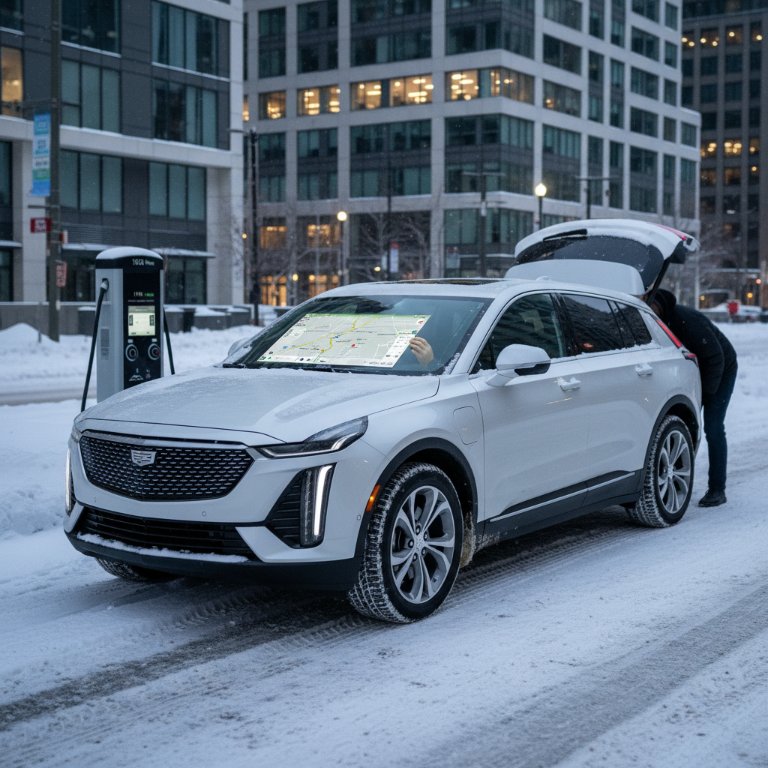
Cadillac's relentless march into the electric future continues, with the 2026 Optiq SUV poised as a critical mid-range offering designed to broaden the brand's EV appeal beyond the opulent Celestiq and the popular Lyriq. Positioned squarely in a hotly contested segment, the Optiq aims to blend luxury with everyday usability. However, a recent week-long evaluation in the unforgiving crucible of Canadian winter conditions reveals a vehicle that delivers a compelling urban experience but stumbles significantly in a crucial metric for any modern EV: charging performance.
While the Optiq largely succeeds in crafting a refined and connected cabin, the limitations exposed during real-world winter testing cast a long shadow, raising questions about Cadillac's competitive strategy in an rapidly evolving market where range and charging speed are paramount.
A Glimpse of Cadillac's Electric Future (and Its Ultium Strengths)
From the moment drivers engage, the Optiq showcases significant strengths. Its all-wheel-drive powertrain, leveraging GM's scalable Ultium platform, proves remarkably responsive, delivering confident traction and immediate power delivery even on slick winter roads. This inherent performance quality is a testament to the Ultium architecture's capabilities. Inside, the cabin impresses with a stellar Dolby Atmos sound system, transforming the driving experience into an auditory delight. Furthermore, the Android-based user interface is both intuitive and highly functional, boasting native Google Maps routing seamlessly integrated with intelligent charging stop planning—a vital feature for long-distance travel, even if the vehicle's own charging capabilities don't fully capitalize on it. Cadillac's SuperCruise also adds undeniable value for highway cruising, solidifying the Optiq's position as a comfortable and technologically advanced long-distance companion for the right driver.
The Cold Reality: Charging Falls Short of Expectations
Despite its interior comforts and dynamic AWD, the Optiq's most significant drawback emerged in its charging performance. The vehicle achieved a peak charging rate of only 150 kW during testing, a figure that is undeniably underwhelming for a 2026 model year EV. To put this into critical context, industry leaders and even many mainstream competitors are already pushing well beyond this benchmark. Hyundai and Kia's E-GMP platform vehicles routinely exceed 200 kW, while premium offerings like the Porsche Taycan can achieve over 270 kW. Even new market entrants are targeting 250 kW+ for their next-generation models. For a luxury EV slated for 2026, a 150 kW peak rate translates directly into longer charging sessions and increased inconvenience, particularly during winter conditions where charging speeds naturally decrease. This disparity isn't just a minor inconvenience; it fundamentally impacts the Optiq's viability as a primary road-trip vehicle and could be a significant deterrent for savvy EV buyers who prioritize rapid turnaround times at charging stations.
Practicality and Comfort Compromises
Beyond charging, the Optiq also presented a few ergonomic and practical challenges. Taller rear passengers will find headroom problematic, an oversight in a segment increasingly focused on passenger comfort across all rows. The driver's seat, while initially comfortable, reportedly led to thigh fatigue during extended drives, suggesting design choices that may not accommodate all body types for long periods. Finally, the vehicle's overall practicality is hampered by a below-average trunk capacity and, notably, the complete absence of a frunk (front trunk). While not deal-breakers for every buyer, these omissions further limit the Optiq's utility, reinforcing the reviewer's conclusion that it is best suited for urban daily driving by a solo commuter or a couple with minimal cargo needs.
Why This Matters:
The 2026 Cadillac Optiq's mixed performance sends a clear, if somewhat concerning, signal to the luxury EV market and to Cadillac's long-term electrification strategy. The strengths—responsive AWD, a sophisticated infotainment system, and SuperCruise—underscore the potential of the Ultium platform and Cadillac's commitment to in-car technology. However, the glaring deficiencies in charging speed and practicality are critical missteps for a vehicle positioned to compete in 2026. Consumers in the premium EV segment expect not just luxury, but cutting-edge performance across all metrics, and charging speed is increasingly a top priority.
Who Wins? Urban commuters and couples prioritizing a premium, technologically advanced daily driver for shorter distances will find much to like. Cadillac itself wins in showcasing its design prowess and commitment to a digital user experience.
Who Loses? Cadillac risks alienating a significant portion of the EV market: those who regularly undertake longer journeys, families requiring more cargo space, or anyone living in regions with less dense charging infrastructure where fast charging is paramount. Competitors from Europe (BMW iX, Audi Q4 e-tron) and Asia (Genesis GV60) who offer superior charging speeds and often better interior packaging stand to gain.
Market Signal: This highlights a potential challenge for GM's Ultium platform rollout: while versatile, its current implementation in the Optiq doesn't appear to be pushing the boundaries of charging technology. For a 2026 model, 150 kW peak is already behind the curve, suggesting that GM may be playing catch-up in a critical performance metric. This could imply a deliberate targeting of a specific, less demanding urban buyer, or it could signal a broader lag in scaling ultra-fast charging capabilities across their electric portfolio.
Is this a 'do-or-die' moment? For the Optiq specifically, its competitive viability hinges heavily on whether its luxury and urban-focused features can overcome its charging and practicality shortcomings. It's not a 'do-or-die' for Cadillac's entire EV program, but it certainly suggests the brand needs to rapidly accelerate its charging technology integration to remain competitive in the premium segment beyond dedicated niche models.
In conclusion, the 2026 Cadillac Optiq emerges as a stylish and tech-rich urban electric SUV, perfectly suited for those who value luxury and connectivity over long-distance charging prowess and maximal practicality. While it embodies many elements of Cadillac's electric vision, its underperforming charging capabilities and practical compromises could limit its broader appeal, forcing Cadillac to refine its strategy for future Ultium-based models to truly dominate the premium EV landscape.