California Unleashes Nuro's Driverless Lucid Gravity: The Road to Uber's Robotaxi Future Just Got Real
Nuro has achieved a pivotal regulatory milestone, securing a permit from the California Department of Motor Vehicles (DMV) to test its customized Luci...
Editorial Team
World Of EV
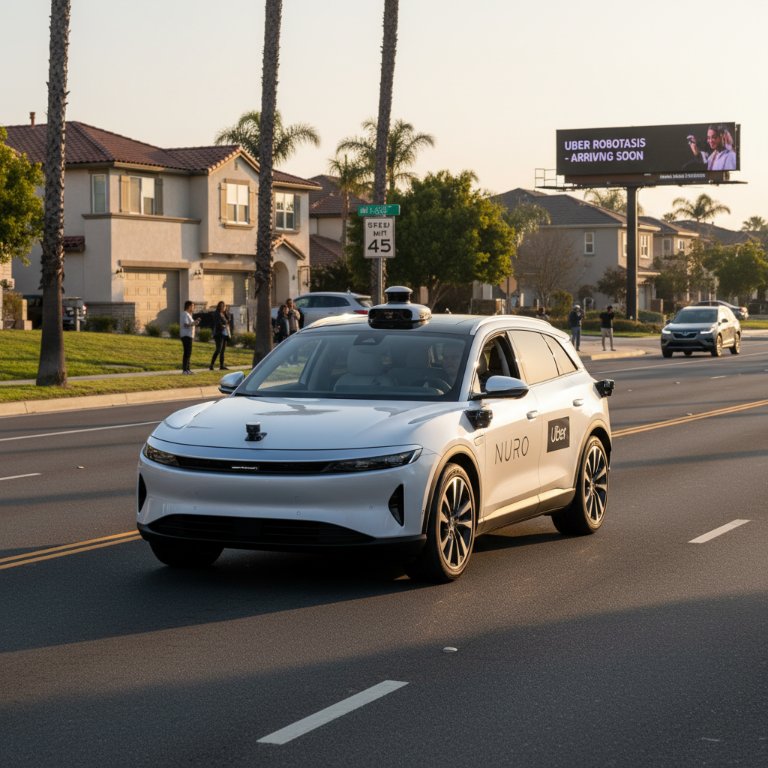
Nuro has achieved a pivotal regulatory milestone, securing a permit from the California Department of Motor Vehicles (DMV) to test its customized Lucid Gravity SUVs without a human safety driver on public roads. This critical approval clears the path for fully driverless operations in Santa Clara and San Mateo counties, at speeds up to 45 mph, day or night. This isn't merely about testing; it's the foundational step for Nuro to power Uber's ambitious robotaxi service, which aims to deploy a staggering fleet of at least 35,000 autonomous Lucid Gravity vehicles.
This development marks a significant acceleration for Nuro, a company previously known for its autonomous delivery vehicles, and represents a determined re-entry into the autonomous passenger space for Uber, which has faced its share of challenges in self-driving development over the years. The partnership with Lucid, a luxury EV manufacturer, also signals a premium approach to the burgeoning robotaxi market.
A Critical Green Light for Driverless Operations
The California DMV permit is a game-changer, transitioning Nuro's operations from supervised autonomous testing to fully driverless validation. Previously, even employee-only rides through the Uber app in the Bay Area required a human safety driver.
Key aspects of this permit include:
- Fully Driverless Testing: Nuro can now remove the human safety driver entirely from its Lucid Gravity test vehicles.
- Operational Area: Testing is authorized within Santa Clara and San Mateo counties.
- Operational Parameters: Vehicles can operate at speeds up to 45 mph, during both day and night conditions.
This permit is a crucial regulatory step, signaling California's confidence in Nuro's technology stack and safety protocols.
The Lucid Gravity Connection: Premium Power for Robotaxis
The choice of the Lucid Gravity SUV as the platform for this robotaxi service is a strategic differentiator. Unveiled at CES 2026, the custom-designed, three-row electric crossover integrates Nuro's self-driving technology with a premium passenger experience.
Features designed for the robotaxi service include:
- Advanced Sensor Suite: High-resolution cameras, lidar sensors, and radar for 360-degree perception.
- NVIDIA DRIVE AGX Thor: Powers the real-time AI processing for advanced autonomous driving.
- Luxurious Interior: Rider-controlled heated seats, climate, music, and interactive screens that show the vehicle's real-time perception.
- Halo-mounted LEDs: Aid in vehicle identification and provide status updates for riders.
Uber's expanded commitment of $500 million in Lucid and an increased order from 20,000 to at least 35,000 Lucid vehicles underscores the scale and ambition of this partnership.
Uber's Autonomous Comeback Trail
Uber's journey in autonomous vehicles has been well-documented, marked by significant investments and subsequent divestments from its own self-driving division. This partnership with Nuro and Lucid signifies a refined strategy: leveraging established AV expertise and a premium vehicle platform rather than developing everything in-house.
This new approach allows Uber to focus on its core ride-hailing platform while Nuro handles the complex autonomous driving stack and Lucid provides a purpose-built, high-quality EV. The planned deployment of 35,000 vehicles highlights a major pivot and a serious commitment from Uber to integrate autonomous ride-hailing at scale.
Why This Matters:
This latest development represents a seismic shift in the autonomous vehicle landscape, with profound implications for all involved parties and the broader mobility sector.
- For Nuro: This permit elevates Nuro beyond its successful autonomous delivery roots into the high-stakes passenger robotaxi arena. It's a critical validation of their 'Nuro Driver' autonomy platform and positions them as a key enabler for large-scale mobility solutions. Success here could cement Nuro's reputation as a leader in generalized autonomous technology.
- For Uber: This is arguably Uber's most significant and credible push into fully autonomous ride-hailing to date. After past setbacks, this strategic partnership allows Uber to re-enter the race with a robust, premium offering. Eliminating driver costs from a substantial portion of its fleet could dramatically improve profit margins and insulate Uber from future labor challenges, providing a powerful competitive advantage.
- For Lucid: Beyond the immediate revenue from the 35,000-vehicle order, this partnership provides a massive, high-profile validation of the Lucid Gravity's advanced platform. It demonstrates Lucid's ability to be a significant technology provider in the commercial AV space, opening new, lucrative avenues beyond direct consumer sales and potentially bolstering investor confidence.
- For the AV Industry: The entry of a premium, large-scale robotaxi service backed by Uber and Nuro, and using Lucid's sophisticated EVs, intensifies the competition in California – already a hotbed for AV development. It signals that the market is maturing beyond pilot programs and moving towards large-scale commercial deployments, potentially accelerating the timeline for widespread robotaxi availability. The regulatory approval also sets a precedent for how other states might approach future driverless deployments.
- For Consumers: This partnership promises a new class of robotaxi experience. Imagine a quiet, comfortable, and potentially more personalized ride in a Lucid Gravity, complete with amenities like heated seats and interactive displays. While regulatory hurdles remain before paid driverless rides commence, this move brings the reality of a premium, driverless Uber journey significantly closer.
Conclusion:
Nuro's achievement of driverless testing permits for the Lucid Gravity SUVs is far more than a technicality; it's a profound signal of intent and progress. Backed by Uber's strategic vision and Lucid's premium hardware, this trifecta is poised to redefine urban mobility. While the road to deploying 35,000 autonomous vehicles is undoubtedly challenging, with further regulatory approvals needed for paid services, the pieces are now firmly in place for a transformative shift in how we experience ride-hailing. The era of the premium robotaxi is no longer a distant dream, but an impending reality on California's streets, promising a future of autonomous luxury for the masses.