Canada's EV Dream Hits a Speed Bump: Billions in Subsidies Under Scrutiny as Projects Halt
Canada's ambitious vision to become a global EV manufacturing powerhouse, underpinned by over CA$52 billion in government subsidies, faces a stark rea...
Editorial Team
World Of EV
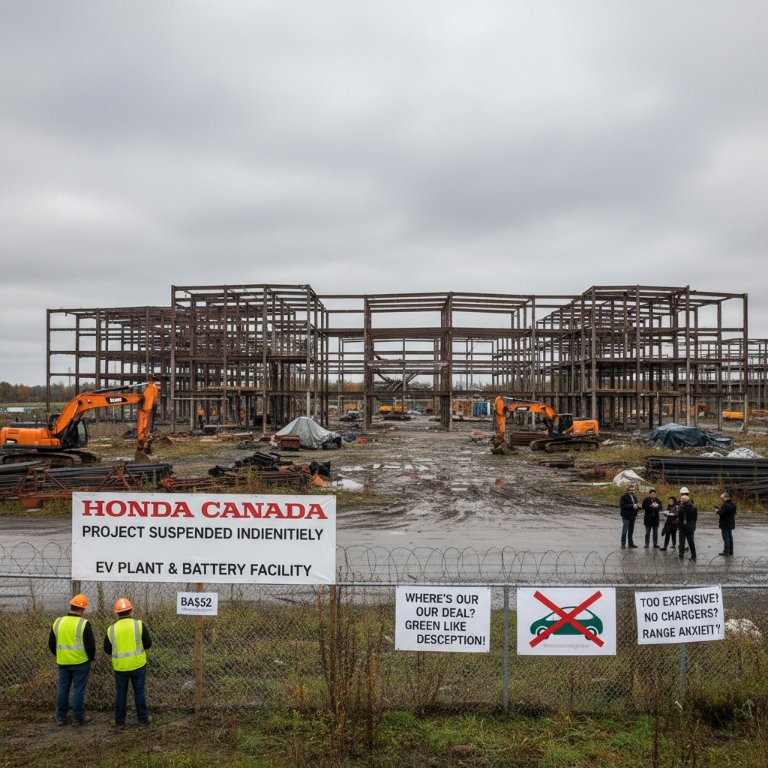
Canada's ambitious vision to become a global EV manufacturing powerhouse, underpinned by over CA$52 billion in government subsidies, faces a stark reality check as several major battery supply-chain projects have been indefinitely suspended. This development, spearheaded by Honda Canada's decision to halt its CA$15 billion ($10.8 billion) EV and battery plant, forces a critical re-evaluation of both market readiness and the efficacy of massive public investment in the electrification transition.
Honda's unexpected move, citing 'evolving business conditions, a change in external resource strategy and shifting customer demand,' sends a clear signal across the automotive industry. This isn't just about one company's project; it's a profound moment for Canada, which has aggressively courted EV and battery manufacturers with unprecedented financial incentives. This latest news calls into question the immediate return on investment for Canadian taxpayers and the viability of rapid EV adoption without sustained, robust consumer-side support.
The Grand Promise and the Sudden Pause
For years, Canada has positioned itself as a critical player in the burgeoning North American EV ecosystem, leveraging its natural resources and political will. The federal and provincial governments pledged an astounding CA$52 billion or more in subsidies to attract automotive giants and battery manufacturers, aiming to secure high-paying jobs and cement Canada's role in the green economy.
- Honda's Pivotal Suspension: The indefinite suspension of Honda's CA$15 billion EV and battery plant in Ontario is the most high-profile casualty of this shifting landscape.
- Evolving Justifications: Honda's reasons – 'evolving business conditions, a change in external resource strategy and shifting customer demand' – suggest a multifaceted challenge rather than a singular issue. This likely encompasses everything from raw material costs and geopolitical pressures to a cooler-than-anticipated consumer market.
Underlying Market Headwinds Dampen Enthusiasm
The pause in these critical projects isn't an isolated incident; it reflects broader anxieties rippling through the EV market. While initial projections for EV adoption were aggressively optimistic, several persistent obstacles continue to temper mainstream enthusiasm:
- Range Anxiety: Despite technological advancements, concerns about vehicle range, particularly in colder climates or rural areas, remain a significant hurdle for many potential buyers.
- Inadequate Recharging Infrastructure: The lack of widespread, reliable, and fast charging facilities continues to be a major deterrent, especially for those without home charging options.
- High Purchase Costs: EVs, even with technological improvements, generally carry a higher upfront cost than comparable internal combustion engine vehicles, making them inaccessible for a segment of the market.
- Impact of Incentive Withdrawal: Crucially, EV sales dropped significantly in 2025 when federal and provincial purchase incentives were paused. This demonstrates the market's strong reliance on subsidies to drive adoption, highlighting that the 'natural' demand, particularly for early mainstream buyers, is still fragile without financial encouragement. This echoes previous market trends seen in other regions when incentives were removed or reduced, proving that the market isn't yet mature enough to stand solely on its own two feet.
Why This Matters:
This series of project suspensions represents a profound inflection point for Canada's EV strategy and the broader North American automotive landscape. It signals a necessary recalibration from aspirational targets to market realities, impacting virtually every stakeholder.
- For Canada's Taxpayers and Policymakers: The indefinite halt of these projects places the colossal CA$52 billion in pledged subsidies under intense scrutiny. Policymakers must now grapple with how to ensure these massive investments yield tangible, long-term returns, rather than funding projects that may never materialize or generate the anticipated economic benefits. It forces a re-evaluation of how much government intervention is sustainable and effective in stimulating a nascent industry.
- For Automakers (and Honda's Strategy): Honda's decision, particularly the reference to 'shifting customer demand,' suggests a cautious approach from manufacturers. It indicates a potential pivot from a 'build it and they will come' mentality to a more measured, demand-driven strategy. Other automakers with significant Canadian investments will undoubtedly be watching closely, potentially reassessing their own timelines and commitments amidst a slower-than-expected transition.
- For EV Enthusiasts and Prospective Buyers: This news is a double-edged sword. While it might suggest a slower pace of new model introductions or localized production, it also could force the industry to address core adoption barriers more aggressively. To succeed, EVs must become more affordable, offer greater charging convenience, and deliver compelling value propositions that transcend mere environmental benefits. The market needs to prove it can stand without the constant drip-feed of government incentives.
- Long-Term Market Signal: This isn't the death knell for EVs, but rather a robust signal that the road to mass electrification will be bumpier and longer than many initially predicted. The industry is entering a more mature, and perhaps more challenging, phase where genuine market demand, infrastructure development, and competitive pricing will dictate success, rather than just technological novelty or government largesse.
The suspension of these significant EV battery supply-chain projects in Canada serves as a stark reminder that the transition to electric vehicles is not a linear path. It underscores the critical need for a balanced approach, where government support is strategically aligned with genuine market demand, robust infrastructure development, and compelling product offerings. The coming months will reveal how both industry and government adapt to these evolving conditions, shaping the future trajectory of Canada's, and indeed North America's, EV ambitions.