Canada’s High-Voltage Blindspot: The Looming EV Mechanic Shortage That Could Stall the Green Transition
The transition to zero-emission transportation is charging ahead globally, but a critical, often-overlooked bottleneck is brewing quietly inside servi...
Editorial Team
World Of EV
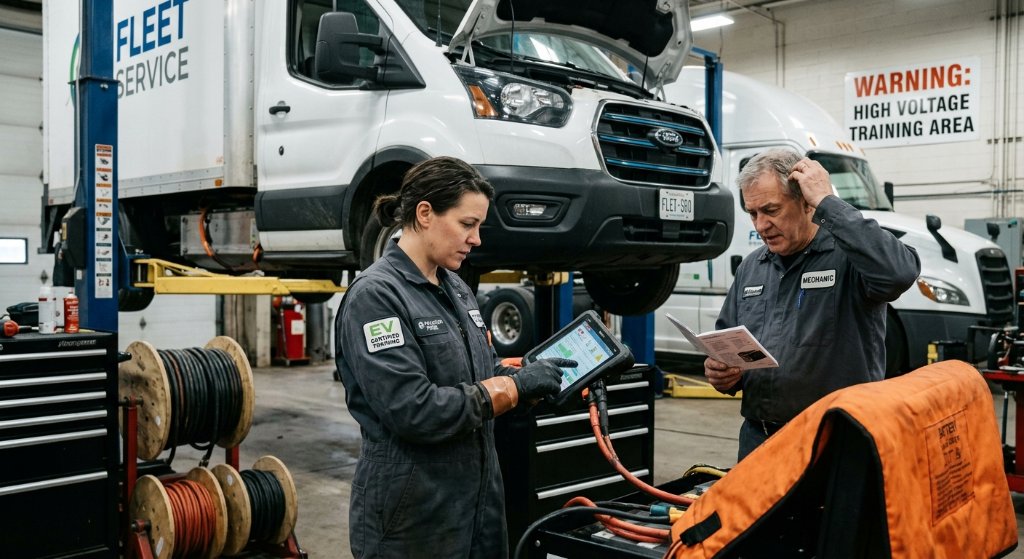
The transition to zero-emission transportation is charging ahead globally, but a critical, often-overlooked bottleneck is brewing quietly inside service bays. As Canada aggressively pushes to meet its mandate of 100% zero-emission light-duty vehicle sales by 2035 and accelerates the electrification of transit and school bus fleets, a new report from environmental think-tank Pollution Probe delivers a sobering wake-up call. Titled 'Amped Up: Upskilling Canada's Heavy-Duty Vehicle Mechanics to Support the Transition to Electric School Buses,' the study warns of a massive structural deficit: we are deploying electric vehicles (EVs) at a pace that far outstrips our ability to train the mechanics needed to keep them running.
This isn’t just a minor speed bump; it’s a systemic vulnerability. For years, the automotive sector has focused almost exclusively on solving battery chemistry limitations and building out public charging networks. Yet, the physical workforce—the mechanics who keep logistics moving—has been left stranded in the internal combustion era. Without rapid, standardized intervention, both fleet operators and everyday EV buyers face a future of endless service delays and a costly, monopolistic reliance on original equipment manufacturers (OEMs).
The High-Voltage Danger Gap
The fundamental mechanics of heavy-duty vehicles, such as steering and suspension, remain relatively unchanged from diesel to electric. However, the powertrain transition introduces an entirely different, highly dangerous operational paradigm. Modern electric school buses and heavy-duty trucks operate on high-voltage battery systems of up to 800 volts DC. At this level, a simple mistake is not just a warranty claim—it is potentially lethal.
To safely work on these platforms, mechanics must shift from mechanical wrenching to advanced electrical and software-based diagnostics. This requires highly specialized safety procedures that the average diesel technician has never encountered:
- Lockout/Tagout (LOTO) Procedures: De-energizing high-voltage battery systems before any work can begin.
- Specialized Personal Protective Equipment (PPE): Working with heavy-duty insulated gloves and arc-rated clothing to prevent electrocution and arc flash injuries.
- Advanced Diagnostic Hardware: Mastering the use of specialized insulation testers (megohmmeters) and scan tools to safely isolate battery faults.
A Broken Educational Pipeline
The crux of the crisis lies in the lack of standardized, national educational infrastructure. Standard automotive and heavy-duty service curricula still widely ignore the realities of high-voltage safety and power electronics. This leaves a massive disconnect between what is being taught in trade schools and what is actually being sold on dealer lots.
- What Legacy Programs Teach: Internal combustion engine (ICE) rebuilds, diesel emissions control, standard 12V electrical systems, and mechanical diagnostics.
- What the Modern Fleet Requires: High-voltage safety protocols, advanced thermal management system maintenance, battery pack diagnostics, power electronics (inverters and converters), and software-driven troubleshooting.
The Threat of OEM Monopolies
Without standardized certifications and local training programs, the industry risks creating a closed-loop monopoly. Today, independent repair shops and fleet-operated garages simply do not have the expertise or safety certifications to service advanced EV powertrains. This forces fleet operators to tow crippled vehicles back to specialized OEM hubs. The result is prolonged vehicle downtime, astronomical service fees, and the gradual death of the independent repair shop.
Why This Matters:
This is a "do-or-die" structural moment for the electric vehicle transition. Up to this point, public debate has centered on consumer "range anxiety" and the speed of DC fast chargers. However, this report reveals that "service anxiety" is the next major hurdle.
- The Winners: Legacy OEMs and vertically integrated EV manufacturers. Companies that control proprietary diagnostic software and repair channels stand to win big in the short term. They will lock fleet operators and consumers into their ecosystem, dictate repair pricing, and capture highly lucrative, recurring service revenues.
- The Losers: Municipalities, school districts, and independent mechanics. Public school boards transitioning to electric buses will find their operating budgets squeezed by astronomical towing and dealership labor costs. Meanwhile, mom-and-pop repair shops that fail to adapt will face forced obsolescence.
- The Market Signal: A vehicle is only as green as its uptime. If fleet operators realize that a single high-voltage glitch can sideline an electric school bus or delivery truck for weeks due to a lack of certified local technicians, commercial EV adoption will hit a brick wall. Governments must treat technician training as critical infrastructure, funding it with the same urgency as charging stations.
Conclusion
The transition to electric vehicles is no longer just a manufacturing challenge; it is a labor challenge. The Amped Up report serves as a timely warning that Canada's ambitious climate targets could easily short-circuit if the workforce is left behind. To ensure the electric revolution succeeds, provincial governments, academic institutions, and manufacturers must immediately align to establish standardized, accessible EV repair certifications. The future of clean transit isn't just built on assembly lines—it's maintained in the service bay.