Catastrophic Battery Failure Rocks Kia EV9: A Troubling Signal for Hyundai Group EVs
The burgeoning reputation of the Hyundai Motor Group as an EV powerhouse faces a severe challenge following a distressing report from owner Ty Duffy. ...
Editorial Team
World Of EV
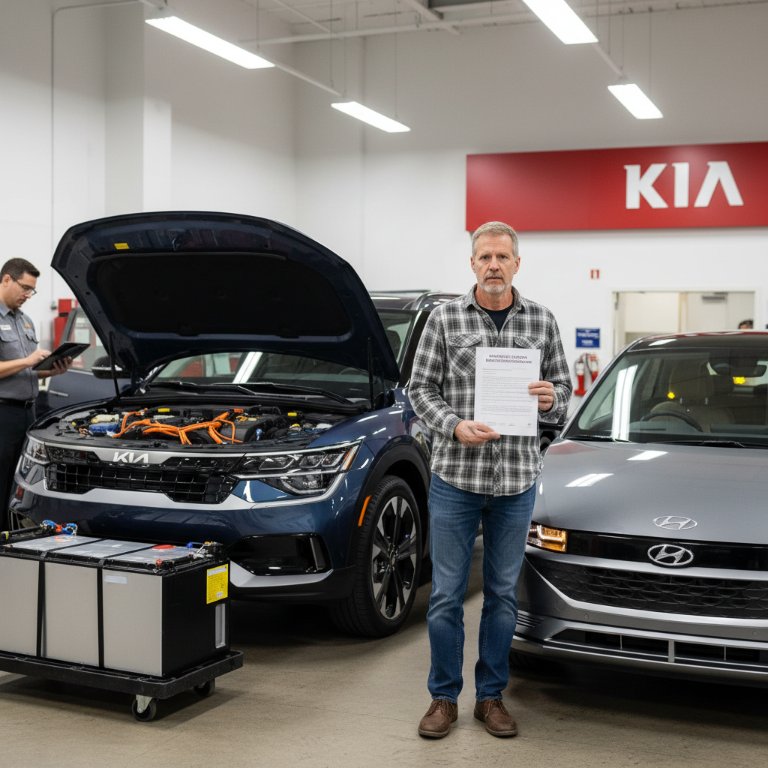
The burgeoning reputation of the Hyundai Motor Group as an EV powerhouse faces a severe challenge following a distressing report from owner Ty Duffy. Duffy's new Kia EV9, a flagship electric SUV, required a complete high-voltage battery system replacement – an unprecedented and alarming failure for a relatively new vehicle. This incident, confirmed after extensive diagnostic checks with a central Kia service center, casts a long shadow over the perceived reliability of vehicles built on the acclaimed E-GMP platform, especially when coupled with Duffy's prior significant issues with a Hyundai Ioniq 5.
Kia and its parent company, Hyundai, have meticulously cultivated an image of innovation and quality in the electric vehicle space. Models like the Kia EV6 and Hyundai Ioniq 5 have garnered critical acclaim, setting benchmarks for charging speed, design, and overall user experience. The introduction of the Kia EV9 further solidified this perception, promising spaciousness and advanced technology in a highly anticipated three-row electric SUV. A core component of this success has been the robust E-GMP (Electric-Global Modular Platform), which underpins a broad range of their current and upcoming EVs. Therefore, a major battery system replacement on one of its newest and most prominent models strikes at the very heart of the brand's hard-won trust.
The Alarming Incident: EV9's Core Compromised
The gravity of Ty Duffy's situation cannot be overstated. A full high-voltage battery system replacement is not a routine repair; it represents a catastrophic failure of the most expensive and critical component of an electric vehicle. Such an operation is complex, costly, and resource-intensive, requiring specialized equipment and highly trained technicians. For a vehicle as new as the EV9 to experience such a fundamental defect so early in its life cycle suggests a potential manufacturing flaw or quality control oversight that extends far beyond a typical recall or software glitch. This level of failure is precisely the kind of incident that rattles consumer confidence and raises serious questions about long-term durability.
A Broader Concern: Echoes from the Ioniq 5
What amplifies the concern around the EV9's battery replacement is Ty Duffy's concurrent struggles with a Hyundai Ioniq 5. While the specific details of the Ioniq 5's problems are not fully elaborated in the initial report, the fact that a single owner experienced significant issues with two distinct E-GMP platform vehicles from the same corporate family suggests this may not be an isolated 'lemon' incident. Instead, it hints at potentially systemic vulnerabilities within the platform's core components or manufacturing processes. For a company that has pushed aggressive EV adoption, consistency in quality across its product line is paramount.
Why This Matters:
The Kia EV9's requirement for a complete battery system replacement is far more than an isolated service incident; it's a critical stress test for the Hyundai Motor Group's EV strategy and a stark warning for the broader electric vehicle market.
- Erosion of Consumer Confidence: A full battery replacement is the ultimate fear for any EV owner or prospective buyer. This incident directly undermines trust in EV reliability, particularly for models from a brand previously lauded for its cutting-edge electric offerings. It feeds into existing anxieties about battery longevity, cost of repairs, and resale value.
- Reputational Damage to E-GMP: The E-GMP platform is the backbone of Hyundai, Kia, and Genesis's EV ambitions. If the core high-voltage battery system – a fundamental component of this platform – is prone to such severe failures, it threatens to tarnish the entire E-GMP ecosystem. This could severely impact future sales across all E-GMP vehicles, from the Kia EV6 and Hyundai Ioniq 6 to the Genesis GV60.
- Unforeseen Warranty and Service Burdens: Catastrophic battery failures translate into immense warranty costs for the manufacturer. Furthermore, such complex repairs strain dealership service centers, many of which are still building their infrastructure and expertise to handle advanced EV maintenance. This creates a logistical and financial headache for Hyundai Motor Group.
- Industry-Wide Scrutiny: This news will undoubtedly put the spotlight on battery quality control across the entire EV industry. While other manufacturers have faced their own challenges, a brand-new, high-profile EV requiring a full battery swap sets a worrying precedent. Competitors who can demonstrate superior, consistent reliability stand to gain significantly.
- A 'Do-or-Die' Moment? While not a death knell, this is a significant wake-up call for Kia and Hyundai. How they transparently address this incident, communicate with owners, and implement corrective measures will dictate whether this becomes a minor blip or a serious long-term obstacle to their EV leadership ambitions. A swift, decisive, and transparent response is crucial to prevent lasting damage to their brand equity.
The EV market is maturing rapidly, and consumers expect the same, if not greater, reliability from their electric vehicles as they do from traditional combustion engine cars. The shocking battery replacement on a Kia EV9 serves as a stark reminder that even the most innovative manufacturers face immense challenges in ensuring bulletproof quality control for these complex, high-tech machines. Hyundai Motor Group must act decisively and transparently to reassure its customer base and protect its hard-earned reputation in the competitive EV landscape.