Charging 2.0: The Fast-Charging Land Grab Is Over, and That’s the Best News EV Drivers Have Had in Years
For years, the public electric vehicle charging experience in North America has resembled a wild west land rush. Operators raced to plant flags—and pl...
Editorial Team
World Of EV
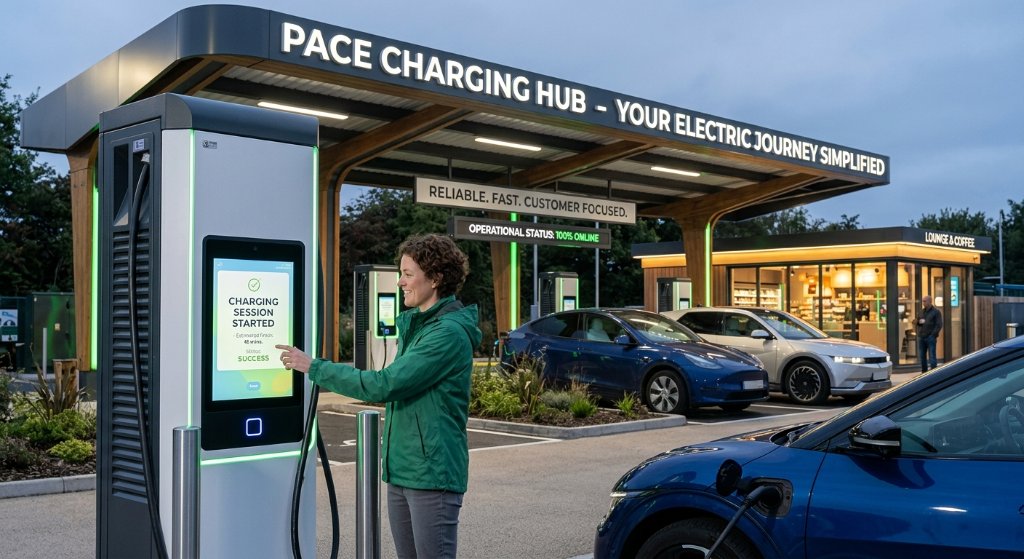
For years, the public electric vehicle charging experience in North America has resembled a wild west land rush. Operators raced to plant flags—and plugs—on any vacant highway corner, prioritizing rapid deployment over basic operational sanity. The result? A fragmented, maddening landscape of broken screens, failed digital handshakes, and "charger anxiety" that kept hesitant buyers away from EVs. But the era of the reckless land grab is officially over. According to the newly released Q2 2026 State of the EV Charging Industry report from charging data platform Paren, we have officially entered "Charging 2.0"—a phase where the metric of success is no longer how many chargers you can put in the ground, but how many of them actually work.
In a dramatic shift, the data reveals that while the pace of new DC fast-charger installations slowed down in the second quarter of 2026, real-world usage has skyrocketed. This is a critical inflection point for an industry that has historically been plagued by reliability issues. In the "Charging 1.0" era, networks like Electrify America and EVgo scrambled to build out geographic coverage, resulting in high-profile uptime disasters. Today, under the pressure of a maturing market, charge point operators (CPOs) are shifting their priorities to operational efficiency, structural reliability, and maximizing the customer experience.
Quality Over Quantity: The Q2 2026 Numbers
The Paren report highlights a fascinating paradox: the growth of new fast-charging hardware is tapering off, yet the actual charging network has never been more active.
- The Slowdown in Hardware: The U.S. added 4,382 new public DC fast-charging ports in Q2 2026, a 10% drop compared to the 4,865 ports installed in Q2 2025. Across the first half of 2026, deployments fell 7.4% year-over-year.
- The Explosion in Sessions: Despite fewer new ports being deployed, EV drivers logged a staggering 46 million charging sessions in Q2, representing a massive 29% year-over-year surge.
- Utilization Equilibrium: National peak-hour utilization held steady at a healthy 15.8%. This flat utilization rate means that the industry is perfectly absorbing the influx of new EV drivers through smarter, more robust infrastructure rather than creating bottleneck lines.
Instead of building speculative stations in remote corners, operators are focusing on densification—adding more stalls to existing successful sites and ensuring the hardware they already own stays online.
Tesla's Tightening Grip Loosens as Hubs Get Larger
Tesla's legendary Supercharger network remains the undisputed titan, but its absolute dominance is starting to show cracks as competitors adapt to the new realities of Charging 2.0.
- Tesla’s Share Dips Below 50%: While Tesla led Q2 deployments with 1,185 new ports (27% of the quarter's total), its all-time share of the U.S. public fast-charging network has officially slipped to 49.8%.
- Rise of the Non-Tesla Big League: Rival networks are stepping up to fill the void. Retail giant Walmart led the non-Tesla charge with 368 new ports in Q2, followed closely by ChargePoint (333 ports), Red E (315), and the newly formed automotive coalition Ionna (186).
- The Shift to Massive Hubs: Non-Tesla operators are moving away from the "isolated single stall" model that plagued early EV road-trippers. Non-Tesla stations averaged 4.4 ports per site in Q2 (up from 3.6 a year ago), reducing the risk of a driver being stranded by a single broken unit. Meanwhile, Tesla’s average station size actually decreased to 12.1 ports, down from 15.0 in Q2 2025, as the company pivots to expanding its geographical reach rather than building massive mega-stations.
Why This Matters:
For EV drivers and the broader automotive industry, the transition to Charging 2.0 is a monumental "do-or-die" moment that signals a maturing ecosystem.
- The Big Winners: EV Drivers. The transition from speculative infrastructure building to rigorous operational maintenance means that 'plug-and-charge' reliability is finally becoming the norm. The industry-wide shift toward the North American Charging Standard (NACS/J3400) and larger multi-port stations dramatically decreases the chances of pulling up to a dead charger. For legacy automakers like Ford, GM, and Hyundai, this reliability is the golden key to unlocking the next wave of mainstream EV buyers who refuse to tolerate the early-adopter charging headache.
- The Big Losers: Second-Tier and Regional CPOs. In the land-grab era, local and regional operators could survive on government subsidies alone. No longer. Charging 2.0 requires massive capital to maintain 99%+ uptime, monitor real-time data events, and manage active field maintenance. Smaller players who cannot afford to optimize their existing hardware will quickly see their utilization rates drop to zero as drivers actively navigate around unreliable stalls. We are about to witness a brutal wave of consolidation and bankruptcies in the minor leagues of EV charging.
- The Market Signal: EV charging is transitioning from an experimental technology play to a highly competitive, utility-style business. Profitability is now the name of the game. For investors, the focus is shifting away from "how many chargers did you build this quarter?" to "how much revenue did your active fleet generate per hour?" Uptime is no longer a vanity metric; it is the ultimate differentiator.
Conclusion
Ultimately, the dip in raw installation numbers shouldn't scare anyone. The Paren report proves that the EV charging network is growing up, not slowing down. By focusing on fixing what's broken and building larger, more efficient hubs, the industry is laying down the resilient foundation necessary for mass-market adoption. The future of road-tripping is no longer about finding a charger; it's about knowing with absolute certainty that when you pull up, you will plug in, charge up, and drive away without a second thought.