China's EV Market Tidal Wave Threatens to Sink U.S. Used EV Values
The seismic disparity between the burgeoning electric vehicle markets in China and the United States is poised to fundamentally reshape consumer perce...
Editorial Team
World Of EV
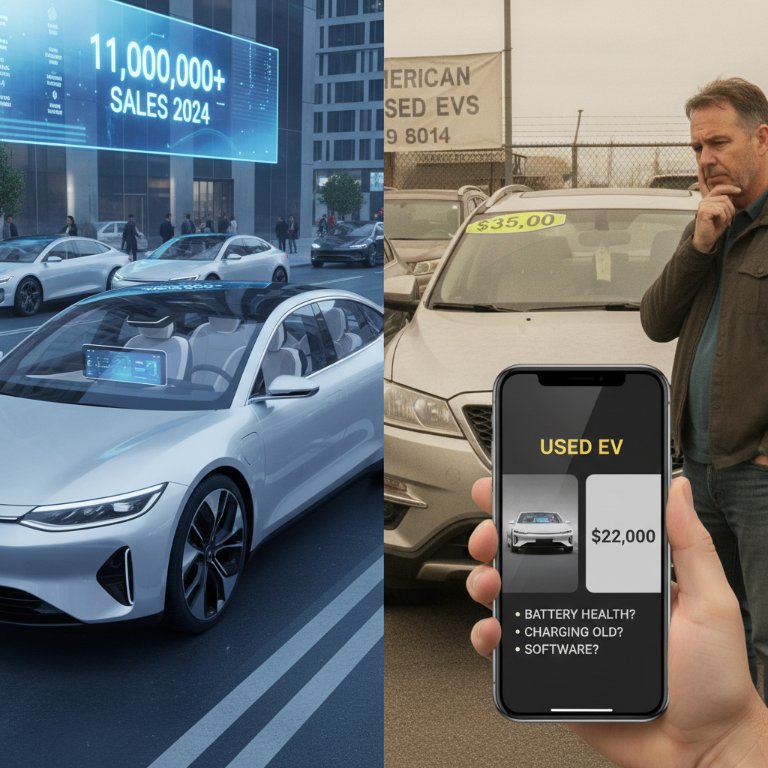
The seismic disparity between the burgeoning electric vehicle markets in China and the United States is poised to fundamentally reshape consumer perceptions and, critically, depress used EV prices across America. While China roared to over 11 million EV sales in 2024, the U.S. managed a comparatively modest 1.6 million units, illustrating a chasm in scale that carries profound implications for the global automotive landscape. This stark contrast in market maturity and volume has ignited an unprecedented 'invisible hand' effect, where the sheer availability of feature-packed, aggressively priced Chinese EVs, visible to American shoppers online, is already eroding the perceived value of older, domestically available used electric vehicles.
The Erosion of Value: Perception Meets Reality
American consumers, ever more connected and informed, are increasingly exposed to the vibrant and competitive Chinese EV market. This digital window into global pricing is creating a direct psychological comparison that U.S. used EV sellers are struggling to counter. The consequence is a growing buyer's reluctance, driven by a confluence of factors:
- Value Proposition: Chinese models frequently offer a superior feature-to-price ratio, making older U.S. used EVs seem disproportionately expensive.
- Depreciation Risk: The rapid pace of innovation and price drops in China fuels fears of accelerating depreciation for current U.S. EV owners.
- Outdated Hardware: Many used U.S. EVs are equipped with older charging hardware, a significant concern as charging infrastructure evolves and charging speeds become a key differentiator.
- Battery Health Uncertainty: Unlike new vehicles, the long-term battery health of used EVs remains a pervasive worry, further exacerbated when cheaper, newer alternatives are just a click away.
- Insurance and Repair Questions: Concerns linger regarding the cost and availability of insurance and specialized repairs for EVs, particularly as models age.
- Software Support: The rapid software advancements in new EVs, especially from Chinese manufacturers, highlight potential obsolescence and lack of future support for older platforms.
Even before Chinese EVs are widely available on U.S. shores – currently held back by significant tariffs – this global pricing visibility acts as a potent market force. The sheer volume and aggressive pricing strategies honed in China's hyper-competitive market are setting a new global benchmark for EV affordability and technology, putting immense pressure on established markets like the U.S. to adapt or face a crisis in residual values.
Why This Matters:
This isn't merely a blip; it's a fundamental recalibration of the EV market that will have lasting repercussions. The impact radiates across multiple segments:
- For U.S. Used EV Owners and Dealers: This trend signals potential pain. Owners face steeper depreciation and lower resale values than anticipated, transforming their 'asset' into a liability more quickly. Dealerships will grapple with sluggish inventory movement and reduced profit margins on used EV stock, needing to adjust pricing strategies drastically to compete with the ghost of Chinese value.
- For U.S. Automakers: The pressure is mounting to innovate faster, cut costs, and offer more compelling value propositions in their new EV lineups. They must consider the global price ceiling effectively being set by Chinese manufacturers. This could mean accelerating the development of more affordable models, improving battery warranties, and enhancing software support for longer vehicle lifespans to counter the 'new-for-less' allure from overseas.
- For U.S. Consumers: In the long run, consumers stand to benefit from more competitive pricing across the board as the U.S. market is forced to respond to global pressures. However, existing used EV owners will bear the brunt of initial depreciation. The widespread desire for more affordable EVs in the US is evident, with many observing the technological advancements and lower prices of Chinese models with frustration.
- Market Signal: This dynamic serves as a stark warning: the EV market is global, and even protectionist tariffs cannot fully insulate a domestic market from international pricing and technological advancements. The speed and scale of the Chinese EV industry are forcing a reckoning for everyone involved in the Western EV ecosystem.
The vast scale of innovation and production in China means they can develop new models in roughly half the time of Western companies, further exacerbating the challenge for legacy automakers.
The Chinese EV market's dominance is creating an undeniable ripple effect, forcing a critical re-evaluation of value and future-proofing in the U.S. used EV sector. While tariffs currently shield the U.S. new car market from direct competition, the psychological impact of readily available, cheaper, and feature-rich Chinese alternatives online is already undeniable. The future of U.S. used EV values hinges on how swiftly the domestic market can adapt to this new global reality, offering compelling reasons for buyers to invest in American-made electric vehicles, both new and pre-owned.