Colorado's EV Market Thrives Amidst National Headwinds, Used EVs Emerge as Key Driver
While the national electric vehicle (EV) market navigates significant turbulence, marked by a sharp decline in new EV registrations, Colorado is chart...
Editorial Team
World Of EV
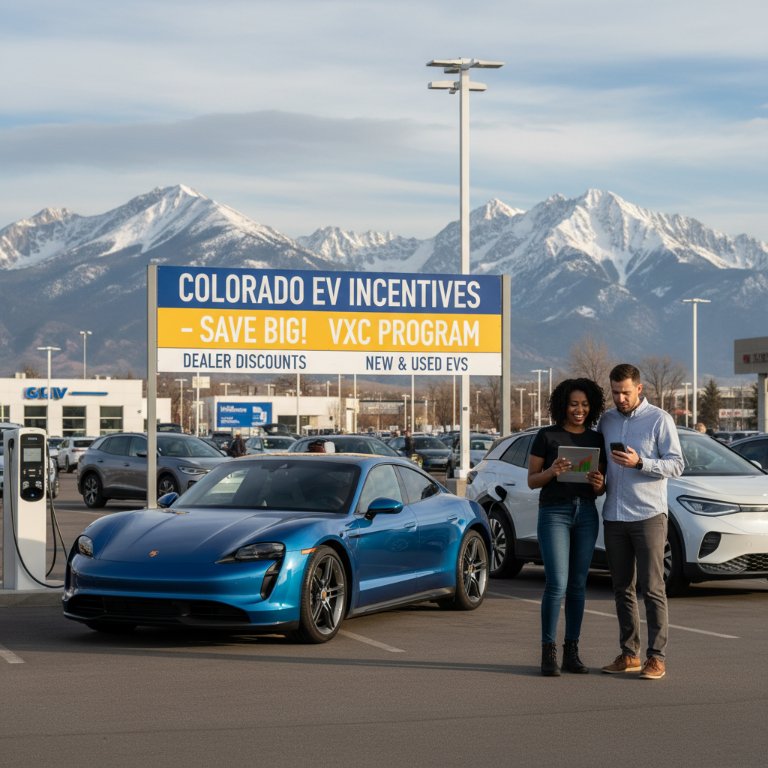
While the national electric vehicle (EV) market navigates significant turbulence, marked by a sharp decline in new EV registrations, Colorado is charting a remarkably different course. This divergence highlights the critical role of robust state incentives and a burgeoning used EV market in sustaining and expanding EV adoption, even as federal support wanes.
Following the elimination of federal subsidies under President Donald Trump, the U.S. has witnessed a dramatic downturn in new EV registrations, plummeting by 64% compared to early 2025. This policy reversal, which scrapped the $7,500 federal tax credit and other mandates, has made new EVs less affordable for many Americans, causing sales to fall precipitously. However, Colorado has emerged as a compelling counter-narrative, with its steadfast commitment to electrification cushioning the blow felt across much of the nation.
Colorado's Incentive Shield and Dealer Drive
Colorado stands out with its exceptionally generous state-level incentives, such as the Vehicle Exchange Colorado (VXC) program. This initiative, while experiencing some budget-driven reductions, remains a powerful force, offering significant rebates for both new and used EVs to income-qualified residents who trade in older, high-emitting vehicles. For instance, eligible Coloradans can receive up to $9,000 for a new EV and up to $6,000 for a used EV through the VXC program. These point-of-sale rebates can be combined with other state tax credits, creating substantial savings for buyers.
Beyond state programs, local dealers are stepping up with their own incentives, further sweetening the deal for prospective EV owners. This multi-pronged approach to affordability is proving crucial in a market where the initial purchase price remains a primary barrier for many consumers. The combined effect of state and dealer incentives effectively mitigates the impact of the lost federal credits, making EV ownership a more attainable reality for a wider demographic.
The Ascendant Used EV Market: A Silver Lining for Affordability
The depreciation concern, a common refrain among early EV adopters, is simultaneously creating an unprecedented opportunity for buyers. While some current owners, like Colorado resident Dave Barnes, express concern over their Volkswagen ID.4's depreciation, this trend is a boon for the used EV market. Janell Bartlett's experience epitomizes this shift; she acquired a used 2021 Porsche Taycan 4S at a significantly reduced price compared to its new equivalent and enjoys stable charging costs, highlighting the immense value proposition in the pre-owned segment.
This dynamic is particularly relevant as the EV market matures. Early adopters, who often pay a premium for cutting-edge technology, typically face steeper depreciation. However, this natural market correction means that well-maintained, relatively new used EVs are becoming increasingly accessible, offering a pathway to premium electric motoring at a fraction of the original cost. The stable charging costs further enhance the long-term financial appeal of these vehicles, distinguishing them from their internal combustion counterparts subject to fluctuating fuel prices.
Why This Matters:
This evolving landscape signals a critical juncture for the broader EV ecosystem. Primarily, it underscores the indispensable role of supportive state policies in driving EV adoption, especially when federal backing falters. States like Colorado, with their robust and innovative incentive programs, are proving to be essential laboratories for sustainable EV market growth. This benefits Colorado residents directly, offering them a clear financial advantage in transitioning to electric mobility.
For consumers nationwide, the rise of the used EV market represents a significant win. It democratizes EV ownership, making high-quality, advanced electric vehicles accessible to a much broader segment of the population who might be priced out of new models. This influx of affordable used EVs could also accelerate the overall energy transition, as more drivers can afford to make the switch.
Conversely, manufacturers who over-relied on federal incentives for their sales strategy in less-supportive states may find themselves at a disadvantage, needing to re-evaluate pricing and market positioning. For early adopters concerned about depreciation, while it's a financial hit on their initial investment, it's also a natural part of a maturing automotive market, not unique to EVs. The market is signaling that sustained growth will rely less on broad federal mandates and more on competitive pricing, diverse offerings (including robust used options), and targeted state-level support.
Colorado's success story offers a vital blueprint: a market where affordability, driven by smart incentives and a healthy used car segment, can thrive even when national political tides turn against electrification. As more EVs enter the secondary market, the accessible entry point for potential buyers will only continue to expand, reshaping the future of electric mobility one state at a time. The imperative for automakers and policymakers now is to understand and adapt to these localized dynamics, fostering an environment where EV adoption can flourish independently of federal largesse.