Cracking the Grid Code: How California Drivers Are Beating Sky-High PG&E Rates with the EV-Solar Trifecta
### **The Golden State’s Electric Crucible** California has long been the primary battleground for America’s electric vehicle transition. Driven by t...
Editorial Team
World Of EV
The Golden State’s Electric Crucible
California has long been the primary battleground for America’s electric vehicle transition. Driven by the state's aggressive Advanced Clean Cars II mandate—which dictates that 100% of new light-duty vehicle sales must be zero-emission by 2035—consumers have adopted EVs at an unprecedented rate. However, this transition is colliding head-on with a brutal economic reality: Californians face some of the nation's highest gasoline prices and skyrocketing electricity rates from utility giants like Pacific Gas and Electric (PG&E).
Rather than backing down, savvy owners are finding innovative ways to outmaneuver the system. Real-world testimonials from a recent Essential California newsletter highlight a shifting paradigm. EV ownership is no longer just about cutting tailpipe emissions; it has become a strategic financial play, transforming the automobile into the ultimate home energy asset.
The Unlikely Champion: The Chevy Bolt’s Enduring Legacy
Among the feedback, one Chevy Bolt owner described the compact hatchback as the "most satisfying physical object" they had ever purchased, praising its whisper-quiet ride and virtually non-existent maintenance costs. This sentiment highlights a critical gap in today's EV market.
When General Motors discontinued the original Bolt EV and EUV platform, they left a massive void in the affordable electric segment. While early models suffered from high-profile battery recall issues, the Bolt ultimately proved that drivers do not need ultra-premium, $80,000 electric supertrucks to enjoy the benefits of electrification. Instead, highly efficient, daily-driver EVs are what truly capture consumer loyalty. Key ownership takeaways include:
- Unmatched Reliability: The elimination of complex internal combustion engine (ICE) components—such as spark plugs, transmissions, and oil filters—translates directly to long-term savings and peace of mind.
- Democratic Efficiency: Small-battery vehicles charge quickly and navigate dense urban environments with ease, serving as the perfect gateway for mainstream adoption.
- The Resale Resilience: High demand for affordable, used EVs is keeping the residual value of legacy models like the Bolt surprisingly robust.
The Zero-Dollar Dream: Navigating the Hurdles of NEM 3.0
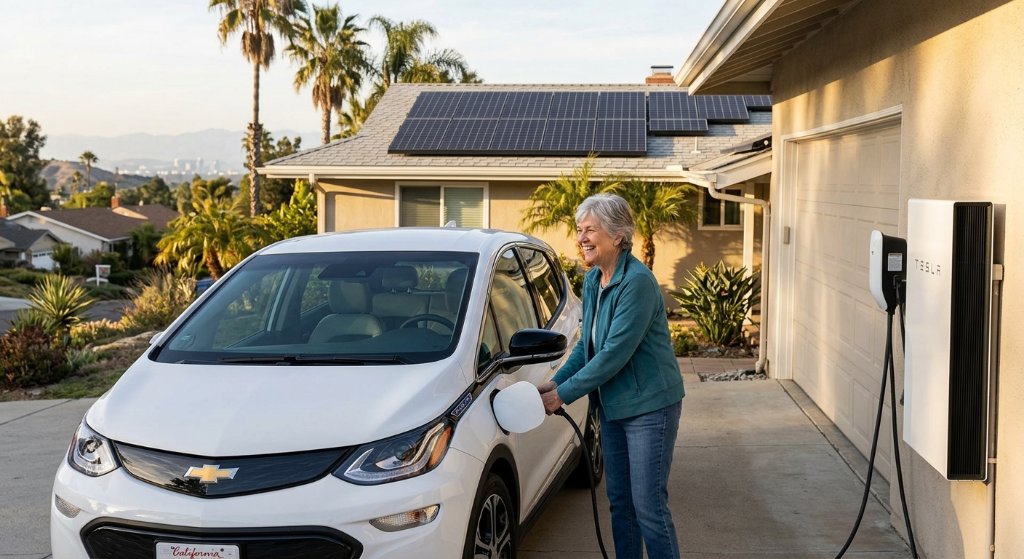
Perhaps the most compelling testimonial came from an owner who paired their EV with rooftop solar and home battery storage, successfully dropping their monthly PG&E utility bill to zero. While this sounds like a dream, it is actually a highly calculated defense mechanism against California’s controversial NEM 3.0 (Net Energy Metering) rules.
Under NEM 3.0, the credit that homeowners receive for exporting excess solar energy back to the grid has been slashed by roughly 75%. This policy shift effectively killed the financial incentive of solar-only setups. However, by adding a home battery and an EV to the mix, consumers can bypass the grid entirely. Here is how this self-sustaining energy ecosystem works:
- Off-Grid Self-Consumption: Rooftop solar panels generate electricity during peak daylight hours, storing excess energy into a home battery storage system (such as a Tesla Powerwall or Enphase 5P) rather than exporting it back to PG&E.
- Smart-Charging During Surplus: The EV is programmed to charge strictly during peak solar production hours, effectively acting as a secondary, mobile battery bank.
- Peak-Load Shaving: During expensive "peak demand" evening hours (typically 4:00 PM to 9:00 PM), the home runs entirely on stored battery power, avoiding exorbitant tier rates.
Why This Matters:
This real-world shift signals a profound evolution in how we view automobiles. The EV is transitioning from a standalone mode of transportation into a crucial decentralized node of the home energy ecosystem.
- Who Wins: Homeowners with the upfront capital to invest in the "Clean Energy Trifecta" (EV + Solar + Storage). These consumers successfully insulate themselves from both fluctuating oil markets and predatory utility pricing. Furthermore, automakers with dedicated home energy divisions—such as Tesla (via Tesla Energy) and GM (via GM Energy)—are positioned to capture immense market share by selling integrated ecosystems, rather than just cars.
- Who Loses: Traditional utility monopolies, who are seeing their most affluent customers pull demand off the grid. Additionally, low-to-middle-income renters and families who cannot afford the steep upfront costs of solar and battery installations face a growing "green divide." As wealthier homeowners defect from the grid, utility companies are likely to raise rates on remaining grid-dependent customers to cover infrastructure costs.
- What's Next for the Industry: This trend underscores the absolute necessity of bidirectional charging capabilities (Vehicle-to-Home or V2H). If an EV can power a house during a blackout or high-rate period, the financial argument for buying an EV becomes undeniable. Automakers who fail to standardize bidirectional charging in their entry-level vehicles will risk irrelevance.
The Road Ahead
The lessons from California’s early adopters are clear: the true value of an EV is unlocked when it is treated as an integrated component of a broader energy strategy. As utility grids face unprecedented strain and gas prices remain volatile, the combination of an affordable EV and home energy storage is no longer just a premium luxury—it is the blueprint for financial independence on the road and at home.