Cracking the Range Code: Why Veteran Hacks and the '20% Rule' Are Saving Used Nissan Leaf Buyers
When a first-time owner of a used 2016 Nissan Leaf took to an online forum to ask the terrifying question—"What happens when I actually run out of cha...
Editorial Team
World Of EV
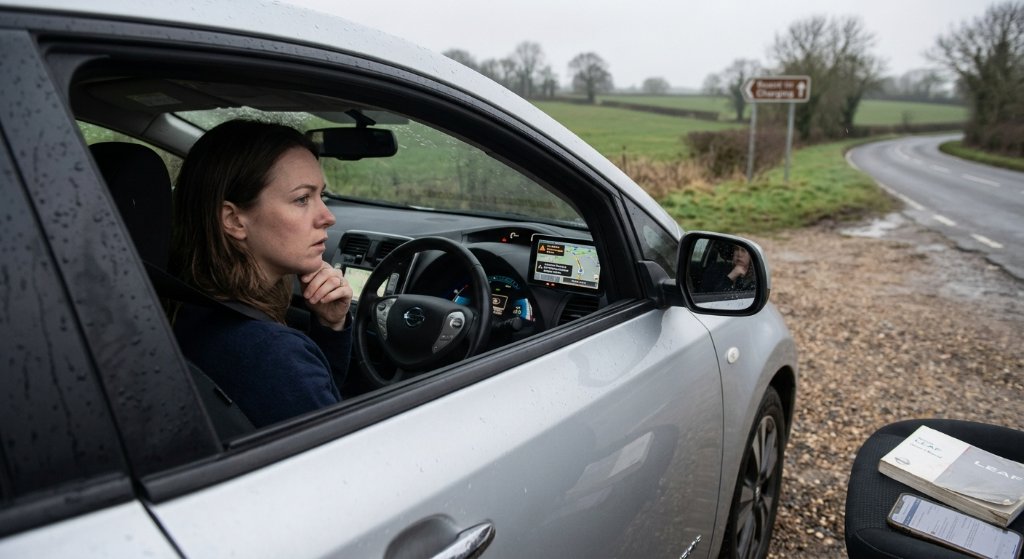
When a first-time owner of a used 2016 Nissan Leaf took to an online forum to ask the terrifying question—"What happens when I actually run out of charge?"—it triggered a massive, community-driven masterclass in EV survival. For buyers entering the electric vehicle market at a budget-friendly price point, range anxiety isn't just a psychological hurdle; it is an active logistical challenge.
While modern EVs like the Tesla Model 3 or Hyundai Ioniq 6 effortlessly cruise past 300 miles of range, first-generation EVs, particularly the Nissan Leaf, are a different breed. Armed with aging batteries and a complete lack of active thermal management, these pioneer vehicles have entered a second life on the used market, introducing a brand-new generation of owners to the quirks of early battery technology.
The Brutal Reality of First-Gen Leaf Batteries
To understand why this forum discussion became so crucial, one must understand the hardware. The 2016 Nissan Leaf was offered with either a 24 kWh or a 30 kWh battery pack. Crucially, Nissan chose a passive, air-cooled thermal management system rather than the active liquid-cooling used by modern EV leaders. Over the last decade, this lack of temperature regulation has caused significant battery degradation, especially in warmer climates. Today, a used 2016 Leaf that originally claimed 84 to 107 miles of range may only deliver 40 to 60 miles on a full charge, making range management a daily math problem.
The EV Community's Survival Guide: Inside the 'Quarter-Tank' Rule
To combat this shrinking margin of error, seasoned EV owners have developed a practical playbook designed to keep first-time buyers off the back of a flatbed tow truck. The core strategies shared in the forum include:
- The 20% Rule (The New 'Empty'): Just as gas car drivers treat a quarter-tank as the cue to refuel, veteran Leaf owners advise treating 20% State of Charge (SoC) as absolute zero. Once the battery hits 20%, it is time to head straight to a charger, leaving a safety buffer for unexpected detours, heavy headwinds, or cabin heating.
- Dynamic Navigation Rerouting: Many built-in EV navigation systems—as well as third-party routing tools like A Better Routeplanner (ABRP)—dynamically monitor energy depletion. If you are consuming power faster than anticipated, the system will automatically calculate your trajectory and reroute you to an active, nearby charging station before you get stranded.
- The Safety Net of 'Turtle Mode': If a driver does push the vehicle to its absolute limit, the Leaf doesn't simply die. It enters "Turtle Mode"—a highly restricted, low-power state indicated by a turtle icon on the dashboard. This limits the car to neighborhood speeds, giving the driver a final, crucial half-mile to safely pull off the road or crawl to a nearby plug.
Why This Matters:
This viral exchange highlights a critical phase in the electric vehicle transition: the democratization of used EVs. As first-generation electric cars depreciate to sub-$10,000 prices, they become highly attractive to students, low-income households, and city commuters. However, this market is a minefield for the uninitiated.
- Who Wins: Dedicated software providers and aftermarket battery specialists. Tools like LeafSpy (which reads battery health via OBD-II) are becoming essential gear for used buyers. This also benefits local commuters who can snag an incredibly cheap second vehicle, provided they understand its limitations.
- Who Loses: Automakers who failed to future-proof their early battery designs. The degradation issues of the air-cooled Leaf, combined with the rapid obsolescence of its CHAdeMO fast-charging standard, serve as a cautionary tale. It emphasizes that liquid cooling and standardized charging ports (like the North American Charging Standard, NACS) are non-negotiable for vehicle longevity.
- The Market Signal: This community-driven problem-solving signals that the used EV market is maturing from a niche hobby into a mainstream necessity. For EVs to truly replace internal combustion engine (ICE) cars, the industry cannot just focus on 300-mile, $50,000 new vehicles. It must support, educate, and build infrastructure for the second- and third-hand owners driving older, degraded hardware.
Ultimately, running out of charge in a used EV is not the catastrophic, bricking event that many skeptics claim. Thanks to smart vehicle programming like "Turtle Mode" and the collective wisdom of seasoned EV veterans, budget buyers can confidently drive older electric cars. As the market transitions, the community's "20% rule" stands as a vital bridge, keeping early EV history alive and on the road.