Cybertruck's Wheel Woes: Tesla Recalls 173 Units as Quality Concerns Persist for Flagship EV
The highly anticipated, and often scrutinized, Tesla Cybertruck faces another significant safety recall, with 173 units manufactured between March 21,...
Editorial Team
World Of EV
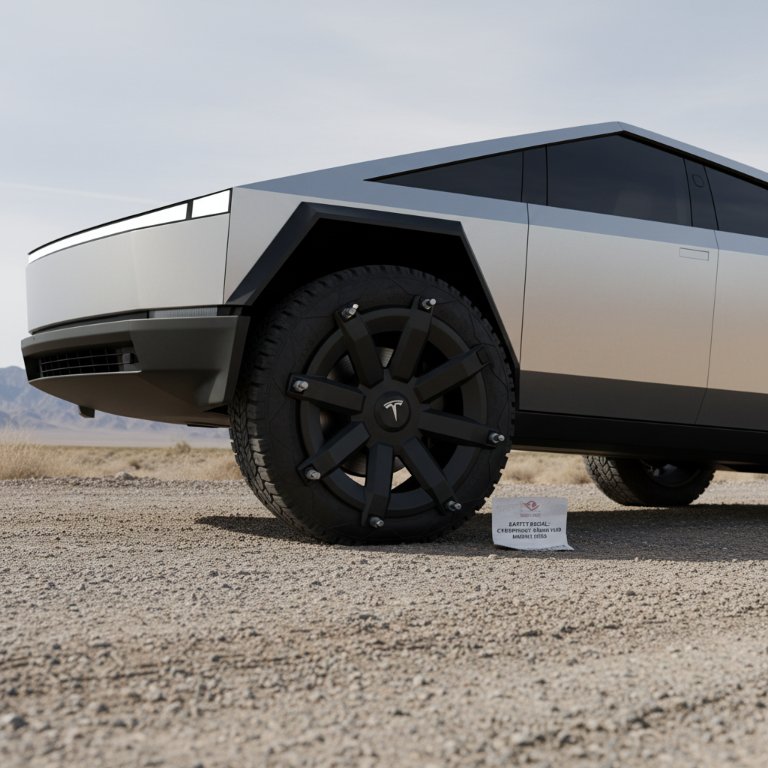
The highly anticipated, and often scrutinized, Tesla Cybertruck faces another significant safety recall, with 173 units manufactured between March 21, 2024, and November 25, 2025, being called back to address a critical flaw. This latest setback for Tesla's avant-garde electric pickup truck concerns the potential for wheel stud separation from the hub, a defect that could lead to a catastrophic loss of vehicle control and an increased risk of a crash. Tesla has committed to replacing the affected wheel hubs and rotors at no charge, with owner notification letters slated for early July 2026.
This isn't the Cybertruck's first encounter with quality challenges. Since its unveiling, and particularly since initial deliveries began in late 2023, the vehicle has been plagued by a series of issues ranging from misaligned body panels and an accelerator pedal defect to problems with exterior trim and even windshield wipers. These persistent quality control concerns, including multiple recalls, cast a shadow over Tesla's manufacturing prowess, especially for a vehicle positioned as a revolutionary statement in the automotive world.
The Critical Design Flaw Unveiled
The National Highway Traffic Safety Administration (NHTSA) report highlights that rough roads and hard cornering can exert undue stress on the brake rotor's stud holes, causing cracks to form. Over time and with continued driving, these cracks can lead to the outright separation of the wheel stud from the hub. This means, quite literally, that a wheel could detach from the vehicle while in motion, posing an extreme danger to occupants and other road users. Drivers might experience early warning signs such as vibration or unusual noises. The recall specifically targets Cybertrucks equipped with 18-inch steel wheels.
Tesla's Proactive (Yet Problematic) Response
While Tesla is moving to rectify the issue by replacing the entire front and rear brake rotors, hubs, and lug nuts on affected vehicles, the recurring nature of these problems is alarming. It suggests that the rigorous testing and validation processes typically associated with new vehicle launches, particularly for a radical design like the Cybertruck's stainless steel exoskeleton, may have been insufficient or compressed. The recall, identified as SB-26-33-003, underscores the complexity of bringing such an ambitious design to mass production reliably.
Why This Matters:
For Current and Prospective Owners: The primary concern is safety. The potential for a wheel to detach at speed is a terrifying prospect that erodes confidence in the vehicle's fundamental reliability. For those who paid a premium for an 'indestructible' truck, these ongoing quality issues are deeply frustrating and could lead to buyer's remorse and a reluctance from future buyers to commit to such an early-stage product.
For Tesla's Brand Reputation: Tesla has historically faced criticism regarding fit-and-finish and quality control across its lineup. The Cybertruck, intended to be a halo product showcasing Tesla's innovation, instead amplifies these long-standing concerns. Each recall, especially one involving such a severe safety risk, dents the company's image and raises questions about its manufacturing maturity. This could further impact Cybertruck sales, which have already fallen short of initial projections.
For the EV Industry: As a leader in the EV space, Tesla's struggles with fundamental quality control can reflect poorly on the entire electric vehicle market. It highlights the challenges of pioneering new designs and manufacturing techniques, emphasizing the need for robust validation before market release. Competitors will undoubtedly leverage these issues to highlight their own established manufacturing processes and reliability.
Looking Ahead: A Call for Production Maturity
While this recall affects a relatively small number of vehicles, its severity and the context of previous Cybertruck issues make it more than a minor blip. Tesla must demonstrate an unwavering commitment to quality and safety, not just through swift recall actions, but by reinforcing its design and manufacturing processes to prevent such critical flaws from reaching customers in the first place. The Cybertruck's journey from concept to reliable production vehicle continues to be a challenging test for Tesla's engineering and quality assurance teams, and the market is watching closely.