E
World Of EVEditorial
News 49 mins ago
Data Explodes the EV Reliability Myth: Giant 47-Million Vehicle Study Shows Electric Cars Outlast Petrol at High Mileage
For years, EV detractors have warned of a looming "scrapheap crisis," claiming that aging electric vehicles would become costly paperweights once thei...
E
Editorial Team
World Of EV
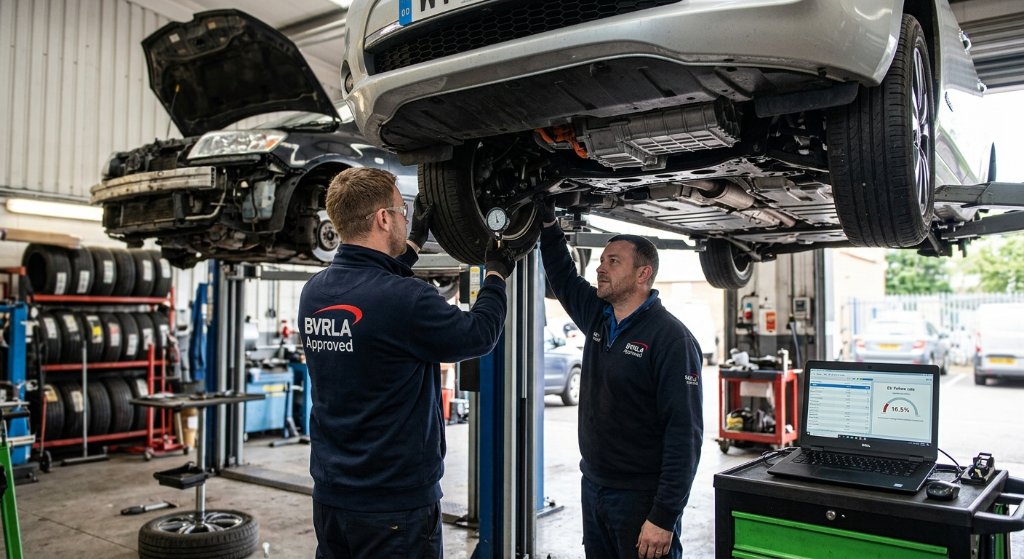
For years, EV detractors have warned of a looming "scrapheap crisis," claiming that aging electric vehicles would become costly paperweights once their odometers climbed. This fear-mongering has severely damaged residual values and kept cautious buyers on the sidelines. Now, a massive new study has completely shattered this narrative, proving with empirical data what EV advocates have long suspected: as the miles rack up, electric cars are fundamentally more durable than their fossil-fueled counterparts.
Historically, EV adoption has been hampered by deep-seated anxiety over long-term reliability—a hangover from the early days of first-generation Nissan Leafs and compliance cars with primitive thermal management. Today, fleet operators and private buyers demand proof of longevity. This comprehensive analysis of millions of real-world roadworthiness tests provides exactly that, fundamentally shifting the conversation around EV ownership costs.
### The Hard Data: How EVs Plateaued While ICE Spikes
Commissioned by the British Vehicle Rental and Leasing Association (BVRLA) and conducted by New AutoMotive, the study analyzed over 47 million statutory MOT roadworthiness tests completed in Great Britain [source]. The sheer scale of the dataset eliminates statistical noise, delivering a definitive look at how drivetrains age.
While initial failure rates for vehicles under 100,000 kilometers (~62,000 miles) are virtually identical between electric and petrol cars, a stark divergence occurs as vehicles enter high-mileage territory [source]. Between 145,000 km and 193,000 km (approximately 90,000 to 120,000 miles), the mechanical complexity of internal combustion engines (ICE) catches up with them [source].
Key performance takeaways from the mileage data include:
* **High-Mileage Resilience:** At high mileages, petrol vehicle MOT failure rates climb to 22.1%, driven by the degradation of thousands of moving parts [source].
* **The EV Plateau:** In contrast, EV failure rates level off at just 16.5%, showcasing the inherent reliability of simplified electric drivetrains [source].
* **Fewer Failure Points:** By eliminating traditional wear items like alternators, starters, exhaust systems, catalytic converters, and complex multi-gear transmissions, EVs bypass the typical failure vectors that plague aging petrol cars [source].
### The Achilles' Heel: The EV Tire Wear Penalty
It is not all smooth sailing for electric vehicles, however. The study highlighted a glaring trade-off of EV ownership: rapid tire degradation. The data reveals that electric vehicles wear through their tires 1.8 times faster than equivalent petrol vehicles [source].
This rapid wear is the direct result of two physical realities of modern EVs: massive battery pack weight (often adding 300 to 500 kg compared to a petrol equivalent) and the instantaneous, high-torque delivery of electric motors.
Key tire wear dynamics include:
* **The Weight Tax:** Heavy vehicles exert massive lateral and vertical forces on tire sidewalls during cornering and braking.
* **Instant Torque Friction:** Unlike ICE cars that build power progressively, EVs deliver maximum torque from zero RPM, micro-slipping the tires and accelerating tread wear.
* **Shift in Maintenance Budgets:** While EV owners largely escape costly engine repairs and brake pad replacements (thanks to regenerative braking), they must reallocate those savings toward premium, EV-specific rubber.
### Why This Matters:
This study represents a monumental shift for the automotive industry, carrying profound implications for buyers, fleets, and legacy manufacturers:
* **The Used EV Market Wins Big:** Residual value anxiety has plagued the EV market, causing steep depreciation. This data provides the concrete reassurance used-car buyers need. Knowing a high-mileage EV is statistically less likely to fail a roadworthiness test than a petrol car will help stabilize used EV prices and boost consumer confidence.
* **Fleet Operators Secure a Victory:** For leasing giants and fleet managers—who manage vehicles driving hundreds of thousands of miles—this data justifies longer leasing lifecycles. Lower failure rates translate directly to less downtime and lower total cost of ownership (TCO), making a bulletproof business case for fleet electrification.
* **The Tire Industry Strikes Gold:** Tire manufacturers are the undisputed secondary winners here. This study underscores a massive, highly lucrative market for specialized EV tires. Brands like Michelin, Pirelli, and Goodyear that design tires to withstand high weight and torque while offering long treadwear life will capture a highly lucrative recurring revenue stream.
* **A Wake-Up Call for Legacy OEMs:** Automakers still hedging their bets with complex plug-in hybrids (PHEVs) or multi-energy platforms are on notice. The mechanical simplicity of dedicated "skateboard" EV platforms is a superior engineering solution for long-term durability. Companies failing to transition fully to pure EVs will struggle to compete on lifetime reliability.
### Looking Ahead
This landmark study replaces subjective anxiety with hard, empirical proof: when it comes to going the distance, simplicity wins. While the tire wear penalty is a real cost that buyers must factor into their budgets, the dramatic reduction in high-mileage mechanical failures positions EVs as the undisputed champions of long-term durability. As the global car park transitions, these findings will redefine our understanding of vehicle longevity and accelerate the demise of the internal combustion engine.