Defying the Headlines: Why 94% of EV Owners Vow to Never Return to Gas
Defying the headlines of an 'EV slump' and navigating a market stripped of federal consumer tax credits, electric vehicle drivers are sending an unmis...
Editorial Team
World Of EV
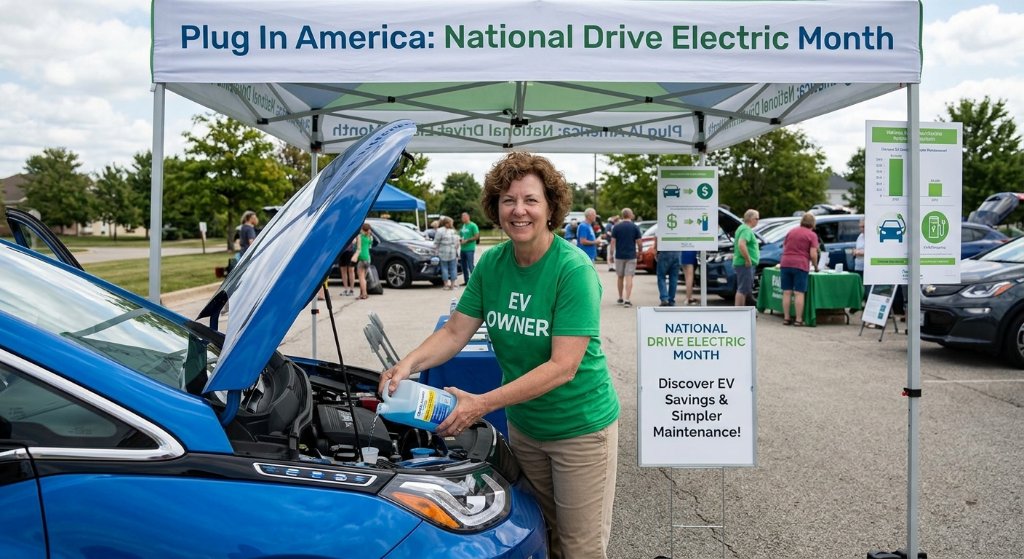
Defying the headlines of an 'EV slump' and navigating a market stripped of federal consumer tax credits, electric vehicle drivers are sending an unmistakable message: they are never going back to gas. As Plug In America kicks off its annual National Drive Electric Month (NDEM) from September 11 to October 12, 2026, the organization's latest national survey reveals an astonishing 94.3% of EV owners plan to stay electric for their next vehicle purchase.
This surging loyalty—up from 91.8% in 2025—comes at a critical inflection point. Legacy automakers have spent the last year scaling back their electrification plans, spooked by high interest rates and the expiration of federal purchase incentives. Yet, the raw data from those who actually live with EVs reveals a massive disconnect between media panic and real-world owner satisfaction.
Defying the Noise: The Reality of EV Ownership
National Drive Electric Month, which features local ride-and-drives and educational workshops across the country, is designed to pierce through mainstream myths. This year, the grassroots push is backed by Plug In America's sixth annual EV Driver Survey—a robust poll of over 4,200 respondents, including 3,809 active EV owners. Conducted after federal EV tax credits vanished, the survey proves that EV adoption is no longer driven merely by government subsidies; it is driven by a fundamentally superior product.
The survey highlights several key trends driving this unprecedented loyalty:
- The Experience Advantage: Over 90% of drivers report that EVs are more fun to drive, quieter, and offer a vastly superior daily experience compared to internal combustion engine (ICE) vehicles.
- The Economic Reality: Nearly 95% of owners state their EV is cheaper to fuel and simpler to maintain. With 91% confirming direct financial savings, the volatile nature of gasoline prices has become a relic of the past for these drivers.
- The 'FUD' Dissolves with Experience: The survey exposes a dramatic shift in perception before and after EV purchase. Range anxiety plummets from a pre-purchase concern of 70.1% to just 27.5% once a driver lives with the car. Similarly, concerns about vehicle pricing drop from 43.8% to 8.6%, and worries about home charging access virtually disappear, falling from 27.6% to a mere 4.3%.
- The Preferred Vehicle: In households that own both an EV and a gasoline-powered car, the EV is chosen for daily driving duties 75% of the time.
Why This Matters:
This data represents a major wake-up call for the entire automotive industry, carrying heavy implications for legacy brands, EV startups, and the wider market.
- The Real Winners (Pure-Play EV Makers): Brands like Tesla, Rivian, and Hyundai/Kia (which have remained deeply committed to dedicated EV platforms) are poised to capture a lifetime of customer loyalty. A 94.3% retention rate means that once a buyer crosses the electric threshold, they are permanently removed from the ICE market. Pure-play EV makers are effectively building an impenetrable moat.
- The Big Losers (The Foot-Draggers): Legacy giants like Toyota, Ford, and GM, who have recently hedged their bets by delaying EV platforms or pivoting heavily back to hybrids, are playing a dangerous short-term game. While hybrids may offer a temporary sales cushion today, these automakers risk losing long-term customer acquisition. By failing to transition buyers to full battery-electric vehicles (BEVs) now, they are handing their future customer base to more aggressive rivals on a silver platter.
- The Myth of the 'EV Slowdown': This data proves that the widely reported 'EV slowdown' is not a demand problem—it is an education and infrastructure problem. The moment a consumer gets behind the wheel and experiences the seamless torque, silent cabin, and home-charging convenience, the psychological barriers (FUD) created by negative press melt away.
Conclusion
As National Drive Electric Month events launch nationwide this week, the narrative is shifting from 'Are EVs ready for prime time?' to 'How quickly can legacy carmakers catch up?' The 94.3% retention rate is a statistical stamp of approval that cannot be ignored. For prospective buyers still on the fence, the message from current owners is loud and clear: the water is warm, the savings are real, and there is no looking back.