Ditch CarPlay and Android Auto: Renault’s Direct Google Account Hack Unlocks True openR Link Potential
For years, legacy automakers stumbled blindly through the dark when it came to in-car software. Renault was no exception; its older, laggy R-Link and ...
Editorial Team
World Of EV
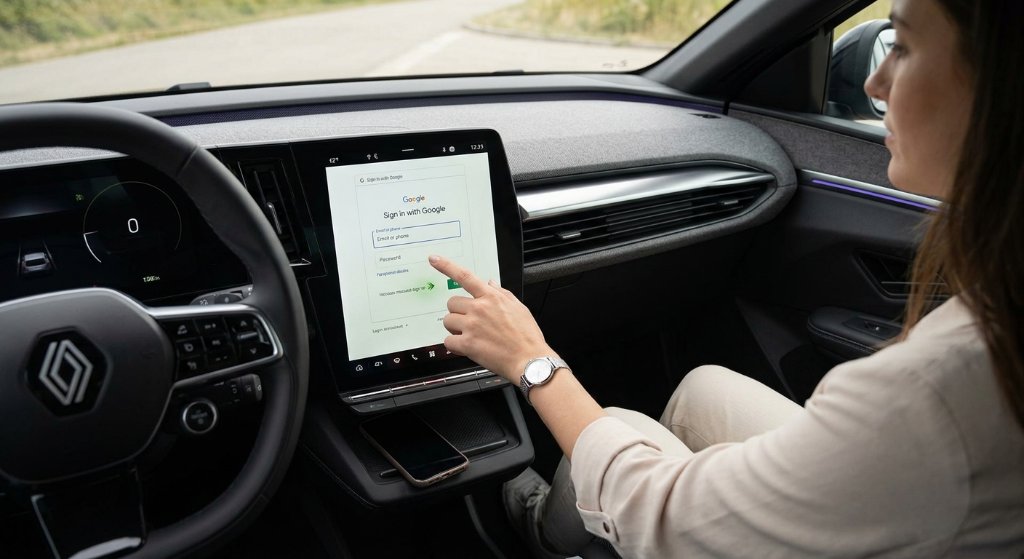
For years, legacy automakers stumbled blindly through the dark when it came to in-car software. Renault was no exception; its older, laggy R-Link and Easy Link infotainment systems were notoriously clunky, driving frustrated owners straight into the arms of Apple CarPlay and Android Auto. However, with its latest pivot to the Android Automotive-powered openR link system—now standard in its new-generation EVs like the Megane E-Tech, Scenic E-Tech, and Renault 5—the French automaker has staged a massive software comeback.
Now, Renault UK’s EV Product Manager, Amy Williams, has revealed a simple yet highly effective "tech hack" that completely changes how drivers interact with their vehicles on daily commutes. By bypassing smartphone mirroring entirely and logging directly into a Google account via the car's native openR link system, owners can finally experience the seamless, lag-free digital cockpit they were promised.
Why Native Beats Phone Mirroring
While wireless Apple CarPlay and Android Auto have become default safety blankets for modern drivers, they remain inherently limited. They rely on local Wi-Fi and Bluetooth handshakes that are prone to interference, leading to mid-commute disconnects and annoying input lag. By signing directly into your Google account on the openR link system, you bypass the middleman. The car runs the applications natively, utilizing its onboard telematics and hardware to deliver a far superior experience.
Key benefits of direct Google integration on Renault's openR link include:
- Zero-Lag Navigation: Enjoy high-resolution map rendering and instant route calculations without the stuttering and positioning delay common in phone mirroring.
- Automatic Updates: Built-in apps (such as Google Maps, Spotify, and Waze) update seamlessly over-the-air (OTA) in the background.
- Personalized Shortcuts: Get instant access to your saved home/work addresses, search history, and favorite media playlists directly on the home screen.
- Deeper EV Integration: Native Google Maps communicates directly with the vehicle's battery management system to optimize charging stops and pre-condition the battery for fast charging.
Ditching the Pairing Headache
The openR link system—which is rapidly evolving and even gaining Google's Gemini AI assistant in newer models like the Scenic E-Tech—is designed to be a standalone ecosystem. Williams points out that relying on a paired smartphone acts as a performance bottleneck.
Native integration allows the vehicle's high-fidelity screens to operate at their native resolutions and refresh rates. Furthermore, it completely eliminates the battery-draining heat, excessive data usage, and connectivity dropouts that plague wireless mirroring on hot days or during long drives.
Why This Matters:
This tech hack highlights a major tectonic shift in the automotive industry: the war between native operating systems and smartphone mirroring. For years, automakers ceded control of the dashboard to Apple and Google because their own proprietary software was abysmal. By adopting Google built-in (Android Automotive OS) and encouraging users to log in directly, Renault is reclaiming the dashboard while still giving users the Google ecosystem they already love.
This is a win-win scenario. For Renault, native sign-in keeps drivers within the vehicle’s ecosystem, enabling advanced EV route planning and battery pre-conditioning that smartphone apps simply cannot calculate without direct access to vehicle telematics. For the consumer, it signals the end of the clunky "phone-pairing dance" every time they start the car.
It also places immense pressure on competitors like Volkswagen and Toyota, who have historically resisted Google's operating system in favor of proprietary software platforms that continue to frustrate buyers. If legacy OEMs want to compete with Tesla's slick, phone-free infotainment, Renault's native Google strategy is the ultimate blueprint.
Conclusion
The recommendation to ditch smartphone mirroring in favor of native Google sign-in proves that Renault is no longer just building electric cars; they are designing holistic digital experiences. As EVs transition from simple transportation to software-defined mobile devices, leveraging native hardware will separate the industry leaders from the laggards. For Renault owners, the path to a frustration-free commute is now as simple as typing in a password.