Ditching the PHEV Trap: Why This 4-Year Genesis GV70 Electrified Review Is a Wake-Up Call for Luxury EV Buyers
For years, mainstream legacy automakers have pushed plug-in hybrids (PHEVs) as the ultimate "best of both worlds" bridge to electrification. But as re...
Editorial Team
World Of EV
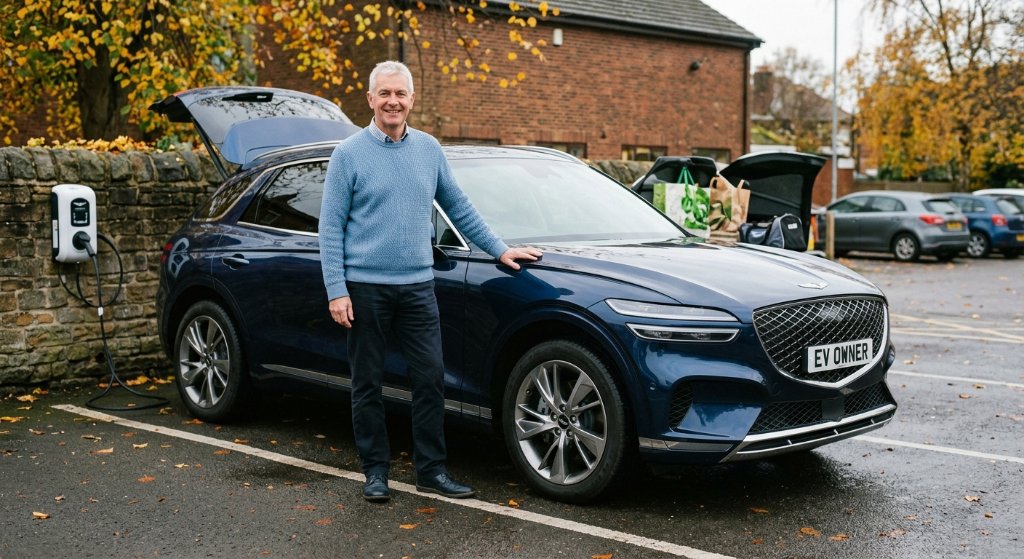
For years, mainstream legacy automakers have pushed plug-in hybrids (PHEVs) as the ultimate "best of both worlds" bridge to electrification. But as real-world, long-term EV ownership data rolls in, savvy buyers are realizing that dual-powertrain systems carry a major hidden cost: double the complexity and double the maintenance. When long-term electric vehicle owner and retired civil engineer David Ball decided to trade in his trusty Mazda 6 wagon, he deliberately bypassed the PHEV market for a fully battery-electric vehicle (BEV)—a move that has paid massive dividends over his four-year, 44,000-kilometer journey in a Genesis GV70 Electrified.
This real-world testimonial sheds light on a broader industry shift. Genesis, Hyundai Motor Group's premium luxury arm, has quietly established itself as a formidable force in the luxury EV segment. While rivals like Lexus and Infiniti stumbled with half-hearted electrification attempts, Genesis bypassed the slow ramp-up, leveraging Hyundai's highly acclaimed 800-volt charging architecture. For buyers like Ball, who prioritize build quality, reliability, and tactile utility over Tesla's ultra-minimalist interior design, the GV70 Electrified has emerged as the premium sweet spot.
The Hidden Maintenance Trap: BEV vs. PHEV
When Ball and his wife began shopping for an electric vehicle, the temptation to buy a plug-in hybrid was real. However, his background as an engineer led him to a crucial realization: owning a PHEV means maintaining both an internal combustion engine (ICE) and a high-voltage battery-electric powertrain. Instead of easing the transition, a hybrid setup introduces twice the failure points, requiring regular oil changes, spark plug replacements, and transmission services on top of monitoring battery health. Choosing the fully electric GV70 eliminated those legacy ICE headaches entirely. Over four years and 44,000 kilometers of road trips and camping excursions, Ball’s maintenance has been virtually non-existent, highlighting the sheer mechanical simplicity of a dedicated electric drivetrain.
Where Premium Comfort Beats Tesla's Minimalism
The luxury EV landscape is often dominated by the Tesla Model Y, but for many traditional premium buyers, Tesla's hyper-minimalist aesthetic and cost-cutting measures are a dealbreaker. Ball investigated the Model Y Long Range three separate times but ultimately walked away.
- The Tactile Advantage: The GV70 Electrified features a conventional, beautifully crafted dashboard layout complete with high-quality physical buttons and tactile dials—a sharp contrast to Tesla's single-screen control scheme.
- Cabin Ergonomics and Materials: Tesla’s synthetic "vegan leather" seats and panoramic glass roof (which lacks a physical sunblind) failed to impress, whereas the Genesis offered unmatched comfort and better-fitting seat belts.
- Real-World Utility: Before signing the contract, Ball had the Genesis dealership bring the GV70 to his home for a "dress rehearsal" to ensure their extensive camping gear, suitcases, and boxes fit perfectly in the ample boot—a test it passed with flying colors.
- White-Glove Ownership: Genesis’s five-year complimentary concierge service, which includes picking up the vehicle from the owner’s home for scheduled servicing and leaving a loaner behind, redefined the premium ownership experience for Ball.
The Performance and Charging Reality
Unlike its stablemate, the GV60, which rides on the dedicated E-GMP electric platform, the GV70 Electrified is built on a highly modified multi-fuel platform. Despite this, it compromises very little.
- Dual-Motor Dynamics: Packing a robust dual-motor system that produces up to 429 horsepower (and a temporary 483 hp in Boost Mode), the GV70 Electrified delivers sports-car-like acceleration and composed, sure-footed road handling.
- 800V Ultra-Fast Charging: Thanks to its high-voltage architecture, the GV70 can charge from 10% to 80% in just 18 minutes on a 350 kW DC fast charger. This blistering speed offsets its modest EPA-estimated range of 236 miles (approx. 380 km), allowing for rapid turnaround times during long highway stints.
Why This Matters:
This four-year ownership case study highlights a critical inflection point in the EV transition. First, it blows up the industry-promoted narrative that PHEVs are a "safer" stepping stone for skeptical buyers. As consumers become more educated, the realization that PHEVs carry "twice the maintenance" will drive more premium buyers directly to pure BEVs.
Second, it underscores a major vulnerability for Tesla. While Tesla dominates the volume market, its stark, cost-effective interiors are alienating a massive demographic of older, wealthier buyers who demand traditional luxury cues: tactile controls, quiet cabins, and premium dealer service. By filling this vacuum, Genesis is winning over high-net-worth customers who are willing to pay a premium—such as the A$138,000 Ball shelled out—for a superior physical experience.
Lastly, this is a clear win for Hyundai Motor Group. By proving that a converted multi-fuel platform like the GV70 Electrified can deliver top-tier reliability, comfort, and ultra-fast charging over a four-year period, they have established deep trust. For legacy automakers like Toyota and Subaru, who are still lagging behind in pure BEV reliability and range, Genesis's success is a warning shot: the luxury market is moving fast, and those who rely on hybrid stopgaps will eventually lose their most profitable customers.
David Ball’s four-year journey with the Genesis GV70 Electrified demonstrates that going fully electric doesn't require sacrificing traditional luxury or risking unproven reliability. By choosing a BEV over a complex hybrid, he avoided unnecessary maintenance while enjoying a highly capable road-tripper backed by superb dealership support. As Genesis rolls out its refreshed models with larger battery capacities and updated tech, the brand is poised to remain a dominant disruptor in the premium EV landscape, proving that thoughtful engineering and traditional luxury values can outshine tech-first minimalism.