Ditching the Pump: Why the Battle for EV Adoption Is Won in the Driveway, Not the Fast-Charger
As legacy automakers flood the market with mainstream electric vehicles like the Chevrolet Equinox EV and Blazer EV, the biggest roadblock to widespre...
Editorial Team
World Of EV
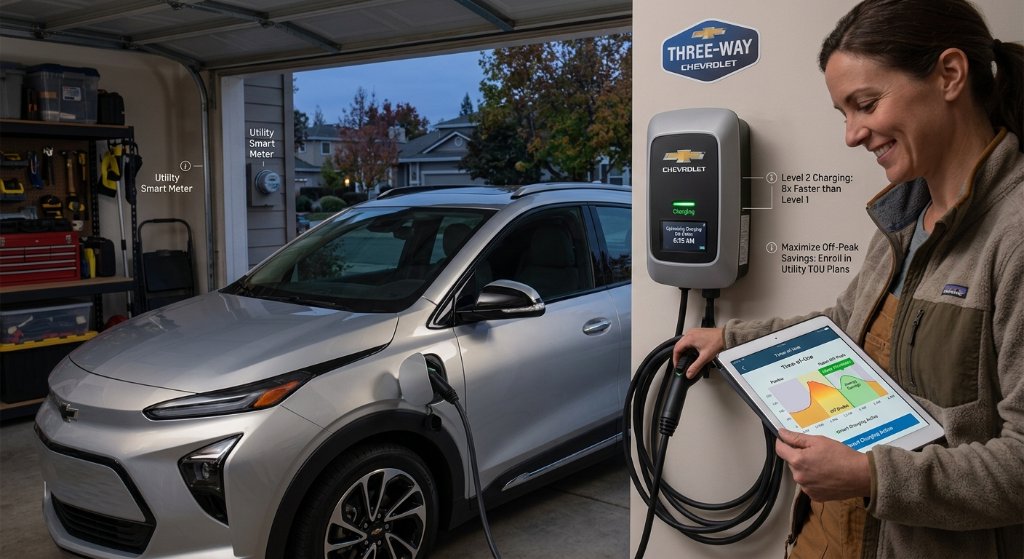
As legacy automakers flood the market with mainstream electric vehicles like the Chevrolet Equinox EV and Blazer EV, the biggest roadblock to widespread adoption isn’t vehicle range—it’s charging literacy. For years, the industry focused on building out expensive, high-voltage public charging networks to mimic the gas station experience. However, a recent masterclass in consumer education from California-based Three-Way Chevrolet highlights a crucial shift in perspective: the true magic of EV ownership happens silently in the driveway while you sleep.
By shifting the conversation from "how fast can I charge on the road?" to "how seamlessly can I charge at home?", dealers are tackling the ultimate psychological barrier for ICE (internal combustion engine) converts. The math and mechanics of home charging are surprisingly simple, yet they represent a massive paradigm shift in how we power our daily commutes.
The Level 2 Standard: Redefining the Daily 'Refueling' Routine
The foundation of a frictionless EV lifestyle is the transition from Level 1 "trickle" charging (using a standard 120V household outlet) to a dedicated Level 2 setup. Operating on a 240V circuit—the same required for a heavy-duty clothes dryer—a Level 2 home charger completely alters how drivers interact with their vehicles.
- Overnight Refueling: Instead of making dedicated trips to a gas station, drivers plug in at night and wake up with a fully replenished battery every morning.
- Hands-Off Convenience: Level 2 chargers typically deliver 10 to 25 miles of range per hour, meaning even a near-empty, large-battery vehicle like the Chevrolet Silverado EV can easily reach a full charge during an eight-hour sleep cycle.
- Battery Longevity: Regularly relying on overnight Level 2 charging is significantly gentler on an EV’s lithium-ion battery chemistry compared to the high-heat, high-voltage stress of DC fast charging.
Cracking the Utility Code: How Time-of-Use (TOU) Plans Slash Operating Costs
While convenience is the hook, the staggering financial savings of home charging are what seal the deal for prospective buyers. The key lies in bypassing standard flat-rate electricity pricing and enrolling in utility Time-of-Use (TOU) plans.
- Off-Peak Advantage: Electric utilities charge significantly lower rates during periods of low demand, typically late at night and early in the morning. By scheduling charging during these off-peak hours, EV owners capitalize on the cheapest energy available.
- Smart Automation: Modern EVs and connected home chargers allow users to set charging windows directly via smartphone apps. The vehicle plugs in after work but delays drawing power until the off-peak rate kicks in.
- The Cost-Per-Mile Collapse: Operating an EV on a TOU plan can reduce fuel costs to a fraction of what gasoline costs, often equivalent to paying less than $1.50 per gallon of gasoline. This dramatically accelerates the return on investment (ROI) of the vehicle purchase.
Why This Matters:
This educational push signals a major evolution in how electric vehicles are sold. For decades, car dealerships operated on a transactional, "sign-and-drive" model. Today, dealerships must act as energy consultants. If a buyer leaves the lot without understanding how to set up their home charging or optimize their utility rates, their initial ownership experience is bound to be frustrating, costly, and reliant on expensive public fast-charging networks.
- The Winners: Consumers who do their homework. Transitioning to a Level 2 home charger paired with a smart TOU plan maximizes both daily convenience and financial savings, solidifying the economic argument for EVs. Automakers also win, as happier owners translate to stronger brand loyalty and lower barrier-to-entry friction for mainstream buyers.
- The Losers: Legacy gas stations and public charging networks that overcharge casual users. As more drivers realize that 80% to 90% of their charging can happen at home for pennies on the dollar, public charging networks will be forced to compete purely on convenience for long-distance road trips rather than daily driving.
- The Market Signal: This highlights that EV viability is no longer just about battery range or vehicle styling. The next frontier of the EV transition is home infrastructure integration. Automakers that partner with home installation services and local utilities to streamline this transition will dominate the next decade of sales.
Conclusion:
Ultimately, the transition to electric mobility is less about changing what we drive and more about changing how we think about fueling. By embracing Level 2 home charging and capitalizing on off-peak utility programs, drivers can unlock the full economic and lifestyle benefits that EVs promise. As dealerships like Three-Way Chevrolet pave the way in educating the public, they are proving that the future of transportation isn't built on the highway—it's plugged in at home.