Empowered EV Ownership: How One Nissan Leaf Driver Used LeafSpy and AI to Dodge a $5,000 Dealership Trap
The traditional dealership service model is facing an existential crisis. For decades, legacy dealers relied on complex internal combustion engines an...
Editorial Team
World Of EV
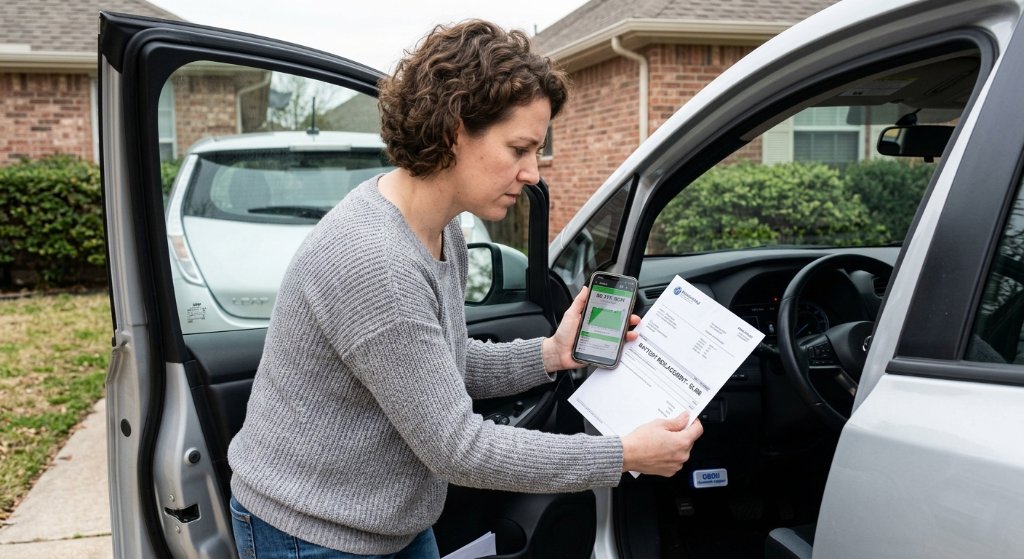
The traditional dealership service model is facing an existential crisis. For decades, legacy dealers relied on complex internal combustion engines and information asymmetry to drive high-margin service revenue. But in the electric vehicle era, the power dynamics are rapidly shifting. This transition was recently highlighted in North Dallas, where a tech-savvy driver of a 2018 Nissan Leaf bypassed a predatory $5,000 battery replacement recommendation using a cheap OBD-II dongle, a specialized mobile app, and ChatGPT.
Historically, the Nissan Leaf has occupied a unique spot in EV lore. As one of the earliest mass-market EVs, it famously eschewed active liquid cooling—a standard now utilized by industry leaders like Tesla, Hyundai, and GM—in favor of a passive, air-cooled battery management system. This engineering choice left the Leaf highly susceptible to thermal degradation, especially in hot climates like Texas. Consequently, Leaf owners have always been highly sensitive to battery health—and unfortunately, prime targets for dealerships eager to recommend expensive, unnecessary battery swaps.
The $5,000 Dealership "Diagnostic"
The drama unfolded when Reddit user maarch72 took their 2018 Nissan Leaf to a local North Dallas dealership, only to be hit with a staggering recommendation: pay $5,000 for a complete battery pack replacement. Rather than accepting the dealer's costly prescription, the owner decided to conduct their own digital audit using consumer-grade diagnostic tools.
The Citizen Mechanic's Tech Stack
To verify the dealership's claim, the owner utilized a modern, highly accessible diagnostic approach:
- LeafSpy Pro: The gold-standard diagnostic app for Leaf owners, which reads raw battery data directly from the vehicle's CAN bus via a Bluetooth OBD-II dongle.
- Generative AI (ChatGPT): Acting as a virtual battery engineer, ChatGPT analyzed the exported raw data, translating complex cell voltages, temperature readings, and charge cycles into plain English.
- The Verdict: The analysis revealed the battery pack was sitting at a highly respectable 80.11% State of Health (SOH) with healthy cell-voltage deltas. The battery was nowhere near end-of-life status, completely debunking the dealership's $5,000 repair recommendation.
Why This Matters:
This incident is a watershed moment for the EV ownership lifecycle, signaling a massive shift in consumer empowerment and the eventual decline of the traditional dealership service monopoly.
- Who Wins: The consumer. By marrying specialized software like LeafSpy with generative AI, everyday drivers can now bypass the "black box" of dealership diagnostics. What once required a proprietary manufacturer scan tool can now be accomplished on a driveway for less than $50.
- Who Loses: Traditional dealerships relying on legacy service-to-sales pipelines. As EVs require significantly less routine maintenance (no oil changes, fewer moving parts), dealerships are desperate to secure high-margin repairs. Recommending a $5,000 battery replacement to a customer who doesn't need it isn't just bad practice; in the internet age, it is a brand-destroying move.
- The Broader Market Signal: Transparency is the new currency. For EVs to achieve mainstream dominance, battery health must be demystified. OEMs that build open, transparent battery-reporting systems directly into their vehicle dashboards will win long-term customer loyalty, while those that allow their dealer networks to exploit consumer ignorance will face severe backlash.
Ultimately, the North Dallas Leaf story is a warning shot to the entire automotive service industry. The era of blind trust in the service bay is over. As battery diagnostics become democratized through AI and cheap hardware, EV drivers are proving they have both the tools and the intelligence to keep dealerships honest. The future of EV maintenance belongs to the transparent, not the gatekeepers.