EPRI Debunks Major EV Myth: Electric Vehicles Prove Significantly Cheaper to Maintain Than Gasoline Cars
The long-held public perception that electric vehicles (EVs) are a financial burden due to exorbitant maintenance costs has been definitively refuted....
Editorial Team
World Of EV
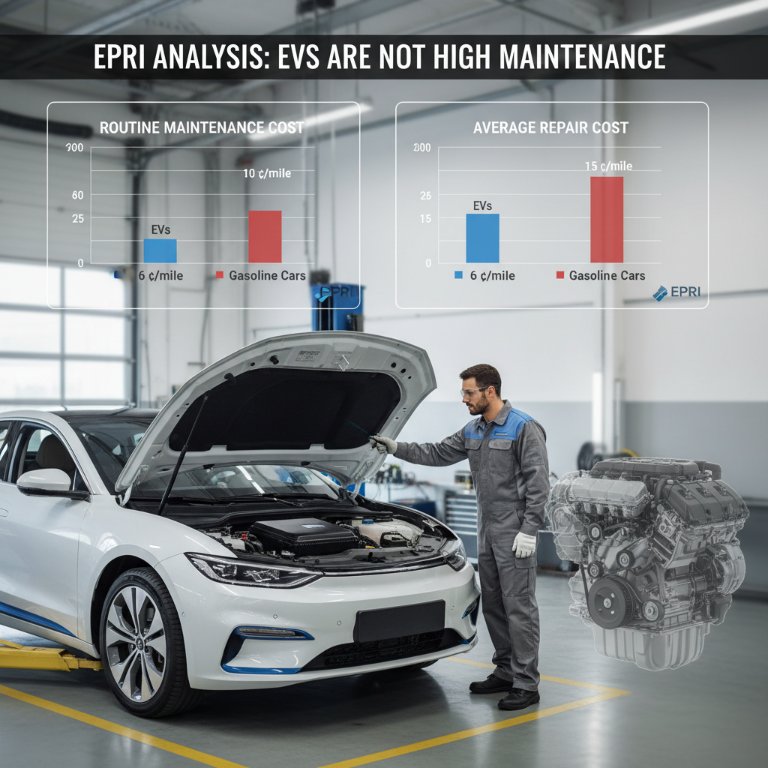
The long-held public perception that electric vehicles (EVs) are a financial burden due to exorbitant maintenance costs has been definitively refuted. A seminal 2024 analysis by the Electric Power Research Institute (EPRI), detailed in an article pre-published for May 16, 2024, reveals that while repair costs are only marginally higher, routine maintenance for light-duty EVs is substantially more economical than for their internal combustion engine (ICE) counterparts. This crucial finding stands to reshape consumer confidence and accelerate EV adoption, pushing back against the narrative of costly ownership that has plagued the industry.
Beyond the Pump: Unpacking EV's Routine Maintenance Advantage
The EPRI report highlights a stark contrast in routine maintenance expenditures. Light-duty EVs average just over 6 cents per mile for routine upkeep, a significant saving compared to approximately 10 cents per mile for ICE vehicles. This substantial difference isn't a fluke; it's a fundamental advantage rooted in the simplicity of electric powertrains.
- Fewer Moving Parts: EVs eliminate a multitude of complex components found in gasoline engines, such as transmissions, timing belts, spark plugs, oxygen sensors, and elaborate exhaust systems, all of which require regular inspection, fluid changes, or replacement in ICE vehicles.
- Reduced Fluid Dependence: The absence of engine oil and associated filters, coolant flushes for engine blocks, and transmission fluid changes dramatically cuts down on scheduled service visits and material costs.
- Regenerative Braking Benefits: Electric vehicles leverage regenerative braking, which uses the electric motor to slow the vehicle and recapture energy, significantly extending the lifespan of traditional brake pads and rotors. This means fewer brake component replacements over the vehicle's life.
Addressing the 'Big Fix' Myth: Repair Costs Hold Steady
While routine maintenance clearly favors EVs, concerns about higher repair costs for more significant issues have lingered. The EPRI analysis, which included data from the Highway Loss Data Institute (HLDI), offers clarity here as well. It concludes that repair costs for EVs are, on average, only about two percent higher than for comparable gasoline models. Many repairs, such as those for body damage, infotainment systems, or advanced driver-assistance features, are common across both EV and ICE platforms and have little to do with the drivetrain itself. However, it's worth noting that newer vehicles, both electric and gas-powered, often incorporate sophisticated technologies like integrated windshield sensors, which can make specific repairs, like a windshield replacement, more expensive across the board.
Why This Matters:
This definitive analysis from EPRI isn't just another data point; it's a powerful weapon in the ongoing battle for widespread EV acceptance. For years, the total cost of ownership (TCO) has been a critical barrier, with maintenance often cited as a major unknown and perceived risk. This report systematically dismantles that perception, providing tangible, per-mile savings that prospective buyers can factor into their budgets.
- Who Wins? Consumers, particularly those on a budget, are the clear beneficiaries. The lower routine maintenance costs translate to tangible annual savings, making EV ownership more accessible and financially predictable. The EV industry also wins, as this report provides solid evidence to counter negative narratives and boost consumer confidence, potentially accelerating market growth. Environmental advocates also gain a stronger argument for EV adoption, showcasing not only ecological benefits but also economic ones. Existing EV owners will feel validated, and their anecdotal experiences of lower service bills are now backed by robust research.
- Who Loses? Manufacturers heavily invested in ICE technology may face increased pressure as one of their last perceived advantages (lower maintenance costs) evaporates. Dealerships and aftermarket service providers traditionally reliant on frequent ICE vehicle maintenance might need to pivot their business models to accommodate the different service needs of EVs.
- What Does This Signal to the Market? This report signals a maturing EV market where the economic benefits are becoming undeniable. It strengthens the long-term TCO argument for EVs, moving them from an environmentally conscious choice to a financially prudent one. This shift could influence fleet operators, ride-sharing companies, and even policymakers to further invest in electric transportation infrastructure and incentives. It underscores that initial purchase price, while still a factor, is increasingly offset by operational savings over the vehicle's lifetime. Consumer Reports' prior analyses, for instance, found lifetime maintenance and repair savings of approximately $4,600 for EVs over ICE vehicles across 200,000 miles.
This EPRI report serves as a crucial validator for the burgeoning EV market. By unequivocally demonstrating the significant financial advantages of electric vehicle maintenance, it empowers consumers, strengthens the industry's position, and paves the way for a future where EVs are not just a greener choice, but a smarter one for the wallet too.