EU Regulators Slam Brakes on Tesla FSD's European Ambitions Amid Mounting Safety Concerns
Tesla's long-cherished dream of widespread European Full Self-Driving (FSD) deployment is confronting a stark reality check. European regulators are e...
Editorial Team
World Of EV
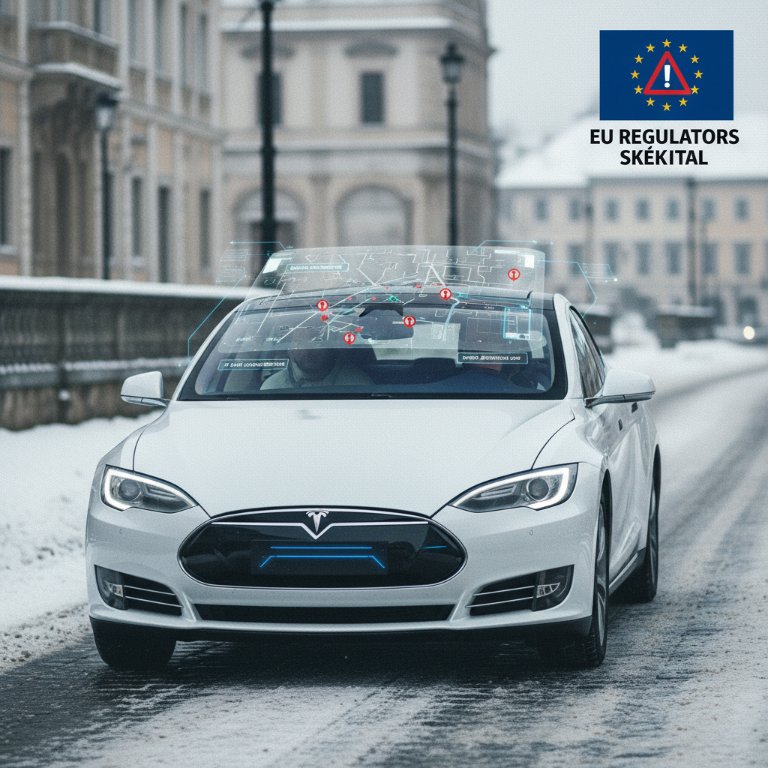
Tesla's long-cherished dream of widespread European Full Self-Driving (FSD) deployment is confronting a stark reality check. European regulators are expressing "significant skepticism" over the system's readiness, threatening to derail Tesla's ambitious timeline for one of its most anticipated features. This isn't merely a bureaucratic hurdle; it strikes at the core of Tesla's future revenue streams, its technological leadership, and its image as an autonomous driving pioneer. This comes as the Dutch regulator RDW presents Tesla's FSD approval to the EU's Technical Committee on Motor Vehicles today, a pivotal moment for wider European adoption.
Safety Concerns Mount Against FSD
Emails obtained by Reuters reveal the depth of regulatory apprehension, highlighting several critical flaws within Tesla's FSD system. Officials are particularly concerned about FSD's observed tendency to exceed speed limits, a fundamental breach of road safety regulations. Furthermore, its reliability and safety on icy road conditions have been called into question, a significant concern for Northern European markets. Regulators also expressed worries about the potential for drivers to circumvent features designed to prevent cell phone use while the system is active, undermining driver attention safeguards. These are not isolated concerns, with regulators from Sweden, Finland, Denmark, and Norway all raising multiple red flags. This collective skepticism underscores Europe's generally more cautious and stringent approach to advanced driver-assistance systems compared to the 'beta' rollout methodology often seen in North America.
Navigating Europe's Strict Regulatory Landscape
While the RDW's presentation today marks a crucial step for broader European deployment, an EU-wide vote on FSD approval isn't expected until July or even October. This extended timeline, now complicated by widespread regulatory objections, means significant delays are a real possibility for Tesla's timeline. Unlike some fragmented regulatory environments, an EU-wide approval is essential for seamless, widespread FSD operation across the bloc, making these early objections particularly impactful. The European regulatory framework places a strong emphasis on verifiable safety and adherence to existing traffic laws, a stark contrast to the iterative, user-feedback-driven development model Tesla has often employed for FSD in other markets.
Why This Matters:
-
For Tesla: This isn't just a minor setback; it's a potential chasm for Tesla's European FSD strategy. The company has heavily invested in FSD, positioning it as a key differentiator, a future profit driver through subscriptions, and a core component of its long-term valuation. Delays in Europe, a crucial and lucrative market, translate directly to deferred revenue and a significant blow to its 'tech leader' image. More critically, it forces Tesla to confront Europe's distinct regulatory philosophy head-on. The questions raised by regulators strongly suggest that FSD may require a distinct 'Euro-spec' version, tailored to more conservative safety parameters and stricter adherence to local laws. This could be a 'do-or-die' moment for FSD's global uniformity and its ability to deliver on the promise of seamless, worldwide autonomous capability.
-
For European EV Buyers: While many European consumers are eager for cutting-edge technology, they are also generally more safety-conscious and accustomed to robust regulatory oversight. The concerns raised by EU officials validate this cautious approach and highlight potential risks. For prospective FSD subscribers, these delays mean waiting longer, or potentially receiving a more constrained version of the system, which could impact the premium they are willing to pay and the overall user experience compared to reports from other regions.
-
For the Broader Autonomous Driving Industry: Europe's resolute stance sets a powerful precedent. Other autonomous driving developers eyeing the lucrative European market will undoubtedly take note of the meticulous scrutiny Tesla's FSD is undergoing. This process underscores the immense technical and regulatory challenges inherent in deploying truly autonomous systems across diverse geographical and legal environments. It reinforces that achieving 'full self-driving' is a complex, multi-faceted journey requiring rigorous validation, especially when crossing international borders, and that regulatory approval is as critical as technological advancement.
The strong reservations from European regulators regarding Tesla's FSD underscore the formidable challenges facing truly autonomous driving technologies in a globally diverse regulatory landscape. Tesla now stands at a critical juncture, needing to either adapt FSD significantly to meet stringent European requirements or face sustained delays and potentially limited market access for one of its most anticipated features. The coming months will be pivotal in determining the future of FSD on European roads and for the broader trajectory of autonomous vehicle development worldwide.