EV App Engagement Soars, But Stability Remains the Ultimate Differentiator: A New Era for Automakers
The digital frontier of electric vehicles has reached a critical inflection point. According to the illuminating JD Power 2026 U.S. OEM EV App Report,...
Editorial Team
World Of EV
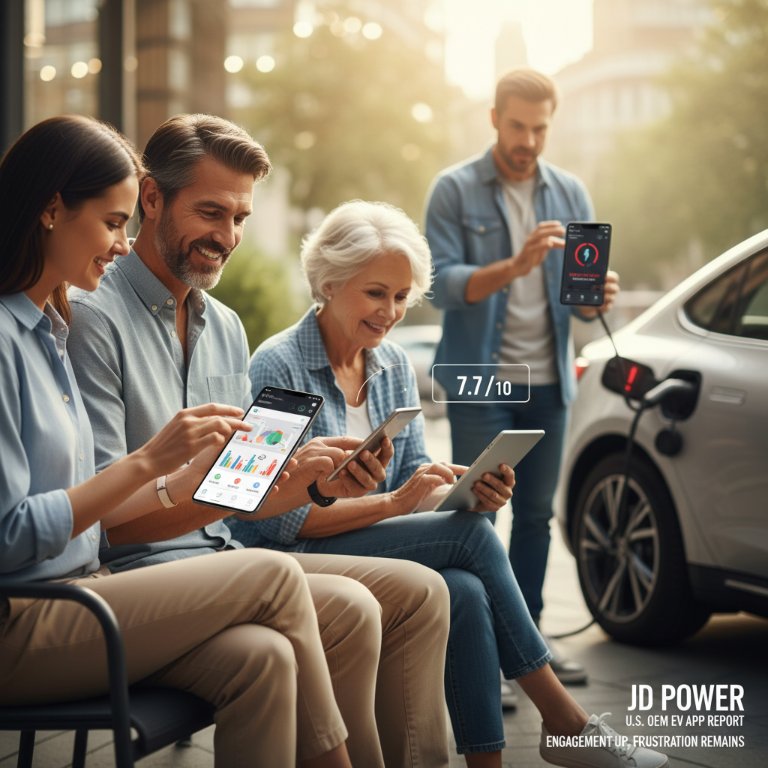
The digital frontier of electric vehicles has reached a critical inflection point. According to the illuminating JD Power 2026 U.S. OEM EV App Report, EV mobile applications are no longer merely novelty features; they are now embedded essentials in the daily lives of owners, ushering in an era where higher engagement directly correlates with higher expectations. This shift demands that automakers treat their app ecosystems with the same rigor as their powertrains.
For years, EV apps often felt like afterthoughts—buggy, slow, or offering limited functionality. Early adopters, eager for any EV-specific features, often tolerated these shortcomings. The 2026 report, however, paints a dramatically different picture, revealing a maturing ecosystem where user satisfaction has taken a significant leap forward. Mass-market users now rate their overall app experience at 7.7 out of 10, a substantial improvement from 6.1 in 2025. This isn't just a marginal gain; it's a testament to the concentrated efforts by many manufacturers to enhance the digital touchpoints of EV ownership.
The Rise of Daily Engagement and Plummeting Churn
The most compelling data point from the JD Power report is the undeniable increase in daily engagement among non-Tesla EV app users. A remarkable 55% now report frequent use, a noticeable jump from 48% in 2025. This surge in consistent interaction isn't just about opening an app; it signifies integration into the daily routine of vehicle management—from checking charge status and pre-conditioning the cabin to managing charging schedules and even executing remote commands.
Perhaps even more telling is the drastic reduction in churn rates. Dropping to a mere 4.5% in 2026 from a concerning 22% in 2023, this statistic loudly proclaims that EV apps are no longer disposable curiosities. They have become indispensable tools, reflecting a profound shift in how owners interact with their vehicles. This stickiness indicates that successful apps are deeply woven into the fabric of the EV ownership experience, providing tangible value that keeps users coming back.
The Lingering Shadow: Connectivity and Stability Challenges
Despite the clear progress in engagement and satisfaction, a significant hurdle continues to plague the EV app landscape: connectivity issues. Even with improvements for the second consecutive year, a full 33% of users still report experiencing problems. This highlights a critical chasm between user expectations and real-world reliability. For savvy EV enthusiasts and prospective buyers, a feature-rich app is only as good as its consistent functionality. An app that frequently disconnects, fails to update, or is unresponsive due to poor connectivity can quickly erode user trust and negate otherwise positive developments. Stability, therefore, emerges as the paramount challenge for automakers striving for digital excellence.
Setting the Benchmark: Tesla and MyHyundai Lead the Pack
In this increasingly competitive arena, clear leaders are emerging. Tesla, long lauded for its software prowess and integrated digital experience, once again secured the highest ranking overall among premium manufacturer EV apps. This dominance is no surprise, given Tesla's foundational commitment to a software-defined vehicle from its inception.
Among mass-market brands, MyHyundai with Bluelink distinguished itself by ranking highest. This achievement by Hyundai signals a strategic investment in user experience and reliable digital services for its mainstream EV offerings, such as the IONIQ 5 and IONIQ 6. This success underscores that strong app performance is not exclusive to premium segments but is an achievable and vital goal for all automakers.
Why This Matters:
This JD Power report isn't just a collection of statistics; it's a strategic roadmap for the automotive industry.
- For consumers, it signals a future where their EV is seamlessly integrated into their digital lives, offering greater control and convenience. The rising satisfaction means that the digital experience is catching up to the driving experience. However, the persistent connectivity issues serve as a stark reminder that even the best apps can falter, and reliability remains a core expectation.
- For automakers, the implications are profound. Those who have prioritized and executed robust, stable, and feature-rich apps, like Tesla and Hyundai, are clearly winning customer loyalty and differentiation. These brands are leveraging software as a competitive advantage, transforming what was once a supplemental feature into a core component of the brand experience.
- Conversely, manufacturers lagging in app development and reliability face significant risks. In a market where choice is expanding and EV apps are now routine, a subpar digital experience can be a deal-breaker, driving potential buyers to competitors. This isn't just about customer satisfaction; it's about market share and brand perception. The “why” behind app usage is now firmly rooted in convenience and integration, not just novelty.
This is truly a 'do-or-die' moment for some. The battleground for EV differentiation is expanding beyond range and charging speed to the digital ecosystem that surrounds the vehicle. The signal to the market is clear: software is no longer secondary. It's a critical component of the value proposition, and investment in stability, connectivity, and user experience is non-negotiable for long-term success.
The Road Ahead: Integration and Impeccable Reliability
The JD Power 2026 report definitively marks a pivotal transition for EV apps. They have evolved from optional extras to essential components of the ownership experience. While remarkable strides in engagement and satisfaction are evident, the persistent challenge of connectivity underscores the need for unwavering focus on stability and impeccable reliability. As the EV market continues its rapid expansion, the quality of the accompanying digital experience will increasingly define brand loyalty and ultimately, market leadership. Automakers must continue to innovate, ensuring their apps are not just functional, but flawlessly integrated and consistently reliable, thereby securing their place in the digitally-driven future of mobility.