EV Apps Accelerate Past Early Hurdles: JD Power 2026 Report Marks a Turning Point for OEM Engagement
For years, the Achilles' heel of the non-Tesla electric vehicle experience often resided not in the drivetrain, but in the palm of an owner's hand. Cl...
Editorial Team
World Of EV
For years, the Achilles' heel of the non-Tesla electric vehicle experience often resided not in the drivetrain, but in the palm of an owner's hand. Clunky, slow, and often unreliable OEM smartphone applications plagued the early days of mass-market EV adoption, creating friction where there should have been seamless integration. Today, the JD Power 2026 U.S. OEM EV App Report signals a dramatic shift, confirming that the industry has finally turned a critical corner, with app usage reaching new heights of engagement and, crucially, meeting a rapidly rising bar of owner expectation.
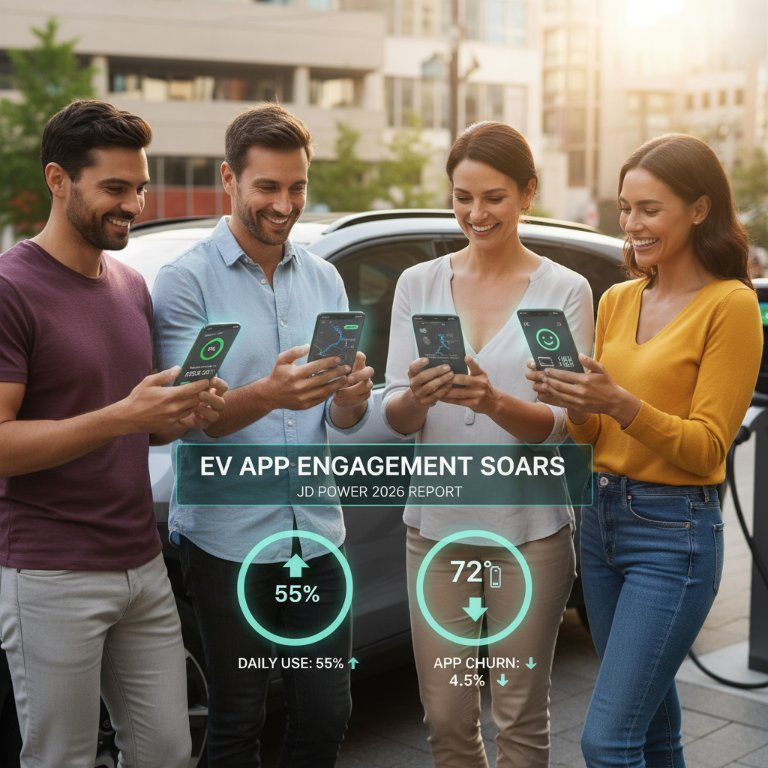
The report, released today, paints a picture of significant progress. Overall app satisfaction for mass market users has surged to an impressive 7.7 on a 10-point scale, a substantial leap from 6.1 just last year. This isn't just a marginal gain; it reflects a concerted effort by automakers to elevate their digital offerings. Furthermore, daily engagement among non-Tesla EV app users has climbed to 55%, up from 48% in 2025, demonstrating that these applications are moving beyond novelty to become an indispensable part of the daily EV ownership routine. Perhaps most tellingly, app churn—the rate at which users abandon an app—has plummeted to a mere 4.5% from a staggering 22% in 2023, unequivocally indicating that these apps are now firmly integrated into the routine vehicle use of a significant majority of owners.
A Dramatic Leap in User Satisfaction and Engagement
Automakers have clearly heeded the call for better digital experiences. The raw numbers speak volumes, illustrating a maturing landscape where fundamental functionality is no longer a luxury but a baseline expectation. The 2026 data shows a significant improvement across the board, moving mass-market EV apps from a frequent point of frustration to a genuine asset for many owners.
- Satisfaction Soars: A jump from 6.1 to 7.7 on a 10-point scale indicates a much more positive user experience.
- Daily Use Becomes Norm: 55% daily engagement for non-Tesla users confirms apps are actively part of the ownership routine.
- Churn Rates Collapse: The drop from 22% to 4.5% in app churn is perhaps the most compelling evidence that apps are now sticky and valuable.
These improvements suggest that OEMs have invested heavily in refining interfaces, bolstering reliability, and expanding feature sets that genuinely add value, such as remote charging management, climate pre-conditioning, and vehicle status checks. The era of the barely functional companion app is, thankfully, behind us.
Speed is King, But the Connectivity Divide Persists
Despite the strides, the report also highlights a critical area requiring urgent attention: performance. Speed is identified as the primary driver of satisfaction, accounting for a quarter (25%) of the impact on user sentiment. In an instant-gratification world, a sluggish app can quickly negate even the most advanced features. However, a persistent shadow looms over this progress: a significant 33% of users still grapple with inconsistent connectivity issues.
This statistic is a stark reminder that while app development has improved, the underlying infrastructure, particularly reliable cellular connectivity within vehicles, remains a stumbling block for a third of owners. For an industry pushing connectivity as a cornerstone of the modern vehicle, this gap represents a fundamental challenge that can quickly erode the gains made in app design and functionality. A fast, feature-rich app is only as good as its ability to reliably connect to the vehicle.
Why This Matters:
This JD Power report marks a pivotal moment for the entire EV ecosystem. For consumers, it signals a future where the digital interface of their electric vehicle is no longer an afterthought but a polished, integrated extension of the driving experience. The days of struggling with unresponsive apps that made basic tasks a chore are fading, replaced by reliable tools that enhance convenience and control.
For automakers, this is a clear indication that investment in software and digital platforms is paying dividends. Those who committed early to refining their apps are now reaping the rewards in higher satisfaction and deeper owner engagement. The competition, historically dominated by Tesla's robust and highly integrated app experience, is clearly heating up as other OEMs demonstrate they can deliver compelling digital products. However, the lingering connectivity issues serve as a stark warning: the race isn't just about software; it's about robust, always-on connectivity. OEMs that fail to address this fundamental infrastructure gap risk falling behind, undermining all their app development efforts. This signals a shift where the digital experience is becoming as crucial as horsepower or range in the battle for market share and customer loyalty. The 'digital garage' is now an essential battleground.
Moving forward, the focus for OEMs must expand beyond mere functionality to consistent, high-speed performance and unwavering connectivity. This report confirms that while significant progress has been made, the journey to a truly seamless and always-on EV experience is far from over. The future of EV ownership hinges not just on the car itself, but on the integrated digital ecosystem that supports it.