EV Curiosity Surges Amidst High Gas Prices, But Fundamental Barriers Continue to Stall Adoption
Despite a period of stabilizing sales volumes, the electric vehicle market is witnessing a notable surge in consumer interest, primarily fueled by per...
Editorial Team
World Of EV
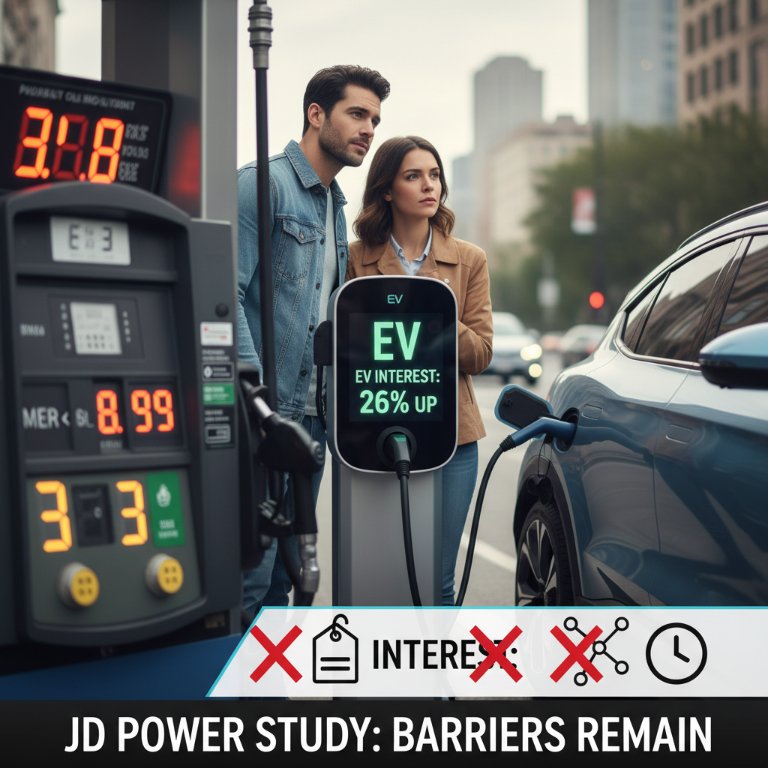
Despite a period of stabilizing sales volumes, the electric vehicle market is witnessing a notable surge in consumer interest, primarily fueled by persistently elevated gasoline prices. The latest JD Power 2026 U.S. Electric Vehicle Consideration (EVC) Study reveals a compelling narrative: 26% of new-vehicle shoppers in April indicated they were 'very likely' to consider purchasing an EV, marking a three-percentage-point increase from the preceding month. This upward trend in consideration signals a growing openness among the general public to embrace electric mobility, reflecting a significant shift in perception.
This burgeoning curiosity, however, presents a stark contrast to actual purchase rates, highlighting a critical chasm the industry must bridge. The study underscores that while more consumers are eyeing EVs, several deeply entrenched obstacles continue to deter them from making the ultimate commitment.
The Shifting Tides of Consumer Sentiment
The three-percentage-point leap in 'very likely' consideration, pushing the figure to over a quarter of new-vehicle shoppers, is more than a statistical blip; it represents a tangible shift in consumer mindset. For years, EV consideration hovered, often influenced by early adopters and environmentalists. Now, the pocketbook pain at the pump, driven by fluctuating and often high gasoline prices, appears to be converting passive interest into active consideration. This suggests that financial pragmatism, rather than just eco-consciousness, is becoming a primary catalyst for exploring EVs. This increased consideration creates a fertile ground for manufacturers who can effectively address the core anxieties of prospective buyers.
Persistent Roadblocks to Widespread Adoption
Despite the positive momentum in consumer interest, the JD Power study robustly confirms that several significant barriers remain firmly in place, acting as formidable deterrents to actual EV purchases. These aren't new concerns, but rather persistent issues that the industry has yet to adequately resolve for the mainstream buyer:
- Purchase Price: EVs, particularly those with longer ranges and advanced features, often carry a higher sticker price than their internal combustion engine (ICE) counterparts. This initial cost premium is a significant hurdle for many budget-conscious consumers, especially when considering the average new car transaction price.
- Availability of Charging Stations: 'Range anxiety' has evolved into 'charging anxiety.' While public charging networks are expanding, their perceived density, reliability, and ease of access, especially in certain regions or for apartment dwellers, remain major concerns. The public is acutely aware that a robust and ubiquitous charging infrastructure is not yet fully realized.
- Time Required for Charging: The disparity between a five-minute gasoline fill-up and a 30-minute (or longer) fast-charging session, let alone overnight Level 2 charging, continues to be a point of friction. Consumers accustomed to instantaneous refueling perceive charging time as a significant inconvenience, particularly on long journeys or in situations where time is critical.
Why This Matters:
This JD Power study delivers a potent message to the entire automotive ecosystem: the battle for consumer interest in EVs is being won, but the war for widespread adoption is far from over. The rising tide of consideration signals that the inherent benefits of EVs are resonating, often thanks to the very tangible impact of gas prices on daily budgets. However, the plateauing sales volumes underscore a critical bottleneck: curiosity is not conversion when fundamental concerns about cost, convenience, and infrastructure persist.
Who wins? Manufacturers and charging network providers who aggressively tackle these barriers head-on stand to gain immensely. Companies offering compelling, affordable EV options with diverse body styles and superior charging experiences – both public and home-based – will capture this growing segment. This also bodes well for companies innovating in battery technology for faster charging and for those rapidly expanding reliable, high-speed public charging infrastructure. Brands that understand the need for a comprehensive ownership experience, not just a good vehicle, are poised for success.
Who loses? Legacy automakers slow to pivot from high-margin, expensive EVs without a strong focus on addressing charging anxieties risk falling behind. Similarly, charging network operators who fail to improve reliability and user experience will alienate potential EV owners. This also presents a challenge for traditional ICE manufacturers who underestimate the long-term shift in consumer sentiment.
This isn't merely a data point; it's a strategic inflection point for the EV market. It signals that the industry must move beyond simply selling the 'idea' of an EV and instead deliver practical, affordable, and seamless ownership experiences. Failing to bridge this gap between growing interest and persistent adoption barriers could temper the EV revolution, turning potential converts into hesitant observers.
The current landscape paints a clear picture: consumer interest in electric vehicles is unmistakably on the rise, spurred by economic pressures at the gas pump. However, the path to mass adoption remains obstructed by long-standing concerns regarding purchase price, charging infrastructure, and the time commitment involved in recharging. The industry's next crucial phase is to translate this heightened curiosity into concrete sales by meticulously addressing these fundamental barriers, ensuring that the promise of electric mobility becomes a practical reality for the broader market.