EV Infotainment Systems Evolve: Your Co-Pilot for Range and Charging Confidence
Electric vehicle infotainment systems are rapidly transforming, moving far beyond mere entertainment to become indispensable, intelligent co-pilots fo...
Editorial Team
World Of EV
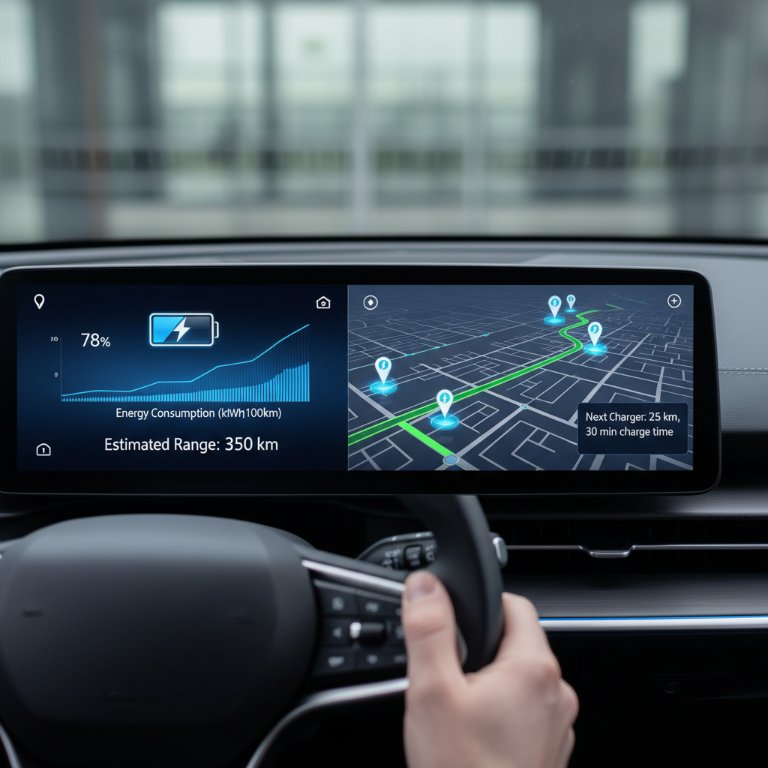
Electric vehicle infotainment systems are rapidly transforming, moving far beyond mere entertainment to become indispensable, intelligent co-pilots for every EV owner. This shift addresses fundamental challenges of EV ownership, such as range anxiety and charging logistics, by integrating advanced features crucial for real-time decision-making. Historically, early EV systems often repurposed designs from internal combustion engine vehicles, leaving drivers with imprecise data and a lack of confidence on longer journeys. Today's sophisticated platforms are purpose-built to alleviate these concerns, making the EV experience seamless and stress-free.
Smart Navigation Takes the Lead
Traditional navigation apps, while competent for gasoline cars, often fall short for electric vehicles, which require nuanced route planning that considers energy consumption and charging availability. The latest EV infotainment systems prioritize 'smart navigation' as a core preference for owners, integrating intelligent routing with the vehicle's unique energy profile.
- Efficient Route Planning: These systems go beyond simply finding the shortest route. They factor in terrain, traffic, real-time energy consumption, and the car's current state of charge to plot the most energy-efficient path.
- Real-time Charging Station Identification: No longer do drivers need to guess. Integrated navigation actively identifies available charging stations along the route, displaying crucial details like charger type, power output, and current availability.
- Optimized Charging Times: Advanced systems can even predict charging durations and suggest optimal stops, ensuring drivers spend less time plugged in and more time on the road.
Unlocking the Battery's Secrets: Real-time Energy Management
The once opaque world of battery performance is now becoming transparent, thanks to evolving infotainment systems. These systems provide critical insights into the vehicle's energy dynamics, empowering owners with unprecedented control and understanding.
- Real-time Battery Monitoring: Drivers gain access to precise, up-to-the-minute data on their battery's state of charge (SoC) and even its state of health (SoH), crucial metrics for understanding the battery's longevity and performance.
- Insights into Energy Consumption: The systems display how driving style, auxiliary features (like climate control), and external factors influence energy usage, helping drivers adopt more efficient habits.
- Accurate Range Prediction: Moving past rudimentary 'guess-o-meters,' modern systems utilize advanced algorithms, often enhanced by AI and machine learning, to provide highly accurate range predictions that adapt to real-world conditions and driving behavior, significantly reducing range anxiety.
Why This Matters:
This dramatic evolution in EV infotainment is not merely about adding more screens or apps; it fundamentally reshapes the entire electric vehicle ownership experience. For EV owners, these advancements translate directly into greater convenience, reduced stress, and increased confidence on every journey. The seamless integration of charging and energy management features effectively tackles the primary barriers to broader EV adoption – range anxiety and charging complexities.
Automakers that master this software-defined vehicle approach stand to gain a significant competitive edge. Companies like Tesla have long demonstrated the power of a superior in-car software experience, and now others, including legacy manufacturers, must prioritize these features to remain relevant. Those slow to adapt will find themselves losing market share to agile competitors who understand that the 'brain' of the EV is as crucial as its powertrain. This signals a critical shift in the industry: software differentiation is becoming as vital as hardware innovation. It’s a do-or-die moment for brands to deliver a truly intuitive and integrated digital cockpit.
Charging infrastructure providers also benefit, as improved in-car navigation directly increases utilization of their networks. The market is clearly signaling a move towards a holistic EV ecosystem where the vehicle, charger, and grid communicate seamlessly.
The Road Ahead
The sophisticated infotainment systems emerging today are no longer just optional luxuries; they are essential components that redefine the practicality and appeal of electric vehicles. As the industry progresses, we anticipate even deeper integration, with features such as predictive maintenance, vehicle-to-grid (V2G) capabilities, and highly personalized energy management becoming standard. This ongoing technological arms race ensures that the future of EV ownership will be increasingly intelligent, efficient, and ultimately, more enjoyable.