EV Momentum Defies Political Headwinds: Drivers Accelerate Shift From Gas as Loyalty Soars
Despite concerted efforts from the current Trump administration to slow the transition to electric vehicles, the American consumer is clearly making a...
Editorial Team
World Of EV
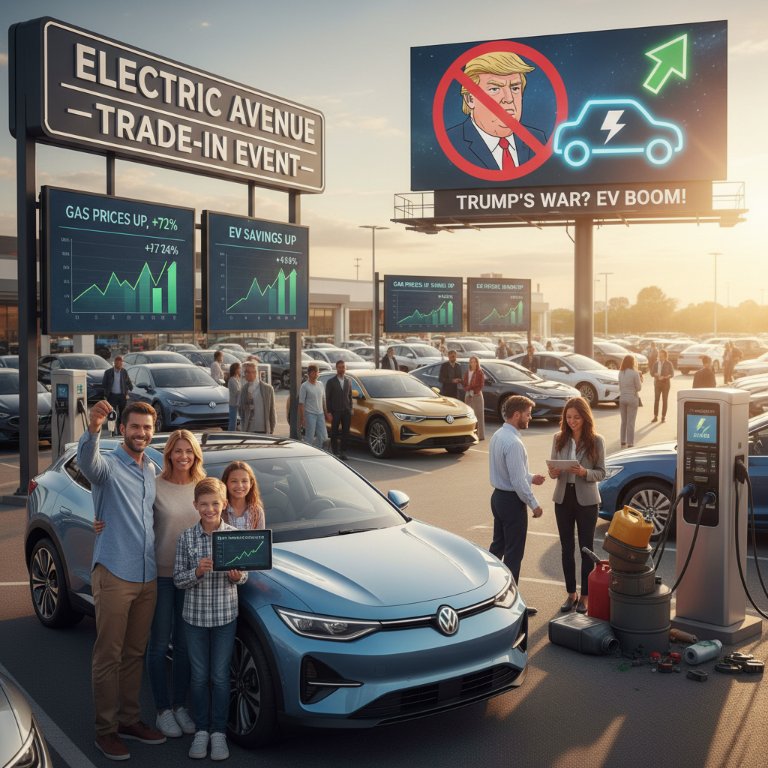
Despite concerted efforts from the current Trump administration to slow the transition to electric vehicles, the American consumer is clearly making a different choice. Fresh data from Edmunds and CNBC reveals an accelerating exodus from gas-powered cars to EVs, underscoring a powerful market-driven shift that is proving resilient to political pressure.
This isn't just about early adopters anymore. The numbers paint a picture of mainstream adoption, driven by practicality and economic realities. The automotive landscape is undergoing a rapid transformation, with implications for every segment of the industry and every driver on the road.
The Great Migration to Electric Accelerates
Drivers are increasingly ditching their internal combustion engine (ICE) vehicles for cleaner, more efficient electric alternatives. In January 2026, a substantial 67.1% of new EV buyers traded in a gas car. Just three months later, by April, that figure jumped to 72.1%. This isn't incremental growth; it's a rapid, decisive pivot by consumers, demonstrating a growing conviction in the benefits of electric mobility. The speed of this shift is particularly noteworthy, indicating that once a consumer considers an EV, the economic and performance benefits often seal the deal.
Unpacking the Loyalty Surge
Beyond simply attracting new converts, the EV market is also fostering strong loyalty among existing owners. The data reveals that EV owners are sticking with electric when it's time for their next vehicle. By April 2026, 35.4% of EV trade-ins were going towards another new EV, while a significant 44.5% opted for a used EV. This burgeoning used EV market is a critical indicator of maturity and expanding accessibility. It suggests that the value proposition of EVs holds up over time, and a robust secondary market is emerging, providing more affordable entry points for a wider demographic of buyers.
The Macroeconomic Driver: Fuel Costs and Geopolitics
While political narratives often attempt to frame EV adoption as an ideological choice, the underlying data points to a far more pragmatic motivator: economics. Rising gas prices, potentially exacerbated by ongoing global conflicts, are making the cost savings of electric vehicles increasingly attractive. For consumers, the volatile price at the pump serves as a constant, tangible reminder of the financial burden of gasoline. In contrast, the predictable and often lower cost of charging an an EV—especially at home—is a compelling economic argument that appears to be overriding any political or cultural resistance.
Why This Matters:
This data isn't just a snapshot; it's a clear signal of the automotive market's direction and resilience.
- Consumers Win: Drivers are making clear economic choices, opting for vehicles that offer lower operating costs and a hedge against global energy price fluctuations. The expanding used EV market further democratizes access to EV technology, offering more affordable options for a wider range of budgets.
- EV Manufacturers Win: This accelerating adoption and strong loyalty validate massive investments in EV platforms, battery technology, and charging infrastructure. Brands that have committed early and aggressively to electrification stand to gain significant market share, while those that have dragged their feet risk being left behind.
- Legacy Automakers Face a 'Do-or-Die' Moment: For traditional manufacturers still heavily reliant on ICE profits, these figures should sound alarm bells. The market is unequivocally moving away from their core business at an increasing pace. Failing to accelerate EV transitions will result in continued erosion of market share and relevance.
- Political Narratives are Being Undermined: The data suggests that consumer behavior, driven by economic self-interest, is more powerful than political efforts to slow down the EV transition. Attempts to impede EV growth are proving ineffective in the face of compelling financial incentives and evolving consumer preferences.
- A Maturing Market: The strong loyalty to both new and used EVs indicates the market is moving beyond the early adopter phase. The presence of a healthy used EV market is crucial for sustainable growth, making EVs a viable option for a much broader segment of the population.
Looking Ahead: An Unstoppable Current
The trajectory is undeniable: the shift to electric vehicles is gaining unstoppable momentum. As gas prices remain elevated and EV technology continues to improve in terms of range, charging speed, and affordability, we can expect this trend to intensify. The market is speaking, and its message is clear: the future of personal transportation is electric, and drivers are voting with their wallets, regardless of the political winds. This consumer-led revolution promises a dynamic and challenging future for the automotive industry, where agility and foresight will be paramount to success.