EV Owners Become Dealerships' Unlikely Service Saviors Amidst Shifting Aftermarket Trends
The automotive aftermarket is undergoing a significant transformation, and new data reveals a fascinating paradox: while traditional dealerships are s...
Editorial Team
World Of EV
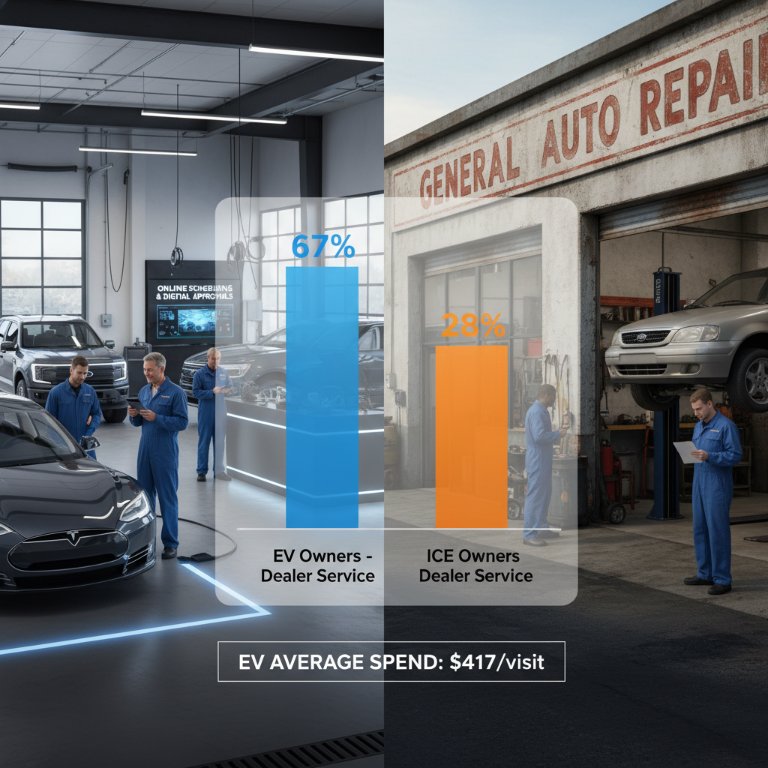
The automotive aftermarket is undergoing a significant transformation, and new data reveals a fascinating paradox: while traditional dealerships are struggling to retain service market share against independent repair shops, electric vehicle (EV) owners are emerging as a crucial lifeline for their fixed operations departments. This shift signals a critical juncture for dealerships, demanding adaptation and a renewed focus on customer experience to thrive in the electrified future.
The Shifting Service Landscape: A Battle for Trust and Market Share
For years, dealerships have faced an uphill battle in their service departments, often perceived as more expensive and less convenient than independent repair facilities. While new studies show dealerships capturing record fixed operations revenue overall, this seemingly positive trend masks a deeper concern: a steady erosion of market share as customers, particularly those with internal combustion engine (ICE) vehicles, increasingly opt for general repair shops. This trend isn't new, but the rise of increasingly complex and specialized vehicles, coupled with greater consumer access to information, has amplified the need for dealerships to prove their value beyond warranty work. Historically, the convenience and perceived cost-effectiveness of local mechanics have often swayed owners of older ICE vehicles away from the dealership's service bay, leading to a long-term decline in repeat business and customer loyalty.
EV Owners: A New Pillar of Dealership Profitability
Amidst this challenging backdrop, EV owners are demonstrating a starkly different service behavior, proving to be a significant boon for dealership fixed operations. The study reveals that a remarkable 67% of EV owners rely on dealerships for their service needs, a stark contrast to the mere 28% reported by ICE vehicle owners. This disparity isn't just about loyalty; EV owners also exhibit the highest out-of-pocket spend per visit, averaging a substantial $417 for maintenance, repairs, and enhancements. This higher reliance and expenditure stem from several factors unique to electric vehicles. The specialized nature of EV powertrains, high-voltage battery systems, and integrated software often requires proprietary diagnostic tools and highly trained technicians, expertise more commonly found at authorized dealerships. Furthermore, many EV owners may feel more secure entrusting their technologically advanced vehicles to the entity that sold them, especially during the warranty period, mitigating concerns about specialized component damage or software incompatibilities.
The Long Game: Ownership, Loyalty, and Digital Engagement
The automotive industry is also witnessing a significant shift in consumer ownership behavior, with nearly two-thirds of vehicle owners now keeping their cars for five or more years. This extended ownership period places an even greater emphasis on the long-term relationship between the customer and their service provider. The study underscores this, highlighting that the service experience significantly impacts a customer's likelihood to repurchase from the same dealer. This means a positive service interaction today translates directly into potential vehicle sales tomorrow. High-performing dealerships are already leveraging digital tools to meet these evolving expectations, implementing practices like online scheduling and electronic estimate reviews. These innovations are crucial for enhancing transparency, building trust, and streamlining the customer journey, addressing historical pain points that often drove customers away from dealerships. For EV owners, who are often early adopters of technology, such digital convenience is not just a bonus but an expectation.
Why This Matters:
This study serves as a critical strategic roadmap for automotive dealerships navigating the transition to an electrified future. The implications are profound, shaping who wins and who loses in the evolving aftermarket landscape.
- Dealerships Must Adapt or Face Obsolescence: For dealerships, the message is clear: the EV revolution is not just about selling new vehicles; it's about fundamentally rethinking the service experience. Those who invest in comprehensive EV technician training, specialized equipment, and customer-centric digital platforms will thrive. Those who cling to outdated ICE-centric service models risk being left behind, losing out on a high-value customer segment. This is a do-or-die moment for many, forcing them to modernize their fixed operations from the ground up.
- OEMs Benefit from a Strong Service Network: For original equipment manufacturers (OEMs), a robust dealership service network for EVs is paramount. It ensures customer satisfaction, reinforces brand loyalty, and provides essential data for product improvements. The higher reliance of EV owners on dealers also gives OEMs a clearer channel for software updates, recalls, and specialized repairs.
- Independent Shops Face a Growing Chasm: While general repair shops continue to capture market share for ICE vehicles, they face an increasing challenge with EVs. Without significant investment in specialized training, tools, and diagnostic equipment for high-voltage systems and complex software, independent shops risk being unable to service a rapidly growing segment of the automotive market, effectively losing a future revenue stream.
- EV Owners May Face Higher Service Costs – But With Expertise: For EV owners, the data suggests potentially higher out-of-pocket costs per visit, but this comes with the benefit of specialized expertise and access to dealer-specific diagnostic capabilities and genuine parts. This trade-off will likely continue until independent shops catch up in their EV service capabilities, potentially leading to more competitive pricing in the long term. This signals that while EVs promise lower routine maintenance, specialized repairs can still be costly.
- Service Experience as the Ultimate Sales Tool: The strong correlation between service experience and repurchase likelihood underscores that fixed operations are no longer just a profit center but a critical driver of future vehicle sales. A truly exceptional service experience can solidify brand loyalty and turn a one-time buyer into a lifetime customer, especially as vehicle ownership periods extend.
The findings present both a challenge and an immense opportunity for dealerships. By strategically focusing on the unique needs of EV owners and leveraging digital tools to enhance the overall service experience, dealerships can not only solidify their position in the evolving aftermarket but also secure their long-term viability in the electric age. The future of automotive service is not just electric, but intensely customer-centric, and dealerships are now holding the key.