E
World Of EVEditorial
News 58 mins ago
EV Owners Dodge a Bullet: Congress Delays Landmark Federal Road Tax Until December
Electric vehicle owners across the United States have secured a crucial financial breather, dodging a new federal registration tax that was set to hit...
E
Editorial Team
World Of EV
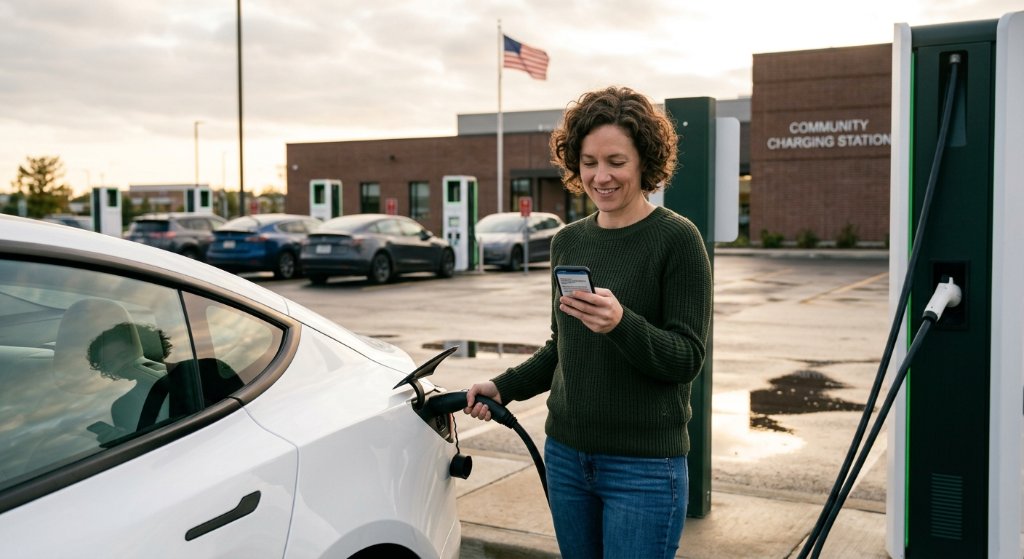
Electric vehicle owners across the United States have secured a crucial financial breather, dodging a new federal registration tax that was set to hit their wallets this October. The unexpected reprieve comes as Congress gridlocked on the massive, five-year BUILD America 250 Act—the Surface Transportation Reauthorization bill—and instead passed a short-term spending patch through December 11, 2026.
This legislative stalling temporarily shelves a highly controversial plan to levy an annual federal registration fee of $130 on all EVs and $35 on plug-in hybrids (PHEVs). It is a landmark proposal, representing the first time in modern history that the federal government has attempted to tax personal vehicles directly to fund national highway infrastructure.
**The Blueprint of the New Federal EV Tax**
The federal Highway Trust Fund (HTF) has long relied on gas taxes to build and repair the nation's roads. However, because the federal gas tax has remained stagnant at 18.4 cents per gallon since 1993, and because EVs do not use gasoline, the fund is facing a massive deficit. Under the proposed BUILD America 250 Act, lawmakers aim to force EV drivers to "pay their fair share".
If the legislation eventually passes, here is how the new tax structure will hit drivers:
* **The Initial EV Fee:** EV owners will pay a flat $130 annual federal registration fee upon enactment.
* **The PHEV Fee:** Owners of plug-in hybrids will face a smaller, $35 annual fee.
* **The Escalator Clause:** Beginning in 2029, both fees will increase by $5 every two years, eventually capping at $150 for EVs and $50 for PHEVs.
* **The Enforcement Hook:** The federal government will not collect this fee directly. Instead, state DMVs will act as federal tax collectors. States that refuse to build this fee into their local registration processes face a crippling penalty—a 125% cut to their federal highway funding.
**The Double-Taxation Nightmare**
For EV buyers, this impending federal tax is a bitter pill to swallow. While EVs have historically avoided fuel taxes, owners are already staring down aggressive state-level registration fees designed to make up for lost local revenues. Currently, over 30 states impose their own EV registration surcharges, which can range from $50 to upwards of $200 annually.
If the federal bill becomes law, drivers in high-fee states will face severe "double taxation". For instance, Texas already charges a steep $200 annual EV registration fee. Adding the federal fee on top would push a Texas EV owner’s annual tax bill to a whopping $330—far higher than the average fuel taxes avoided by switching to electric power. Critics argue this heavy-handed taxation penalizes clean vehicle adoption and disproportionately burdens early adopters.
### Why This Matters:
The stalling of the BUILD America 250 Act is a classic Washington delay, but it signals a fundamental shift in how the nation treats EV ownership.
* **The Winners:** EV and PHEV owners keep their cash for a few more months. EV manufacturers also catch a break; adding another cost of ownership right now would further cool a market already grappling with mainstream adoption headwinds, high interest rates, and the recent rollbacks of federal purchase incentives.
* **The Losers:** The Highway Trust Fund. The Congressional Budget Office (CBO) estimates the fund will bleed into a catastrophic $318 billion shortfall over the next decade. Delaying this infrastructure bill pushes the nation's transit funding closer to a cliff.
* **The Market Signal:** The "free ride" era for EVs is officially over. For years, federal policy relied on carrots—like hefty tax credits—to drive adoption. Now, the government is preparing the stick. Introducing a national car tax that forces state DMVs to act as federal collection arms is a massive, unprecedented power grab. Once this door is opened, there is little stopping Congress from raising these fees further or expanding them to combustion vehicles down the line. It is highly likely to trigger aggressive constitutional challenges from states' rights advocates.
**The Bottom Line**
The December 11 extension merely delays the inevitable. Congress cannot kick the infrastructure funding can down the road forever, and the bipartisan consensus around making EVs pay into the Highway Trust Fund is too strong to ignore. Whether the final bill passes in December or slips into 2027, EV and PHEV owners must face the hard truth: the era of tax-free zero-emission driving is coming to a close.