EV Ownership Defies Subsidy Cliff: Real-World Savings and Massive Emission Cuts Confirmed
The narrative surrounding electric vehicle adoption often hinges on federal incentives. However, as these subsidies evolve, many prospective buyers ar...
Editorial Team
World Of EV
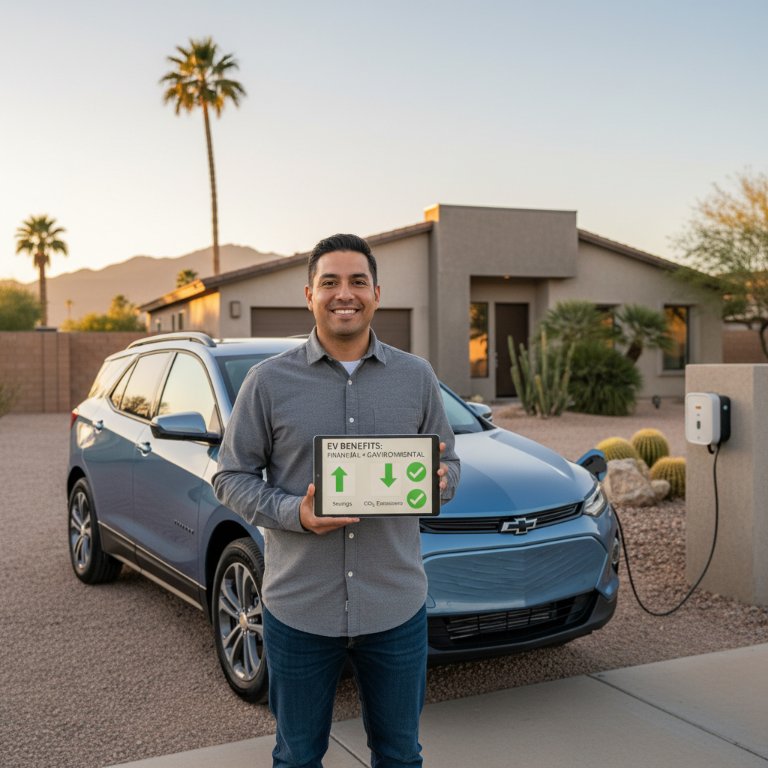
The narrative surrounding electric vehicle adoption often hinges on federal incentives. However, as these subsidies evolve, many prospective buyers are left questioning the true financial viability and environmental impact of making the switch. A recent real-world validation from Guadalupe Higuera, a 30-year-old Chevrolet Equinox EV owner in Phoenix, offers compelling evidence: EV ownership is a smart financial and ecological decision, even in the absence of federal handouts.
Higuera's journey with his Chevrolet Equinox EV underscores a critical truth for a market navigating a changing incentive landscape. While federal tax credits for new and used EVs have seen significant changes, with some ending as of September 30, 2025, according to Insurify, Higuera's experience shows that the fundamental benefits of EVs are robust enough to stand on their own. This perspective provides much-needed clarity for consumers considering popular and attainable EVs like the Equinox, which is one of GM's key Ultium models aimed at the family-size electric SUV market.
The Financial Equation: Beyond the Federal Handout
For many, the initial higher purchase price of an EV, coupled with shifting incentives, creates hesitation. Higuera's conclusion, however, directly addresses this concern: switching from a gas car to an EV was a good financial decision for him. This isn't an isolated incident; typical U.S. drivers switching from a gas Equinox to an Equinox EV can realistically expect to save $10,000–$15,000 over a 10-year ownership period, especially if they drive more than average. These savings stem primarily from:
- Lower 'Fuel' Costs: Charging an EV at home is dramatically cheaper per mile than buying gasoline, often saving around $1,000 per year on energy alone for a typical driver. Even with higher-priced DC fast chargers, the cost remains competitive with frugal gas SUVs.
- Reduced Maintenance: EVs possess fewer moving parts than traditional internal combustion engine (ICE) vehicles, eliminating the need for oil changes, transmission service, and many engine-related repairs, translating to hundreds of dollars in annual savings.
Unpacking the Climate Impact: Efficiency Trumps Source
Beyond personal finance, the environmental argument for EVs often faces scrutiny, particularly concerning the electricity source and manufacturing emissions. Higuera's investigation revealed a significant 80% reduction in carbon dioxide emissions, even with electricity potentially sourced from fossil fuels. This substantial reduction is attributable to the inherently higher energy efficiency of electric powertrains compared to their gasoline counterparts. An EV is typically responsible for lower levels of greenhouse gases than an average new gasoline car, even when electricity generation creates carbon pollution.
Addressing the common misconception about manufacturing, research indicates that while manufacturing EVs (especially their battery packs) involves higher initial carbon emissions than producing an ICE vehicle, these emissions are 'earned back' quickly through reduced operational emissions. The initial carbon deficit from manufacturing can be overcome in as little as six months or after approximately 15,000 miles of driving, depending on the energy grid's 'greenness'. Over the lifetime of the vehicle, the total greenhouse gas emissions associated with manufacturing, charging, and driving an EV are typically lower than those of a gasoline car.
Why This Matters:
Guadalupe Higuera's experience serves as a powerful testament to the maturing EV market. This isn't merely anecdotal; it's a real-world validation that the core value proposition of electric vehicles—financial savings and environmental responsibility—is strong enough to withstand shifts in government incentives. For savvy EV enthusiasts and prospective buyers, this signals a crucial turning point: the industry is moving beyond reliance on subsidies and toward intrinsic, undeniable benefits. Consumers who were on the fence, swayed by concerns about affordability or perceived environmental compromises, now have clear, demonstrable proof that EVs offer a compelling long-term solution. This reinforces confidence in the entire electrification movement, demonstrating its resilience and solidifying its role as a smarter choice for both personal budgets and planetary health. This strengthens the position of mainstream EVs like the Equinox EV, making them even more attractive to a broader audience who are now assured of long-term financial and environmental gains. While the federal support structure continues to evolve, state and local incentives still exist in many areas, further enhancing the financial appeal for some buyers.
The Future is Efficient and Sustainable
Higuera's findings encapsulate the burgeoning reality of EV ownership: it's not just a trend; it's a pragmatic choice for a sustainable and financially sound future. As technology advances and the charging infrastructure expands, the compelling benefits of electric vehicles, proven through real-world applications, will only continue to drive widespread adoption, reshaping the automotive landscape for good.