EV Ownership Hits New High as Charging Anxiety Fades: A Pivotal Moment for Mainstream Adoption
The landscape of electric vehicle (EV) ownership is undergoing a profound transformation, with a landmark study revealing unprecedented levels of sati...
Editorial Team
World Of EV
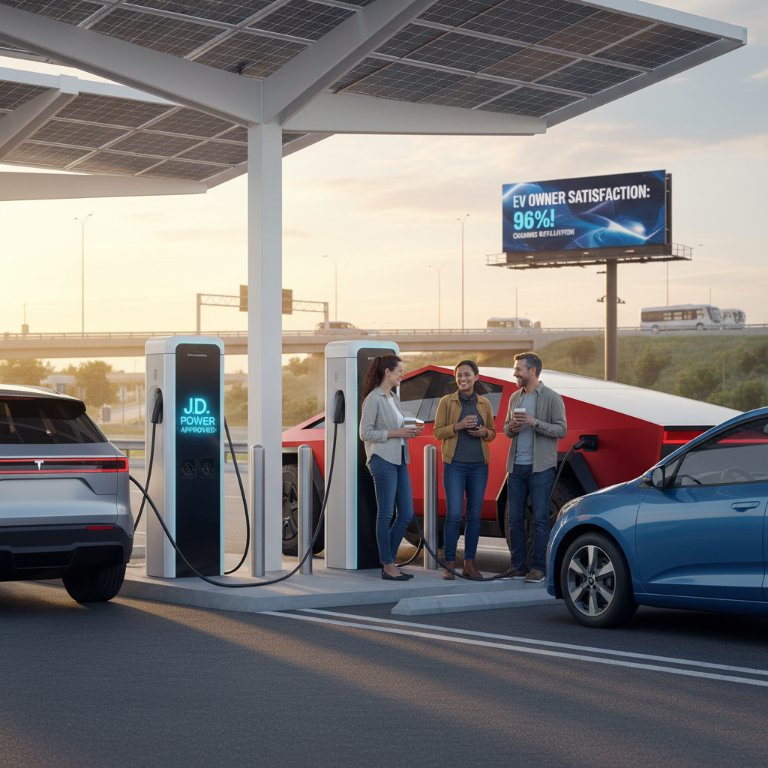
The landscape of electric vehicle (EV) ownership is undergoing a profound transformation, with a landmark study revealing unprecedented levels of satisfaction among battery electric vehicle (BEV) owners. The J.D. Power 2026 U.S. Electric Vehicle Experience (EVX) Ownership Study, released in February 2026, signals a critical turning point, indicating that overall satisfaction has reached its highest point since the study's inception in 2021. This surge in owner contentment is not merely anecdotal; a staggering 96% of new BEV owners now state they would strongly consider another BEV for their next vehicle, a powerful endorsement that speaks volumes about the maturing EV ecosystem.
For years, the promise of electric mobility was often overshadowed by the specter of 'range anxiety' and the often-frustrating reality of public charging infrastructure. Early adopters navigated a patchwork of unreliable chargers, inconsistent payment systems, and sparse availability, experiences that frequently dampened the otherwise enthusiastic reception of EVs. This historical context is vital to appreciating the magnitude of the current shift. We're moving beyond mere tolerance; owners are genuinely satisfied, driven by tangible improvements that directly address their primary pain points.
The Charging Revolution Takes Hold
The most significant catalyst behind this elevated satisfaction is undeniably the dramatic improvement in public charging availability. J.D. Power identifies this as the single most improved index factor across both premium and mass-market BEV segments. This isn't a minor tweak; it represents a fundamental enhancement to the daily lives of EV drivers. The expansion of dedicated public charging networks, coupled with the strategic opening of Tesla's ubiquitous Supercharger network to non-Tesla models, has fundamentally reshaped the charging experience.
For premium EV owners, the expectation of seamless, reliable charging is paramount, and the industry is finally delivering. Mass-market drivers, often more sensitive to inconvenience and cost, are now finding the value proposition of EVs significantly enhanced by readily accessible power. This dual-pronged improvement tackles the issue from both ends of the market, fostering confidence and reducing friction for a broader demographic of prospective buyers.
Why This Matters:
This study isn't just a collection of statistics; it's a powerful narrative about the EV market's maturation and its accelerating trajectory towards mainstream adoption. Here's why this news is particularly impactful:
- For EV Owners: The most immediate winners are current and prospective EV owners. The days of hunting for reliable chargers and suffering from charging anxiety are rapidly receding, making the EV ownership experience demonstrably more convenient and enjoyable. This translates directly into less stress and greater utility from their vehicles.
- For EV Manufacturers: High owner satisfaction and a 96% repurchase intent rate are a golden ticket for automakers. It signals a robust and loyal customer base, validating their significant investments in BEV technology and production. Manufacturers who have prioritized integrating with or providing access to reliable charging networks (like those adopting NACS) stand to gain significantly in customer retention and market share. Conversely, brands that have lagged in addressing charging concerns may find themselves at a disadvantage as the bar for owner experience continues to rise.
- For the Charging Infrastructure Industry: This validates the massive investments made by charging network providers. The improved experience will likely lead to increased utilization, driving further expansion and technological advancements within the charging ecosystem. The opening of Tesla's Supercharger network to other brands has proven to be a masterstroke, boosting overall network reliability and convenience for a wider array of drivers, while also generating new revenue streams for Tesla.
- Signals a Tipping Point: The decline of charging anxiety, long considered one of the primary roadblocks to widespread EV adoption, suggests that the market is rapidly approaching a critical tipping point. As more drivers experience seamless charging, the perceived risks of switching to an EV diminish, paving the way for accelerated growth beyond early adopters.
The J.D. Power study underscores a pivotal moment for the electric vehicle industry. The foundational challenges of charging accessibility and reliability, once significant deterrents, are now evolving into strengths. This newfound confidence among BEV owners not only promises continued growth for the segment but also fundamentally shifts the competitive landscape, making the transition to electric mobility an increasingly attractive and practical choice for the masses.