EV Reliability Divide Exposed: Renault Zoe Dominates as Tesla Model S Plunges in Groundbreaking Warranty Study
As a massive wave of off-lease, first-generation electric vehicles floods dealerships, used buyers are facing a critical question: which electric cars...
Editorial Team
World Of EV
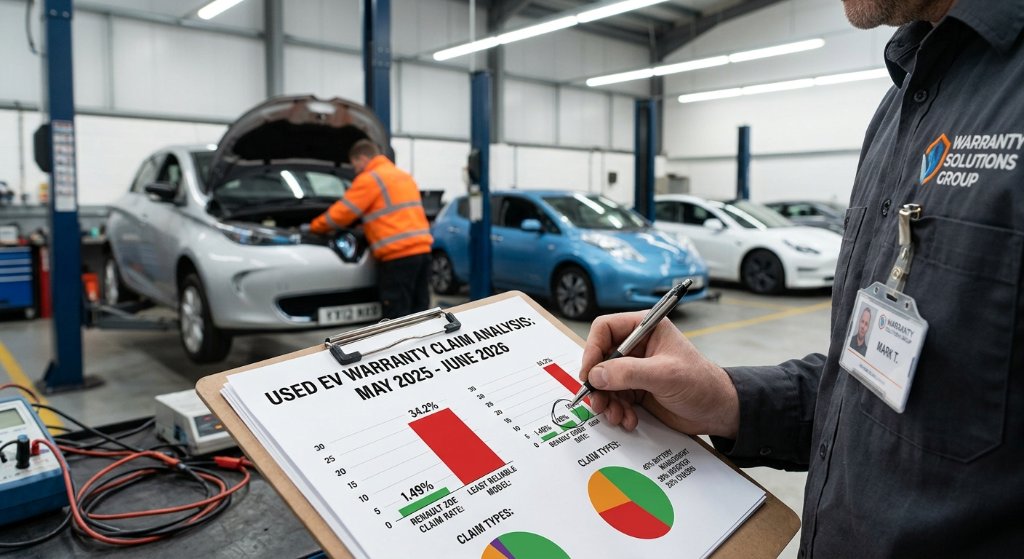
As a massive wave of off-lease, first-generation electric vehicles floods dealerships, used buyers are facing a critical question: which electric cars actually stand the test of time? A landmark study analyzing roughly 2,500 EV warranty claims from May 2025 to June 2026 has just shattered the assumption of a uniform EV ownership experience. Released on July 20, 2026, by the Warranty Solutions Group (WSG), the inaugural EV Market View Report reveals a shocking 23-fold difference in reliability between the market’s best and worst-performing electric models.
Historically, prospective buyers have obsessed over battery degradation, fearing that a used EV is a ticking financial time bomb. Yet, this new real-world claims data turns that narrative on its head, proving that mechanical and electrical ancillary failures—not the high-voltage battery—are the true battleground for EV longevity.
The Standout Winners and Premium Losers
The WSG data highlights a stark contrast between affordable, purpose-built commuter cars and complex, high-end luxury vehicles. Emerging at the absolute top of the reliability charts is the humble Renault Zoe, boasting an incredibly low warranty claim rate of just 1.49%. On the other end of the spectrum, the highly complex, premium Tesla Model S anchored the bottom with a staggering 34.78% claim rate.
The top-performing and bottom-performing models showcase a clear trend:
- The Reliability Leaders:
- Renault Zoe: 1.49% claim rate (average claim cost of just £130.44)
- BMW i3: 2.17% claim rate (average claim cost of £261.32)
- MG ZS EV: 2.33% claim rate (lowest average claim cost at £73.01)
- Nissan Leaf: 2.42% claim rate
- Tesla Model Y: 3.33% claim rate
- The Reliability Underperformers:
- Tesla Model S: 34.78% claim rate (over 23 times more likely to generate a claim than the Zoe)
- Mercedes-Benz EQV: 33.33% claim rate
- Tesla Model X: 29.17% claim rate
Debunking the Battery Myth: What Actually Fails
For years, mainstream automotive media warned that used EV buyers were risking five-figure bills to replace dead traction batteries. In reality, the WSG report reveals that high-voltage batteries are exceptionally robust, accounting for a mere 2.09% to 2.14% of all recorded warranty claims. Instead, it is the everyday electrical and mechanical components that are driving cars into the workshop.
The most frequent points of failure identified in the report include:
- Central Locking Systems: 4.29% of all claims (the most common single fault).
- Charging Flap Actuators: 3.57% of claims (often preventing owners from charging entirely).
- Suspension Lower Arms: 2.86% of claims (largely due to the heavy curb weight of EVs stressing traditional suspension parts).
- PDC Sensors (Parking Sensors): 2.74% of claims.
- Charging Ports: 2.14% of claims.
Crucially, the average cost for these common repairs (central locking, charging flaps, and suspension arms) hovers between £300 and £400—far from the catastrophic financial ruin often associated with EV repairs. However, labor represents a significant portion of the expense, making up 29% of the average repair bill.
Why This Matters:
This data represents a watershed moment for the used electric vehicle market. For years, the industry treated EV reliability as a monolith. We now have definitive, real-world proof that it is not.
Who wins? Value-conscious buyers and manufacturers of simple, lightweight EVs. The stellar performance of the Renault Zoe, BMW i3, and Nissan Leaf proves that simpler, mature EV platforms are incredibly resilient. It also vindicates Renault, who pioneered affordable European EVs and is now transitioning to its native AmpR Small platform for the highly anticipated Renault 4 and Renault 5. Meanwhile, the Tesla Model Y’s solid 3.33% claim rate proves that Tesla's high-volume, modern casting and simplified manufacturing techniques are paying off, making it a highly dependable secondhand buy.
Who loses? Early adopters of high-end luxury EVs and the prestige brands that built them. The horrific 34.78% claim rate of the Tesla Model S and the 29.17% rate of the Model X highlight the perils of over-engineering. These vehicles are packed with motorized door handles, air suspension, and complex falcon-wing doors that invite mechanical gremlins. Similarly, the Mercedes-Benz EQV's dismal 33.33% claim rate exposes the pitfalls of converting heavy internal combustion vans into rushed electric platforms.
For the broader market, this is a clear signal: the used EV buyer’s checklist must change. Buyers should worry less about battery state-of-health and more about the complexity of the vehicle's ancillary systems. If you are buying a used luxury EV out of warranty, an extended service contract isn't just a luxury—it is an absolute necessity.
Moving Forward
As the used EV market matures and transitions from early adopters to mainstream buyers, transparency will be key to building consumer trust. The WSG report provides a much-needed injection of empirical reality into a market often dominated by anecdotal fear-mongering. Moving forward, manufacturers will be judged not just on theoretical battery range or rapid 0-60 mph times, but on their ability to build simple, durable, and easily repairable vehicles that survive past their initial lease agreements.