EV Repair Costs Tumble As Ecosystem Matures—But Tesla Remains A Costly Exception
### The EV Premium Is Shrinking For years, the narrative surrounding electric vehicles has been haunted by a quiet terror: the dreaded post-collision...
Editorial Team
World Of EV
The EV Premium Is Shrinking
For years, the narrative surrounding electric vehicles has been haunted by a quiet terror: the dreaded post-collision repair bill. Early adopters vividly remember when a minor fender-bender could total a brand-new EV due to battery safety concerns, or when a lack of specialized mechanics meant waiting months for astronomical OEM parts. These horror stories created a persistent barrier to entry, driving up insurance premiums and giving prospective buyers serious pause.
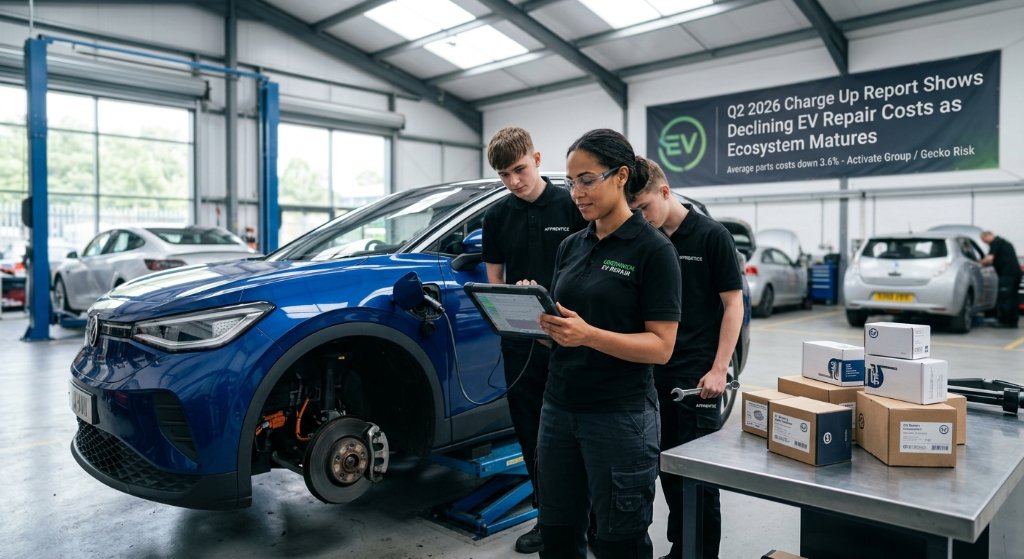
But the tide is finally turning. The newly released Q2 2026 Charge Up report—co-published by collision management specialist Activate Group and EV data firm Gecko Risk—proves that the EV ownership landscape is entering its mature era. EV repair costs have fallen by 1.9% year-on-year, indicating a steady downward trajectory that is reshaping the economics of electric mobility.
Inside the Data: The Maturing EV Ecosystem
Historically, the high cost of EV components and a severe shortage of qualified high-voltage technicians created a bottleneck that kept repair prices artificially high. The Q2 2026 report signals a structural shift: the repair network is finally scaling up. This positive trajectory is driven by several key factors:
- Cheaper, More Available Parts: Average parts costs declined by 3.6% year-on-year, marking two consecutive quarters of decline as supply chains stabilize and salvage networks mature.
- Technician Expertise: More independent collision centers are investing in high-voltage training and safety gear, breaking the manufacturer-dominated repair monopoly.
- Lower Cycle Times: Better parts logistics mean vehicles spend less time occupying expensive bay space, reducing overall administrative and storage overhead.
The Tesla Exception: Why the Pioneer Still Demands a Premium
While the broader market celebrates falling expenses, the Q2 2026 report highlights a persistent outlier: Tesla. Despite being the highest-selling EV brand on the road, Tesla remains the most expensive major brand to repair.
This premium is driven primarily by specialized labor rather than the price of raw materials. Tesla’s highly proprietary repair network, unique construction techniques (such as massive single-piece gigacastings), and restricted diagnostic software access mean independent mechanics are often locked out. As a result, repairing a Model 3 or Model Y requires specialized certified shops that charge premium labor rates, keeping Tesla's repair invoices stubbornly high compared to traditional legacy automakers.
Why This Matters:
This shifting economic landscape carries profound long-term implications for the entire automotive industry:
- The Winners (Everyday Buyers and Insurers): As repair costs fall, the risk profile of EVs is stabilizing. For the consumer, this translates directly to lower insurance premiums—removing one of the most frustrating hidden costs of EV ownership.
- The Winners (Mass-Market Challengers): Legacy brands and rapid scaling players like BYD (which has skyrocketed to second place in registrations) win big. Their more conventional, easily repairable vehicle architectures mean lower claims severity, making them highly attractive to fleet buyers who manage thousands of vehicles.
- The Losers (Tesla's Walled Garden): Tesla is at a critical crossroads. As competitors aggressively lower their Total Cost of Ownership (TCO), Tesla’s expensive, closed-loop service network will transition from a minor nuisance to a major competitive disadvantage. If Tesla doesn't democratize its repair process and lower labor barriers, pragmatist buyers will jump ship to more repairable brands.
- Market Signal: This data marks the official transition of EVs from specialized tech novelties to commoditized, everyday transport. The era of the "EV tax" at the body shop is drawing to a close.
The Road Ahead
The myth that electric vehicles are financial time bombs in minor accidents is officially being debunked. While Tesla owners must still navigate a costly and proprietary service ecosystem, the broader industry is successfully scaling and demystifying high-voltage repairs. As parts supply chains continue to mature and high-voltage training becomes standard curriculum for local mechanics, the financial barrier to EV ownership will continue to disintegrate, paving the way for the next massive wave of mainstream adoption.