EV Savings Under Scrutiny: Americans Doubt Real-World Financial Benefits Amidst Rising 'Hidden' Costs
The long-held promise of substantial financial savings with electric vehicle ownership is facing a harsh reality check. A recent Bumper.com survey, co...
Editorial Team
World Of EV
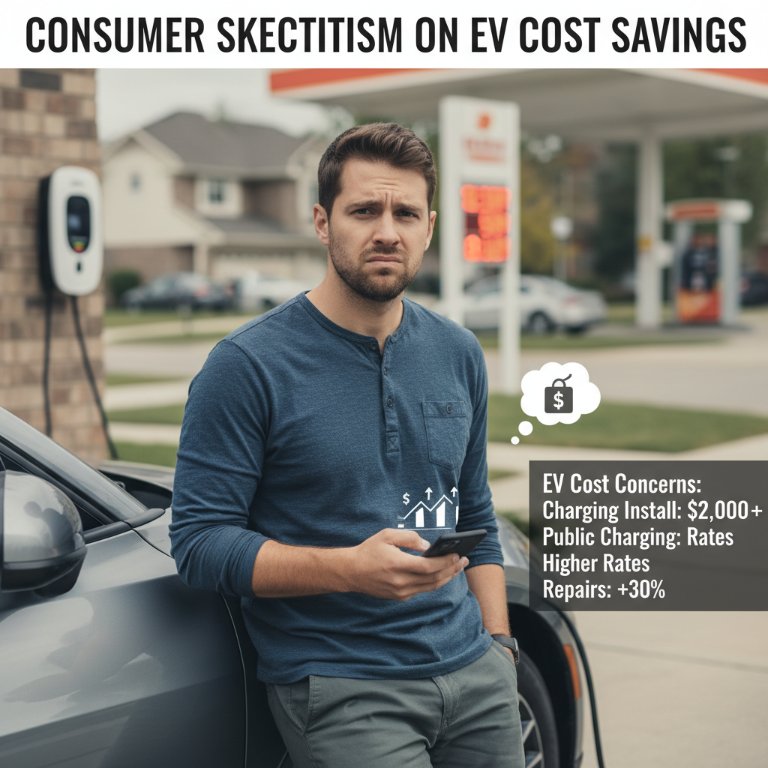
The long-held promise of substantial financial savings with electric vehicle ownership is facing a harsh reality check. A recent Bumper.com survey, conducted between April 3 and April 6, 2026, reveals that a significant number of Americans remain unconvinced that EVs offer meaningful real-world financial advantages. This skepticism extends beyond initial vehicle pricing and charging infrastructure concerns, pointing to a broader misunderstanding or underestimation of the true total cost of EV ownership.
The Hidden Costs Emerge: Home Charging and Public Rates
While the allure of ditching the gas pump remains strong for many, the survey highlights several 'hidden' costs that are increasingly influencing consumer perceptions. One prominent concern is the expense associated with establishing a Level 2 home charging station. Essential for practical daily EV use, these installations typically run about $2,000. While federal tax credits can offset some of this, the upfront investment is a barrier for many prospective buyers.
Adding to the financial puzzle, public fast charging, often necessary for longer trips or for those without home charging options, is 'substantially more expensive' than residential electricity rates. This pricing disparity can erode the perceived fuel savings, as drivers relying heavily on public networks might find their 'fueling' costs rivaling, or even exceeding, gasoline vehicles on road trips.
Repair Bills Take a Heavier Toll
Further complicating the financial calculus is the cost of vehicle maintenance and repair. While EVs typically boast lower routine maintenance costs due to fewer moving parts like oil changes and spark plugs, a critical factor is emerging: repair costs after incidents. Kelley Blue Book estimates suggest that EV repairs can be approximately 30% more expensive than those for gasoline-powered vehicles. This is largely attributed to longer diagnostic and repair times, specialized labor requiring additional certifications, and the complexity of managing high-voltage battery packs during collision repair.
Why This Matters:
This Bumper.com survey acts as a crucial barometer for the evolving EV market, signaling a maturation where consumers are looking beyond the initial hype and government incentives to the long-term financial realities. The findings underscore a significant challenge for EV manufacturers and policymakers: the narrative of universal, effortless savings is not resonating as widely as once assumed.
Who Wins? Manufacturers who transparently address the total cost of ownership, perhaps by bundling home charging solutions or offering comprehensive service plans, stand to gain trust. The used EV market might also see a boost, as the initial depreciation hit has already occurred, making them a more attractive value proposition for cost-conscious buyers.
Who Loses? EV brands that continue to assume buyers will overlook these ancillary costs, or those with less robust and affordable repair networks, could face slower adoption rates. The perception of EVs as a premium-only product, despite efforts to introduce more affordable models, risks being reinforced.
Market Signal: This report is a clear signal that the industry must shift its focus from purely promoting environmental benefits and performance to thoroughly educating consumers on the holistic financial picture of EV ownership. It's not enough to say EVs are cheaper to 'fuel'; the entire ecosystem of ownership must be considered. This could spur innovation in repair techniques, parts availability, and transparent charging network pricing models. It also emphasizes the importance of residential charging infrastructure in making EVs truly cost-effective for the average driver.
The takeaway is clear: for electric vehicles to achieve widespread mainstream adoption, the industry must proactively address these emerging cost concerns. The initial enthusiasm is now giving way to practical considerations, and future growth hinges on convincing buyers that the financial benefits are tangible, predictable, and outweigh the perceived complexities.