EV Tipping Point: Price Parity with ICE Vehicles Just Six Months Away, Gadkari Declares
The long-anticipated era of electric vehicles reaching cost parity with their internal combustion engine (ICE) counterparts is no longer a distant dre...
Editorial Team
World Of EV
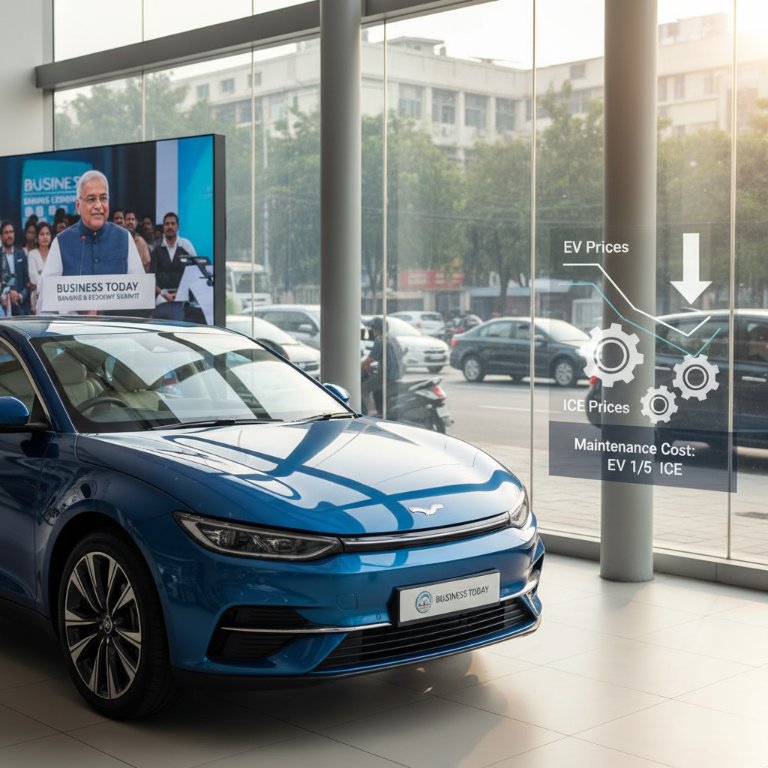
The long-anticipated era of electric vehicles reaching cost parity with their internal combustion engine (ICE) counterparts is no longer a distant dream, but an imminent reality. Union Transport Minister Nitin Gadkari has made a definitive declaration, stating that within the next six months, the upfront cost of electric cars and two-wheelers is expected to align with traditional gasoline and diesel vehicles. This groundbreaking shift, announced at the Business Today Banking and Economy Summit, is primarily fueled by rapid advancements and falling prices in lithium-ion battery technology, marking a pivotal moment for the global automotive industry and consumer adoption.
For years, the higher sticker price of EVs has been the primary hurdle preventing widespread adoption, despite the clear environmental benefits and lower running costs. This announcement from a key governmental figure signals a dramatic acceleration towards mainstream EV accessibility, moving beyond niche markets and into the hands of the everyday consumer. It underscores the maturity of the EV ecosystem and the relentless innovation driving down critical component costs.
The Road to Price Parity Paves the Way
Minister Gadkari's bold timeline isn't just an optimistic forecast; it reflects significant tangible progress within the battery industry. The continuous reduction in the cost-per-kilowatt-hour (kWh) for lithium-ion batteries—the single most expensive component in an EV—is the engine driving this affordability revolution. What once seemed a distant future, where battery costs would necessitate government subsidies to make EVs competitive, is now being achieved through sheer technological and manufacturing prowess. This rapid decline in battery prices means manufacturers can offer compelling EVs without passing exorbitant costs onto buyers. For perspective, only a few years ago, battery packs alone could constitute nearly half the vehicle's total cost, a barrier now rapidly diminishing.
Unpacking the Maintenance Advantage
Beyond the upfront cost, Gadkari also highlighted another critical differentiator: the vastly superior economics of EV ownership. He asserted that electric vehicles would incur maintenance costs at merely one-fifth of what ICE engines demand. This substantial reduction stems from the inherent simplicity of an electric powertrain. EVs have significantly fewer moving parts, eliminating the need for routine oil changes, spark plug replacements, and complex exhaust system maintenance that are standard for ICE vehicles. Furthermore, regenerative braking in EVs significantly extends the life of brake pads, further contributing to lower long-term running costs. This total cost of ownership (TCO) advantage, combined with impending price parity, presents an overwhelmingly compelling case for consumers to make the switch.
Why This Matters:
This announcement is nothing short of a seismic shift, signaling the true arrival of the electric vehicle in the mainstream. It has profound implications across the entire automotive value chain:
- Consumers Win Big: The most immediate beneficiaries are consumers who have been on the fence due to initial purchase price concerns. With price parity, coupled with the dramatic reduction in running and maintenance costs, the financial argument for an EV becomes irrefutable. This will democratize access to electric mobility and accelerate adoption rates globally.
- EV Manufacturers Gain Momentum: Companies committed to electrification stand to gain immensely from the surge in demand this price shift will inevitably trigger. It validates their long-term strategies and investment in EV platforms and battery research. Smaller players and startups may find a more level playing field as the cost barrier shrinks.
- ICE Incumbents Face a Reckoning: For traditional automakers still heavily reliant on ICE profits, this signals an an urgent imperative to accelerate their EV transition. The grace period for gradual shifts is rapidly closing. Those slow to adapt risk significant market share erosion as consumers flock to more economical and environmentally friendly alternatives. The entire ICE supply chain, from component manufacturers to service centers, will need to pivot or face obsolescence.
- Market Signal of a Tipping Point: Gadkari's statement, particularly its tight six-month timeline, serves as a powerful market signal. It indicates that the industry has reached a crucial inflection point where economies of scale, technological maturity, and government policy are converging to make EVs the logical choice. It reinforces the idea that the electric transition is no longer a matter of 'if,' but 'how quickly.'
In conclusion, Minister Gadkari's projection of EV price parity within six months, bolstered by falling battery costs and unparalleled maintenance advantages, marks a definitive turning point for the automotive industry. It transforms EVs from a premium alternative into a financially superior choice for the masses. The race to electrify just got a significant boost, and the implications for consumers, manufacturers, and the broader energy landscape are immense and immediate. The future of mobility is here, and it’s more accessible than ever before.