EV Veterans Reveal Ultimate Playbook to Bypass Charging Chaos and Slash Fuel Bills by 90%
The mass-market transition to electric vehicles is officially underway, but many first-time buyers are hitting a wall of frustration. From broken publ...
Editorial Team
World Of EV
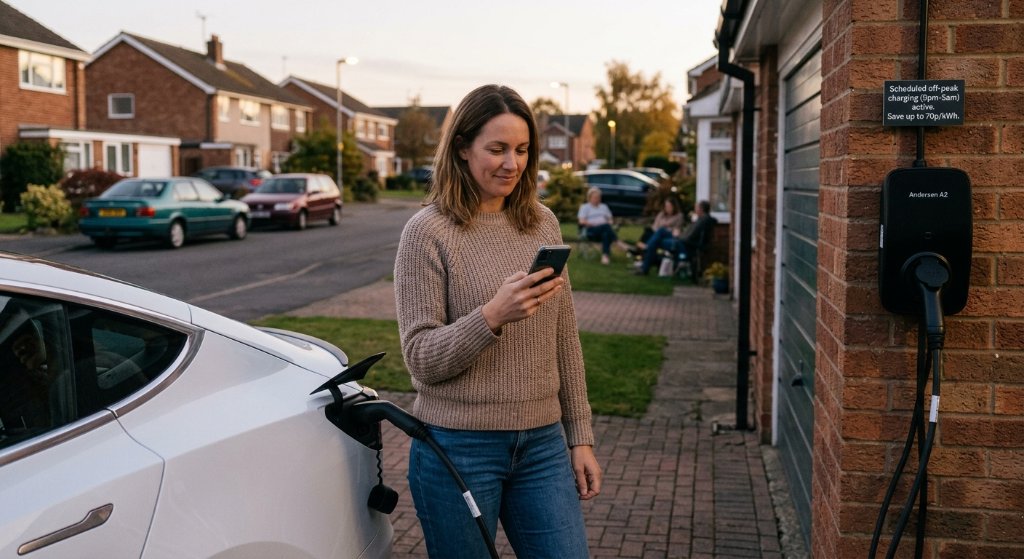
The mass-market transition to electric vehicles is officially underway, but many first-time buyers are hitting a wall of frustration. From broken public chargers to unexpected "billing shock," transitioning from gas to electrons isn't always the seamless experience promised by legacy automakers. After years of relying on adapted internal combustion engine (ICE) platforms and subpar software, the learning curve for new EV owners remains steep.
To bridge this gap, veteran EV owners who have logged hundreds of thousands of miles are sharing their battle-tested "life hacks." These recommendations bypass the marketing hype and address the daily realities of EV ownership, offering a blueprint to maximize efficiency, avoid charging headaches, and slash running costs by up to 90%.
Dodge the Charging Chaos with Live-Status Apps
One of the most frustrating hurdles for new EV owners is pulling up to a public fast charger only to find it out of service. While in-car navigation systems have improved, they often lack the real-time reliability data required to plan a stress-free road trip. Veteran owners bypass native vehicle maps entirely in favor of dedicated, crowd-sourced apps.
- Live-Status Tracking: Platforms like PlugShare, Zap-Map, and A Better Routeplanner (ABRP) provide real-time updates on charger status, indicating whether a stall is occupied, offline, or underperforming.
- Driver Reviews: Crowd-sourced comments warn drivers about broken physical plugs, payment software failures, or reduced charging speeds before they even arrive.
- Route Optimization: Specialized apps recalculate routes based on real-time weather, elevation, and charger reliability, rather than just raw distance.
The 90% Discount: Master the Off-Peak Home Charge
Public ultra-rapid charging is undeniably convenient for road trips, but relying on it for daily driving is a financial trap. In regions like the UK, public ultra-rapid charging can cost up to 79p per kWh. In contrast, charging at home overnight on an EV-specific utility tariff can drop costs to as low as 7p per kWh—representing a massive 90% savings.
- Schedule Your Sessions: Utilize your vehicle’s infotainment system or your smart home charger's app to restrict charging to off-peak hours (typically midnight to 5:00 AM).
- Ditch the Public Grid for Daily Commutes: By treating your EV like a smartphone—plugging it in at night and waking up to a "full tank"—you almost entirely bypass the volatile pricing of public infrastructure.
- Preconditioning on Grid Power: Schedule your cabin heating or cooling to run while the car is still plugged in during these cheap hours, preserving your battery capacity for the actual drive.
Decoding the "Guess-O-Meter" and Tracking Real-World Consumption
New EV drivers are often alarmed when their dashboard range drops faster than the miles on the odometer. This discrepancy occurs because official range ratings (like EPA or WLTP) are conducted under ideal laboratory conditions. The vehicle's onboard range estimator—affectionately dubbed the "Guess-O-Meter" by the community—constantly recalibrates based on driving style and climate.
- Monitor Consumption, Not Miles: Learn to read your car's efficiency metric (typically miles per kWh or Wh/km). If your car averages 3.5 miles per kWh, a 75 kWh battery will reliably yield about 262 miles of range.
- Expect Seasonal Drops: Cold weather can degrade EV range by 20% to 30% due to battery chemistry slowdowns and cabin heating demands.
- Speed is the Enemy of Range: Aerodynamic drag increases exponentially at highway speeds. Dropping your speed from 80 mph to 70 mph can dramatically improve your real-world range.
Why This Matters:
This collective wisdom from EV veterans highlights a critical reality: the gap between theoretical EV convenience and real-world execution is currently being filled by "user ingenuity" rather than seamless industry integration.
For legacy automakers and charging networks, this is a wake-up call. Third-party software developers and utility providers are currently winning the customer loyalty battle because vehicle operating systems still fail to adequately manage range realities and charging reliability. Until automakers build these "hacks"—such as automatic off-peak scheduling, battery preconditioning, and highly accurate live-status routing—directly and flawlessly into their native software, mass-market adoption will continue to face friction.
The ultimate winners in this landscape are smart utility companies capitalizing on off-peak grid management and savvy buyers who master these hacks to run their vehicles for pennies on the dollar. The losers are the public charging networks that refuse to maintain hardware uptime, as educated drivers will increasingly bypass them altogether.
Conclusion
Transitioning to an electric vehicle does require a shift in mindset, but it does not have to be painful. By treating public chargers as a secondary backup, routing with live-status apps, and taking advantage of dirt-cheap overnight home tariffs, drivers can unlock the true economic and practical benefits of electric mobility. As the industry matures, these "hacks" must transition from expert workarounds to standard, automated vehicle features.