EVs Defy Floodwaters: Real-World Testimonials Shatter Old Perceptions of Electric Vehicle Vulnerability
For years, a pervasive misconception has shadowed electric vehicles: their perceived vulnerability to water. The popular narrative often suggested tha...
Editorial Team
World Of EV
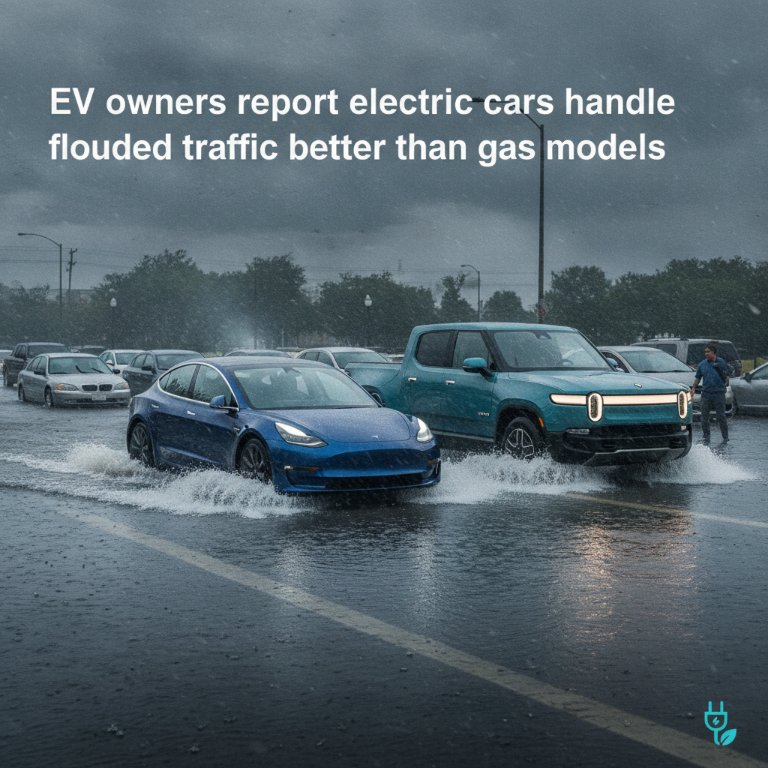
For years, a pervasive misconception has shadowed electric vehicles: their perceived vulnerability to water. The popular narrative often suggested that high-voltage battery packs and complex electronics would inevitably falter when confronted with significant flooding, leaving drivers stranded. However, recent real-world testimonials from EV owners are dramatically rewriting this script, demonstrating an unexpected resilience that often surpasses their internal combustion engine (ICE) counterparts.
Real-World Resilience: Dispelling the Myth
Online forums and communities have become a crucial platform for EV drivers to share their experiences, and a recent prompt for flood navigation stories has yielded compelling evidence. Numerous owners reported their electric vehicles performed at least as well as, or even better than, gas-powered vehicles when facing inundated roads. These aren't isolated incidents but a growing body of anecdotal proof challenging long-held assumptions.
- Tesla Model 3's Unflinching Performance: One notable account features a Tesla Model 3 owner who successfully navigated a flash flood, observing that nearby ICE cars were completely stuck while their EV pressed on. This scenario highlights a stark contrast in capability when water levels become critical for traditional powertrains.
- Rivian R1T Forges Ahead: Further reinforcing this resilience, a Rivian R1T driver reported experiencing no adverse effects even with water levels reaching the door handles. This aligns with Rivian's engineering, which boasts impressive water fording capabilities for its R1T, officially rated up to 43.1 inches depending on suspension settings. Such robust performance in challenging conditions underscores a fundamental design advantage.
Engineering Beneath the Surface: Why EVs Excel
The ability of many EVs to traverse flooded areas more effectively than traditional vehicles is no mere coincidence; it is a direct result of their inherent design and engineering principles:
- Sealed Battery Packs: At the heart of an EV's flood resistance are its meticulously sealed battery packs. These enclosures are typically designed to meet stringent ingress protection (IP) standards, such as IP67 or IP68, which certify their ability to withstand immersion in water. This prevents water from reaching crucial high-voltage components, which is a key differentiator from ICE vehicles where a single water breach can cause catastrophic failure. The exterior of the battery pack is electrically isolated and heavily shielded.
- Elimination of Air Intake Vulnerability: Unlike gasoline or diesel engines that rely on air intake for combustion, EVs do not require air to operate. This eliminates the critical vulnerability of hydrolocking an engine, a common and often fatal issue for ICE vehicles when water enters the air intake system. Without an exhaust system, there's also no concern about water entering the exhaust pipe and stalling the engine.
- Sealed Electric Motors: Electric motors are generally self-contained and better sealed against water ingress compared to the complex internal workings of an ICE. Their simpler mechanical nature and robust casings contribute to their ability to function submerged.
- Strategic Component Placement: Many EV architectures, particularly those built on dedicated 'skateboard' platforms, often feature batteries mounted low in the chassis, potentially acting as ballast, while other vital electrical components are frequently positioned higher within the vehicle, away from common water levels. This, combined with adjustable air suspension in vehicles like the Rivian R1T that can increase ground clearance, further enhances their wading capabilities.
Why This Matters:
- Boosting Consumer Confidence: The anecdotal evidence directly combats a primary source of anxiety for prospective EV buyers in regions prone to heavy rainfall or flash floods. Dispelling the myth that water and electricity are an inherently catastrophic mix for EVs will undoubtedly accelerate adoption, particularly in markets where climate change is increasing the frequency of extreme weather events.
- Redefining Vehicle Durability: For too long, the 'ruggedness' of a vehicle has often been associated with traditional off-road ICE machines. These testimonials reposition EVs, especially purpose-built electric trucks and SUVs, as equally, if not more, capable in challenging conditions. This could become a powerful new marketing angle for manufacturers, shifting consumer perceptions of EV limitations.
- A Call for Nuance and Responsibility: While these accounts are encouraging, it's crucial for both drivers and manufacturers to exercise caution. No vehicle, EV or ICE, is truly flood-proof, and driving through deep, fast-moving water or saltwater remains inherently dangerous. Water can still damage cabin electronics, underbody components, or hidden connectors, and saltwater corrosion poses a significant long-term threat to any vehicle. Consumers must still respect wading depth limits and heed warnings, as evidenced by incidents where Tesla owners ignored flood warnings and suffered severe damage. J.D. Power experts caution that water will find a way in, damaging components regardless of powertrain type.
- Pushing Design and Safety Standards: The positive performance in floods will likely prompt manufacturers to further enhance sealing technologies and integrate even more robust water protection into future designs. Stricter standards for battery housing seals, like China's updated GB 38031-2025, are already emerging, emphasizing containment and protection. This competition to offer superior resilience will ultimately benefit consumers.
Looking Ahead: A More Resilient Electric Future
The consensus among EV owners who have braved flooded roads is clear: electric vehicles often possess an inherent advantage over their gasoline-powered counterparts. While the fundamental dangers of driving through floodwaters persist for all vehicles, the robust, sealed nature of EV powertrains frequently offers a level of protection and operational continuity previously unexpected. This shift in perception marks a pivotal moment, affirming the advanced engineering behind modern EVs and paving the way for a more confident and resilient electric future, even in the face of nature's unpredictable challenges.