EVs Ignite a Home Power Revolution: Vehicle-to-Load Tech Becomes Essential for Energy Resilience
The automotive landscape is undergoing a profound transformation, and it extends far beyond the tailpipe. Electric vehicles, once solely viewed as a s...
Editorial Team
World Of EV
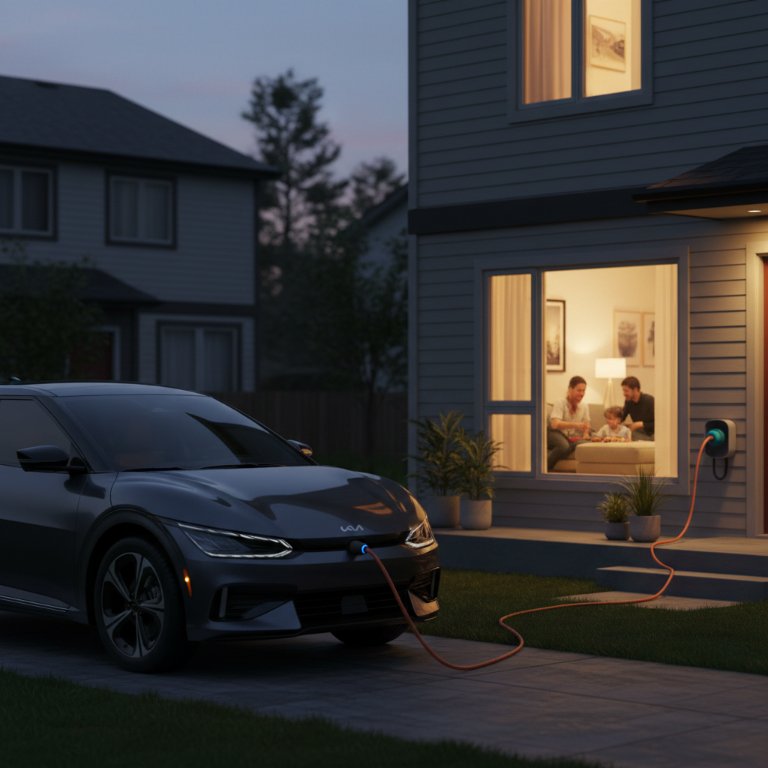
The automotive landscape is undergoing a profound transformation, and it extends far beyond the tailpipe. Electric vehicles, once solely viewed as a sustainable alternative to gasoline cars, are now asserting themselves as critical components of home energy resilience. Thanks to the accelerating adoption of Vehicle-to-Load (V2L) technology, a growing roster of EVs can now serve as robust emergency home power sources, effectively sidelining the need for cumbersome, separate home backup systems.
Beyond Transportation: EVs as Mobile Powerhouses
For years, homeowners facing power outages have relied on noisy, fossil-fuel-guzzling generators or expensive, dedicated stationary battery systems. The advent of V2L technology fundamentally alters this paradigm. It transforms your EV into a massive, silent, and clean power bank on wheels. With average battery sizes ranging from a substantial 60 to 80 kilowatt-hours (kWh), these electric vehicles possess the capacity to power essential household appliances—think refrigerators, lights, and communication devices—for at least two full days, often much longer depending on usage. This isn't just a niche feature; it's a profound redefinition of vehicle utility, integrating the car directly into the home's energy infrastructure.
Pioneering the Power Shift: Key Models Leading the Charge
While the concept of vehicle-to-grid (V2G) has been discussed for years, V2L is the immediate, tangible benefit reaching consumers today. This capability is rapidly becoming a significant differentiator for forward-thinking automakers. Our expert analysts at "World Of EV" have highlighted several key models that are already empowering owners with this groundbreaking functionality:
- Nissan Leaf: A pioneer in the EV space, demonstrating early V2L capabilities, albeit with more limited output compared to newer models.
- Hyundai Ioniq 5/6: These sleek, purpose-built EVs from Hyundai have made V2L a core selling point, offering convenient power outlets for diverse applications.
- Kia EV6/EV9: Kia's E-GMP platform siblings mirror Hyundai's V2L prowess, with the EV9's larger battery promising even greater home backup potential.
- Ford F-150 Lightning: Ford's electric pickup truly showcases the power-hungry potential of V2L, capable of powering an entire home for days, effectively turning the truck into a mobile power station.
- Tesla Cybertruck: With its massive battery packs and robust electrical architecture, the Cybertruck is poised to offer significant V2L capabilities, aligning with Tesla's broader energy ambitions.
- GMC Hummer EV: This colossal electric supertruck, with its immense battery capacity, offers unparalleled emergency power potential, cementing its role as more than just an off-road beast.
Why This Matters: The Dawn of Distributed Energy Independence
This isn't just about convenience; it's a strategic shift with far-reaching implications. The rise of V2L-equipped EVs signals a new era of distributed energy independence and resilience. For the savvy EV enthusiast and prospective buyer, the value proposition is immense. They gain not only sustainable transportation but also a silent, reliable, and always-fueled backup power system, eliminating the upfront cost and ongoing maintenance of separate generators or battery walls. This directly addresses the silent question: "Why does this matter to me?" – it provides security, cost savings, and enhanced utility from a single investment.
Who Wins? EV owners are the clear victors, gaining unprecedented control over their home's energy supply during outages. Automakers who prioritize and effectively market V2L technology also win, differentiating their products in an increasingly crowded market. This feature is a powerful selling point that speaks directly to real-world problems. Furthermore, the push towards V2L could pave the way for more sophisticated Vehicle-to-Grid (V2G) integration, potentially allowing EVs to feed power back to the grid during peak demand, stabilizing energy infrastructure and offering owners financial incentives.
Who Loses? Manufacturers of traditional fossil-fuel generators and stationary home battery systems may face significant headwinds as consumers increasingly see their EV as a dual-purpose asset. The market for dedicated home backup solutions will likely consolidate and innovate to maintain relevance against this powerful new contender.
What Does This Signal to the Market? This trend signals that the automotive industry is rapidly converging with the energy sector. EVs are no longer just transportation appliances; they are becoming essential nodes in a more resilient, decentralized energy future. This pushes other manufacturers to integrate similar technology, accelerating the development of robust bidirectional charging capabilities. It underscores the multi-faceted value proposition of electric vehicles and will undoubtedly accelerate EV adoption as consumers recognize the tangible, everyday benefits beyond just driving.
Looking ahead, the integration of V2L technology marks a pivotal moment, transforming electric vehicles into indispensable assets for modern living. As battery technology advances and charging infrastructure expands, our EVs will not only take us where we need to go but also power our homes, secure our essential services, and actively participate in a smarter, more resilient energy grid. The future is electric, and it's powering more than just the road ahead.