Extreme Temperatures Slash EV Range and Hike Costs, AAA Study Reveals Critical Challenges
A groundbreaking study released today by AAA uncovers the significant and often underappreciated impact of extreme temperatures on electric vehicle (E...
Editorial Team
World Of EV
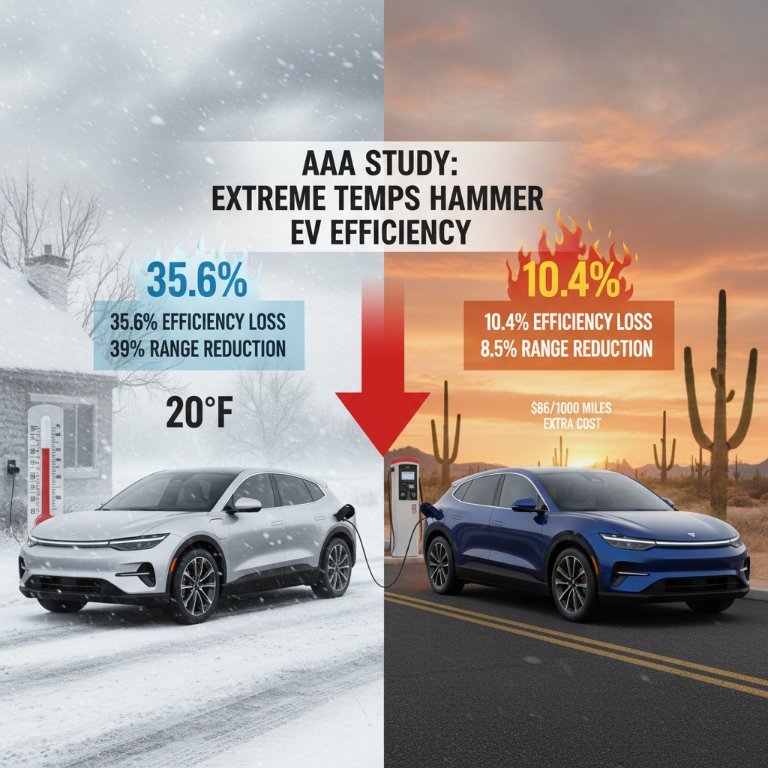
A groundbreaking study released today by AAA uncovers the significant and often underappreciated impact of extreme temperatures on electric vehicle (EV) efficiency and operating expenses. This isn't merely an academic exercise; it's a stark reminder to prospective buyers and a call to action for the industry regarding the real-world performance of EVs beyond ideal conditions.
After years of anecdotal evidence and informal owner reports, AAA's comprehensive analysis provides concrete data, validating the challenges EVs face when the mercury plummets or soars. For a burgeoning market striving for mainstream adoption, these findings underscore critical areas where technology must evolve and consumer expectations must be carefully managed. The study effectively moves the conversation from 'do EVs perform differently in extreme weather?' to 'by how much, and what does it truly cost the owner?'
The Chilling Reality of Cold Weather Performance
When temperatures drop to a frigid 20 degrees Fahrenheit, the impact on EV performance is nothing short of dramatic. The AAA study found a substantial 35.6% drop in overall efficiency. This isn't just about how much energy is consumed; it translates directly to a staggering 39% reduction in the vehicle's driving range. This significant decrease can turn a comfortable long-distance trip into a logistical nightmare, requiring more frequent and potentially longer charging stops.
- Why it Matters: The primary culprits for this sharp decline are the inherent challenges of battery chemistry in cold conditions and the energy-intensive demands of cabin heating. Lithium-ion batteries perform less efficiently in the cold, slowing down the chemical reactions that generate power. Moreover, traditional resistive heaters used in many EVs are energy hogs, drawing significant power to keep occupants warm, often without the benefit of a highly efficient heat pump system.
Heat Takes Its Toll, Albeit Less Severely
While less severe than cold, scorching temperatures also take a measurable bite out of EV efficiency. At a sweltering 95 degrees Fahrenheit, the study observed a 10.4% reduction in efficiency and an 8.5% decrease in driving range.
- Why it Matters: The energy drain in hot weather primarily stems from the need for aggressive cabin cooling via air conditioning and, crucially, battery thermal management. Keeping the battery pack within its optimal operating temperature range prevents degradation and ensures performance, but this cooling process itself consumes valuable energy, impacting overall range.
Charging Costs: A Tale of Two Temperatures and Locations
The AAA study also sheds critical light on the variability of EV operating costs, particularly influenced by charging habits in cold weather. For owners with access to home charging, the news is relatively positive: in cold weather, EVs charged at home were found to be cheaper to operate than comparable hybrid vehicles. This reinforces the significant financial advantage of home charging rates.
However, the picture changes dramatically for those reliant on public charging infrastructure, especially in cold conditions. The study revealed that EVs using public chargers in cold weather became approximately $86 more expensive per 1,000 miles than hybrids.
- Why it Matters: This disparity highlights a crucial factor for potential buyers: where you charge matters immensely. Public charging networks often carry a premium per kilowatt-hour, and when combined with the reduced efficiency caused by cold weather, the operating cost advantage of an EV can quickly evaporate, or even reverse. This finding is a critical consideration for urban dwellers or those in apartments without dedicated charging access, who may face higher daily costs than initially anticipated.
Why This Matters:
This AAA study is not merely a data dump; it's a pivotal moment for the EV market, signaling both challenges and opportunities. For consumers, it underscores the absolute necessity of understanding real-world performance expectations. The notion of an 'EPA range' should be treated as a best-case scenario, with significant adjustments needed for extreme climates. Prospective buyers in colder regions, or those without home charging, must factor in potentially higher operating costs and reduced utility from their vehicles. This insight empowers consumers to make more informed purchasing decisions and to plan trips more realistically.
For manufacturers, this study amplifies the urgent need for continued innovation in thermal management systems. While many modern EVs incorporate heat pumps – a significant improvement over older resistive heaters – their widespread adoption and further efficiency gains are paramount. Tesla's focus on integrated thermal management, for example, represents a leading edge, and other automakers must catch up. Companies that can deliver more consistent range and charging efficiency across a wider temperature spectrum will undoubtedly gain a competitive edge. This is not a 'do-or-die' moment for the EV industry as a whole, but it is a clear signal that the next generation of EVs must prioritize robust all-weather performance to truly achieve mass market appeal and displace internal combustion engine vehicles globally. Who wins? Savvy consumers who do their homework, and manufacturers who invest heavily in advanced thermal management and battery preconditioning strategies. Who loses? Those who overpromise on range, or public charging networks that fail to offer competitive pricing, particularly as EV efficiency drops.
Conclusion:
The AAA study offers invaluable, data-driven insights into the real-world operational challenges of electric vehicles in extreme temperatures. While EVs continue their inexorable march towards automotive dominance, these findings serve as a crucial reminder that efficiency and cost are highly dependent on environmental conditions and charging infrastructure access. Moving forward, the industry must prioritize advanced thermal management systems and consumer education to ensure that the promise of electric mobility translates into a consistent and cost-effective reality for all drivers.