Fleeing the Fuel Shock: Australian Households Turn to EVs as the Ultimate Cost-of-Living Safe Haven
Australian households are abandoning the petrol station in droves, opting for electric vehicles as a strategic financial fortress against relentless i...
Editorial Team
World Of EV
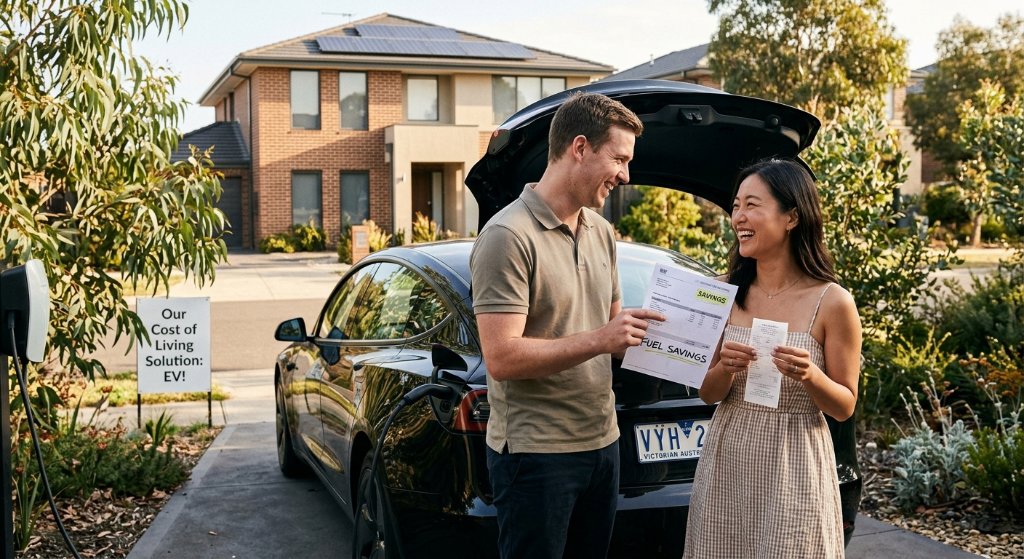
Australian households are abandoning the petrol station in droves, opting for electric vehicles as a strategic financial fortress against relentless inflation and soaring fuel prices. This structural shift is no longer just an environmental trend; it is a cold, hard fiscal strategy. New national accounts data released by the Australian Bureau of Statistics (ABS) reveals that despite an otherwise highly cautious consumer market, vehicle purchases spiked by a massive 10.3% in the June quarter—dominated by EVs and hybrids. While general retail spending remains flat, EV sales are literally keeping the national economy afloat, contributing heavily to a stronger-than-expected 0.4% GDP growth.
For years, skeptics argued that high upfront premiums would keep electric cars relegated to the garages of the wealthy. However, as geopolitical tensions in the Middle East threaten oil supplies and send local petrol prices soaring, the financial math of car ownership has changed overnight. Savvy buyers are realizing that while inflation pinches their weekly grocery budgets, shifting from petrol to electricity represents the single largest variable cost reduction they can make on their household balance sheets.
How the Middle East Crisis Accelerated the Transition
The immediate catalyst for this surge is a hostile global energy landscape. With escalating conflicts in the Middle East disrupting the Strait of Hormuz, oil prices have spiked, leaving traditional internal combustion engine (ICE) drivers highly vulnerable to external shocks. Australian families are refusing to be held hostage by volatile international fuel cartels, choosing instead to lock in predictable energy costs.
To mitigate these pressures, households are strategically reallocating their capital. Instead of spending on high-end discretionary items like overseas travel—which saw a sharp decline this quarter—consumers are investing in long-term household assets that offer immediate operational savings. Key drivers of this shift include:
- Total Cost of Ownership (TCO) Prioritization: Buyers are looking past the initial sticker price, calculating the massive multi-year savings in fuel and routine maintenance.
- Insulation from Oil Shocks: Transitioning to EVs allows households to leverage domestic grid power, or better yet, rooftop solar setups, driving their daily commute costs down to near-zero.
- Reduced Maintenance Overheads: Without oil filters, spark plugs, and complex multi-speed transmissions, EVs eliminate the costly, unpredictable repair bills common with aging ICE vehicles.
The Hard Numbers Behind the "Structural Shift"
The hard data confirms this macroeconomic pivot. Grace Kim, the ABS Head of National Accounts, pointed out that this isn't random spending, but highly calculated budgeting: "The rise in electric vehicle purchases may have reflected households taking a longer-term approach to cost of living pressures, with some choosing EVs to help reduce ongoing expenses."
The Electric Vehicle Council's (EVC) latest sales report paints an even clearer picture of this transition. Consumer demand has coalesced around market leaders who have successfully brought scale and price parity to the region:
- Explosive Growth: Tesla and Polestar recorded a combined 7,821 deliveries in August alone—a staggering 148% increase compared to August of last year.
- The Undisputed King: The Tesla Model Y remains the absolute heavyweight champion of the Australian EV market, with deliveries soaring by 176% year-on-year to 6,414 units.
- Year-to-Date Surges: Cumulative YTD deliveries for Tesla and Polestar have reached 37,532, marking a 91% surge over the same period last year.
- The Death of Price Premiums: As EVC CEO Julie Delvecchio highlighted, "EVs are not only close to or at price parity with petrol cars, but Australians are also increasingly looking beyond the purchase price."
Why This Matters:
This economic shift signals a profound transformation in the automotive landscape, with clear winners and losers emerging in real-time.
- The Winners: Tesla and aggressive Chinese EV manufacturers (such as BYD) who have achieved the vertical integration needed to lower retail prices. They are capturing massive market share because they can deliver vehicles that meet the price-sensitive demands of middle-class families today. Furthermore, novated leasing programs and salary-packaging firms are winning big, thanks to robust government Fringe Benefits Tax (FBT) exemptions that make EV adoption financially irresistible.
- The Losers: Legacy automakers who have dragged their feet on electrification. Consider companies like Mazda, which historically struggled to offer viable electric options—evidenced by the critical flop and quick discontinuation of the low-range MX-30. Brands that lack a competitive, affordable, pure-electric lineup are being rapidly cut out of the family budget. Traditional petrol station networks are also on notice; as fuel sales volumes drop, their business models must rapidly pivot to fast-charging and convenience retail to survive.
- The Market Signal: The narrative of "range anxiety" has officially been dethroned by "running-cost anxiety." For the average consumer, an EV is no longer a technology statement; it is a financial shelter. Legacy brands still sitting on the fence face an existential "do-or-die" moment. If they cannot deliver highly efficient, competitively priced EVs to the market immediately, they will simply be phased out of the consumer's household budget.
With the Reserve Bank of Australia keeping a hawkish eye on inflation, households will continue to ruthlessly optimize their balance sheets. Cutting out the fuel pump and trading it for cheaper, cleaner electrons is the most direct financial lever a modern family can pull. This isn't a temporary spike—it's a structural realignment of how, and why, we buy cars.