Ford Hits Reverse on F-150 Lightning Production, Embraces EREV as Insurance Costs Bite
Ford, a titan of American automotive manufacturing, is recalibrating its electric vehicle strategy with a significant and surprising move. The automak...
Editorial Team
World Of EV
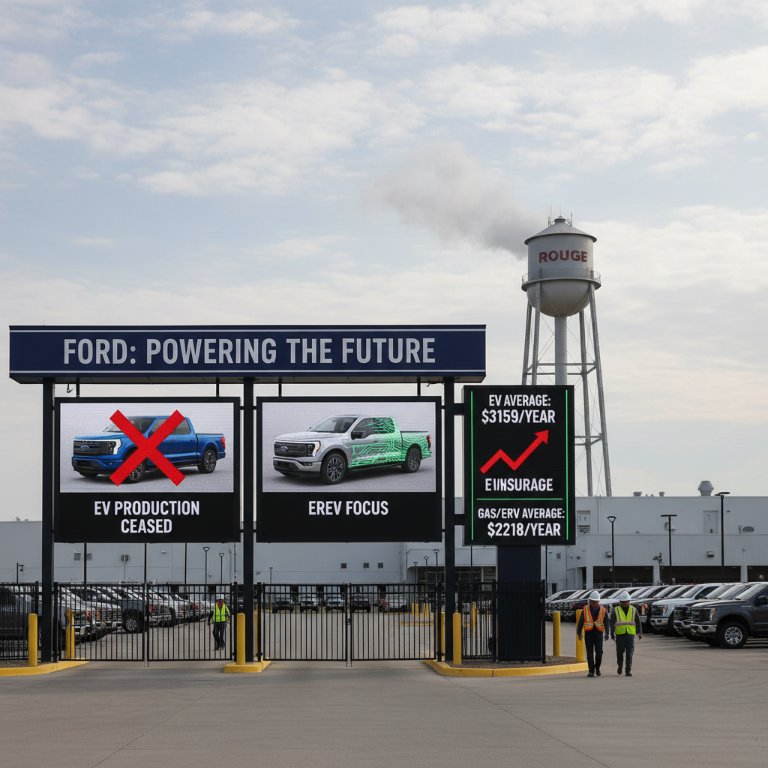
Ford, a titan of American automotive manufacturing, is recalibrating its electric vehicle strategy with a significant and surprising move. The automaker has ceased production of its ambitious F-150 Lightning at the iconic Rouge Electric Vehicle Center, signaling a strategic pivot that prioritizes established internal combustion engine (ICE) F-Series trucks. This dramatic shift is not merely a course correction but a deeper re-evaluation of the EV landscape, particularly as Ford eyes an extended-range electric vehicle (EREV) future and confronts the undeniable reality of high EV ownership costs, especially regarding insurance.
Rouge Returns to its ICE Roots, Lightning Shifts Focus
Production Halt: Ford has officially stopped manufacturing the all-electric F-150 Lightning at its Rouge plant in Dearborn, Michigan. The facility, initially envisioned as a hub for Ford's electrified future, will now recommit its resources entirely to the production of traditional internal combustion engine F-Series trucks.
Strategic Reprioritization: This move underscores a recalibration of Ford's production strategy, opting to double down on its highly profitable gasoline-powered truck lineup while reassessing the optimal path for its electric truck offerings.
The EREV F-Series: A Hybrid Evolution?
Extended-Range Vision: Ford is reportedly shifting its developmental focus towards an Extended-Range Electric Vehicle (EREV) for its truck lineup. Unlike conventional hybrids, an EREV utilizes its internal combustion engine solely as a generator to replenish a smaller battery pack, extending the vehicle's electric range without directly driving the wheels.
Bridging the Gap: This EREV strategy suggests Ford is seeking to offer the benefits of electric propulsion – instant torque, quiet operation – while mitigating common EV hurdles like range anxiety and the need for widespread fast-charging infrastructure. It could also appeal to commercial users who require consistent uptime and flexibility.
The Hidden Cost: Soaring EV Insurance Premiums
A Growing Burden: A critical factor influencing EV adoption, often overlooked, is the significantly higher cost of insurance. Recent reports highlight that electric vehicles, including popular models like the F-150 Lightning, are substantially more expensive to insure than their gasoline-powered counterparts.
Stark Disparity: In 2026, the average annual insurance premium for an EV is projected to be approximately $3,159. This stands in stark contrast to the average gas vehicle, which comes in at around $2,218 per year. This nearly $941 annual difference represents a considerable added burden to the total cost of EV ownership.
Why the Premium? Higher repair costs due to specialized components (batteries, advanced electronics), limited availability of qualified technicians, and potentially higher vehicle values contribute to these elevated premiums. For a work truck like the F-150, which often sees heavy use, this cost becomes even more pronounced.
Why This Matters: Ford's Pragmatic Reset in the EV Race
Ford's decision to halt F-150 Lightning production and pivot towards an EREV strategy isn't just a tweak; it's a profound market signal. It reveals a deep-seated recognition within Dearborn that the pure Battery Electric Vehicle (BEV) transition, particularly for high-volume, high-utility vehicles like pickup trucks, faces more significant headwinds than initially projected.
Who Wins?
Ford's Bottom Line (Potentially): By re-focusing Rouge on highly profitable ICE F-Series trucks, Ford secures its current revenue streams, which are vital for funding future EV development. The EREV approach also allows them to offer an "electrified" option without the massive upfront battery costs and charging infrastructure reliance of a pure BEV, potentially making the electrified F-Series more accessible and profitable in the near term.
Range-Anxious Consumers: The EREV concept directly addresses one of the biggest psychological barriers to EV adoption: range anxiety. Users can enjoy electric driving for daily tasks while having the security of a gasoline generator for longer hauls or when charging isn't readily available.
The Insurance Industry (for now): High EV repair costs translate into higher premiums, benefiting insurers. However, this dynamic is unsustainable for widespread EV adoption.
Who Loses?
Early F-150 Lightning Adopters: While their trucks remain valuable, a shift in production focus could signal a reduction in future R&D dedicated specifically to the BEV Lightning platform, potentially impacting long-term updates or resale value perception.
Pure BEV Advocates: This move might be seen as Ford slowing its full EV transition, potentially dampening enthusiasm among those hoping for an accelerated shift away from fossil fuels. It underscores the challenges in converting ICE loyalists directly to BEVs.
The EV Market's Momentum (Slightly): While not a complete retreat, Ford's pivot highlights the difficulties in scaling BEV production and demand, especially for higher-priced segments, in the face of infrastructure limitations and critical ownership costs like insurance. It could lead other manufacturers to re-evaluate their pure BEV timelines, potentially giving rise to more EREV or advanced hybrid solutions.
This isn't a "do-or-die" moment for Ford, but rather a "learn-and-adapt" one. It signals a pragmatic, profit-driven approach to electrification, acknowledging that the path to a fully electric future is far from linear and fraught with economic realities that extend beyond just the sticker price.
Ford's recalibration of its F-150 Lightning strategy and the embrace of an EREV future, coupled with the undeniable impact of escalating EV insurance costs, marks a significant moment in the automotive industry's electrification journey. It serves as a potent reminder that while the future is electric, the transition will be a complex tapestry woven with diverse powertrain solutions, economic realities, and evolving consumer needs. Ford, it seems, is choosing a path of measured pragmatism, aiming to electrify its iconic truck line while safeguarding profitability and addressing critical ownership concerns that impact the everyday buyer.