Ford Scraps Model e Certification, Unleashing EVs to All Dealers – A Strategic U-Turn for Blue Oval?
Ford is dramatically reshaping its electric vehicle sales strategy, announcing the discontinuation of its Model e dealer certification program, effect...
Editorial Team
World Of EV
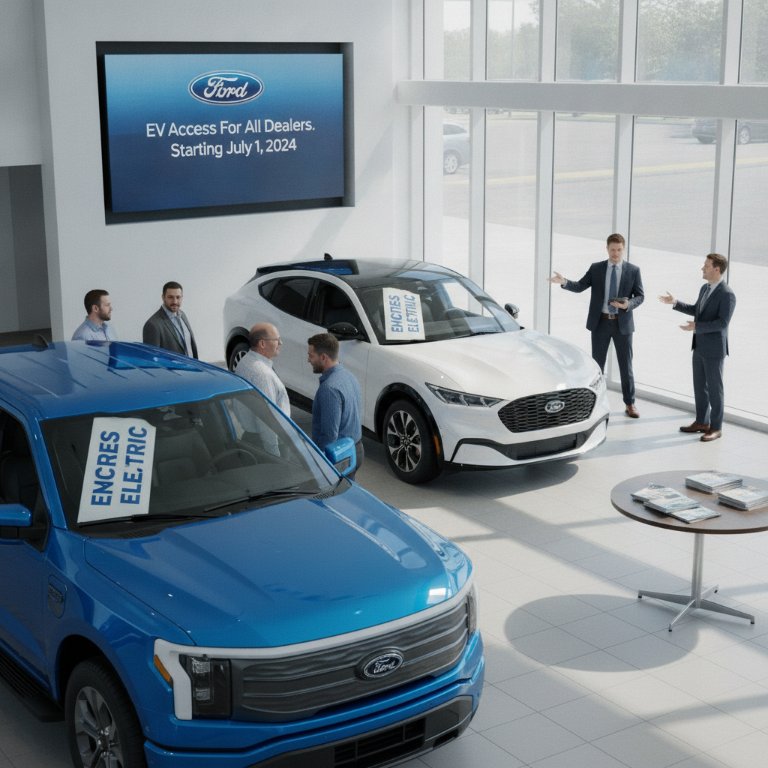
Ford is dramatically reshaping its electric vehicle sales strategy, announcing the discontinuation of its Model e dealer certification program, effective July 1, 2024. This pivotal decision means all Ford dealerships in the U.S. will gain access to sell the automaker's full EV lineup, a significant departure from the previous model that demanded substantial investments from its dealer network.
Ford's Pivotal Shift: Ending Model e Certification
Ford initially launched the Model e certification program in September 2022, with requirements taking effect on January 1, 2024. The program aimed to create a specialized EV retail experience, echoing some aspects of Tesla's direct sales model while retaining the traditional dealership structure. Dealers wishing to sell Ford EVs had to choose between two tiers: 'Certified' and 'Certified Elite.' These tiers mandated considerable financial outlays, with 'Certified' dealers investing around $500,000 and 'Certified Elite' dealers up to $1 million to $1.2 million. These investments primarily covered:
- Installation of high-powered DC fast chargers and Level 2 charging stations, with at least one DC fast charger made public.
- Specialized training for employees on EV technology, charging systems, and maintenance.
- Agreement to transparent, non-negotiable EV pricing and home delivery options.
Despite initial optimism, only about half of Ford's 3,100 dealerships committed to the program for 2024, with many expressing pushback and even filing lawsuits over the significant upfront costs.
The Rationale: Streamlining Sales and Boosting Accessibility
Ford states its decision to 'sunset' the Model e program is to simplify its EV sales model and enhance accessibility for consumers. “The world has changed,” stated Marin Gjaja, COO of Ford's Model e electric vehicle business, acknowledging that “The growth has slowed down.” By opening EV sales to its entire network of approximately 2,800 U.S. dealers, Ford aims to increase its EV sales volume and ensure that over 90% of Americans live within 20 miles of a Ford dealer capable of selling and servicing EVs.
While the mandatory certification is ending, Ford still expects dealers to demonstrate fundamental EV competency, which includes maintaining current EV training and having the necessary hardware for EV service work, such as installing two Level 2 chargers and three NEMA plugs. These new requirements are significantly less burdensome than the previous model.
Dealer Reactions: Investment vs. Opportunity
For the roughly 1,400 to 1,920 dealers who invested heavily in the Model e program, reactions are predictably mixed. Many dealers, having spent hundreds of thousands of dollars on infrastructure and training, may feel a sense of frustration or even betrayal. These dealers often faced a June 30, 2024, deadline to install charging stations under the previous requirements. The possibility of seeking reimbursement for these now-unnecessary investments looms large, potentially straining relations between the automaker and its long-standing franchise partners. Conversely, dealerships that opted out of the costly program, or those in more rural areas, now have an unexpected opportunity to enter the EV market without the previous financial barriers.
Why This Matters:
This strategic pivot by Ford signals a significant course correction in the evolving EV landscape, carrying profound implications for the automaker, its dealer network, and the broader market.
Ford's Play for Volume and Market Share: The most evident 'win' is for Ford itself. By eliminating high barriers to entry, Ford can push its EVs through its entire dealer network, potentially boosting sales volume and market share in a segment where growth has recently decelerated. This move acknowledges that the 'premium experience' model, while aspirational, was likely hindering widespread adoption. With Model e facing expected losses of up to $5.5 billion in 2024, a volume-focused approach is a pragmatic necessity.
Consumers Benefit from Accessibility, But What About Experience?: For prospective EV buyers, this is largely a win. More dealerships selling and servicing EVs means greater convenience and potentially increased competition, which could translate to more competitive pricing. However, the initial Model e program aimed to ensure a consistent, high-quality EV sales experience, a commitment that may now become more diluted across a broader, less specialized network.
The Dealer Dilemma: Winners and Losers: This is where the impact is most contentious. Dealers who invested substantial capital (averaging $600,000, and up to $1.2 million for 'Elite' status) under the Model e program are the clear 'losers' in the short term, potentially left with sunk costs and a sense of disadvantage. Expect conversations around compensation or alternative incentives. Conversely, dealerships that held back now gain immediate access to EV inventory and sales without the prior financial burden, becoming de facto 'winners.' This move could exacerbate existing tensions between Ford and its dealer body, reminiscent of similar issues faced by other OEMs like GM with Buick dealers.
A Broader Industry Readjustment: Ford's decision reflects a growing realism across the auto industry regarding the pace of EV adoption. Initial projections for rapid growth led many automakers to implement ambitious, sometimes costly, EV-specific retail strategies. The current slowdown in EV demand, coupled with persistent concerns about charging infrastructure and affordability, is forcing a re-evaluation. Ford's U-turn suggests that for mainstream brands, leveraging the existing, extensive dealer footprint for volume might be prioritized over creating a bespoke, high-cost EV sales channel, at least for now. This could signal a broader trend away from highly restrictive EV dealer programs across the industry.
In conclusion, Ford's dismantling of its Model e dealer certification program represents a calculated risk and a pragmatic shift in strategy. While it promises greater accessibility for consumers and potential sales growth for the automaker, it undeniably creates friction with dealers who bought into the previous vision. This move highlights the dynamic and often unpredictable nature of the EV transition, forcing even industry giants like Ford to continually adapt their approaches in pursuit of sustainable electrification. The coming months will reveal how effectively Ford manages dealer relations and whether this expanded access truly translates into a significant boost in its EV market presence.