Ford Unleashes Ford Energy: A 20 GWh Power Play Reshaping the Grid and Its EV Future
Ford Motor Company, a titan increasingly defined by its ambitious electric vehicle roadmap, has just unveiled a strategic masterstroke set to redefine...
Editorial Team
World Of EV
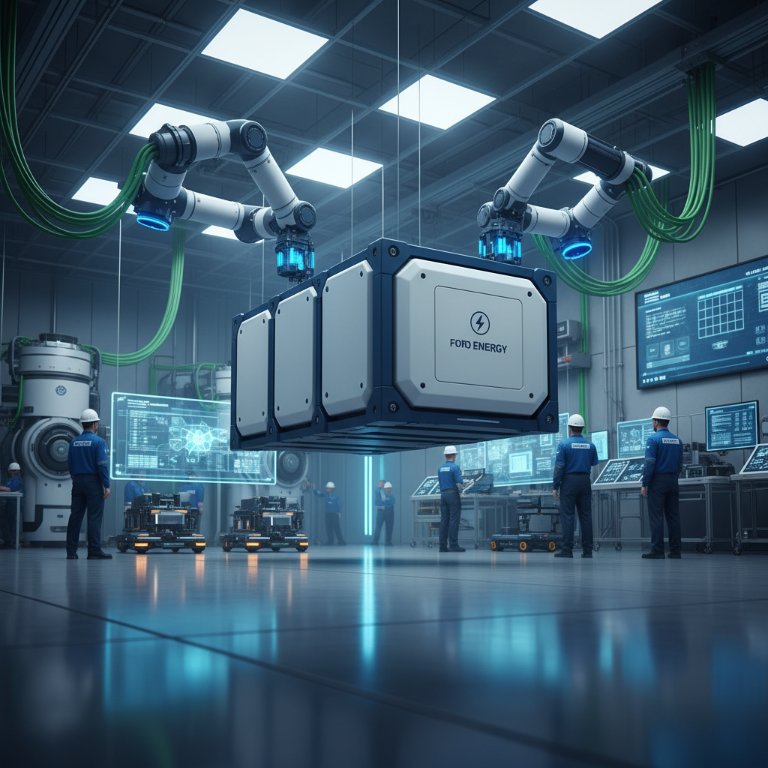
Ford Motor Company, a titan increasingly defined by its ambitious electric vehicle roadmap, has just unveiled a strategic masterstroke set to redefine its role in the global energy landscape. The blue oval isn't just building EVs anymore; it’s now powering the grid itself. Ford has launched Ford Energy, a wholly-owned subsidiary poised to manufacture high-capacity battery energy storage systems (BESS), a move that signifies far more than a simple product line expansion.
This isn't Ford's first foray into battery innovation; the company has previously made significant investments and forged crucial partnerships, notably with SK On through the BlueOval SK joint venture, to secure its EV battery supply chain. However, this latest development signals a profound shift: Ford is now taking direct control over a critical component of the broader energy ecosystem, moving beyond merely powering its vehicles to actively stabilizing and supporting renewable energy integration. This strategic pivot underscores a growing recognition among traditional automakers that the future of mobility is inextricably linked to the future of energy management.
Ford Energy's Strategic Mandate
Ford Energy's mission is clear: to become a major player in the rapidly expanding market for stationary energy storage. The company confirms it will convert an existing electric vehicle battery manufacturing plant in Glendale, Kentucky, into a dedicated production facility for these advanced battery energy storage systems. This repurposing of an existing asset demonstrates Ford’s commitment to optimizing its industrial footprint and leveraging established infrastructure for new ventures.
- Location: Glendale, Kentucky – transforming an existing EV battery facility.
- Focus: Manufacturing battery energy storage systems (BESS).
- Ownership: Wholly-owned subsidiary, signaling full control and dedicated investment.
Massive Scale, Critical Timing
Ford isn't dabbling in energy storage; it's entering the arena with significant intent. The Glendale facility is projected to deploy at least 20 GWh annually, a staggering capacity that immediately places Ford Energy among the heavyweights in the global BESS market. For context, 20 GWh of storage capacity could power hundreds of thousands of homes for extended periods, or provide substantial grid stability services for major utilities. Initial customer deliveries are projected for 2027, aligning with industry timelines for the rapid scale-up of renewable energy projects and the increasing demand for grid modernization efforts.
- Annual Capacity: At least 20 GWh, a substantial entry into the BESS market.
- Timeline: Initial customer deliveries slated for 2027, positioning Ford to capitalize on near-term market growth.
- Applications: Likely to include utility-scale grid storage, commercial and industrial applications, and potentially integrated home energy solutions alongside Ford's EV offerings.
Why This Matters:
- Vertical Integration & Supply Chain Resilience: By producing its own stationary storage, Ford diversifies its battery manufacturing capabilities and reduces reliance on external suppliers for a crucial energy component. This creates a more resilient and integrated energy strategy, complementing its EV battery production.
- New Revenue Streams & Market Diversification: The BESS market is exploding, driven by the global push for renewable energy and grid modernization. Ford is tapping into a multi-billion-dollar opportunity beyond vehicle sales, positioning itself as an energy solutions provider, not just an automotive manufacturer. This provides a hedge against potential slowdowns or intense competition in the pure-EV market.
- Empowering the Energy Transition: Large-scale battery storage is indispensable for integrating intermittent renewable energy sources like solar and wind into the grid. Ford Energy directly contributes to grid stability, energy independence, and the broader fight against climate change. This move positions Ford as a key enabler of the global energy transition.
- Challenging Established Players: Ford Energy will directly compete with established BESS players like Tesla Energy, BYD, LG Energy Solution, and various utility-backed ventures. Ford's manufacturing prowess and brand recognition could quickly make it a formidable competitor, potentially driving innovation and competition in the sector.
- Future-Proofing Ford's Business Model: This strategic expansion signals Ford's long-term vision to evolve from a traditional automaker into a holistic energy and mobility company. It prepares Ford for a future where vehicles are not just consumers of energy but also participants in a dynamic energy grid, potentially through vehicle-to-grid (V2G) technologies and integrated home energy solutions.
Ford's launch of Ford Energy is more than just a new subsidiary; it's a bold declaration of intent. By committing 20 GWh of annual BESS production, Ford is positioning itself as a central player in the fundamental shift towards a decarbonized and decentralized energy future. This move will undoubtedly strengthen its overall energy ecosystem, diversify its revenue streams, and solidify its standing as a leader in the broader energy transition. We expect to see how Ford Energy will integrate with Ford's existing EV offerings and potentially offer innovative solutions to both commercial and residential customers in the coming years.