Ford Unleashes 'Ford Energy,' Repurposing EV Battery Plant for Major Grid Storage Play
Ford Motor Company, a titan in the automotive world, has just made a strategic declaration that signals a profound shift in its future trajectory beyo...
Editorial Team
World Of EV
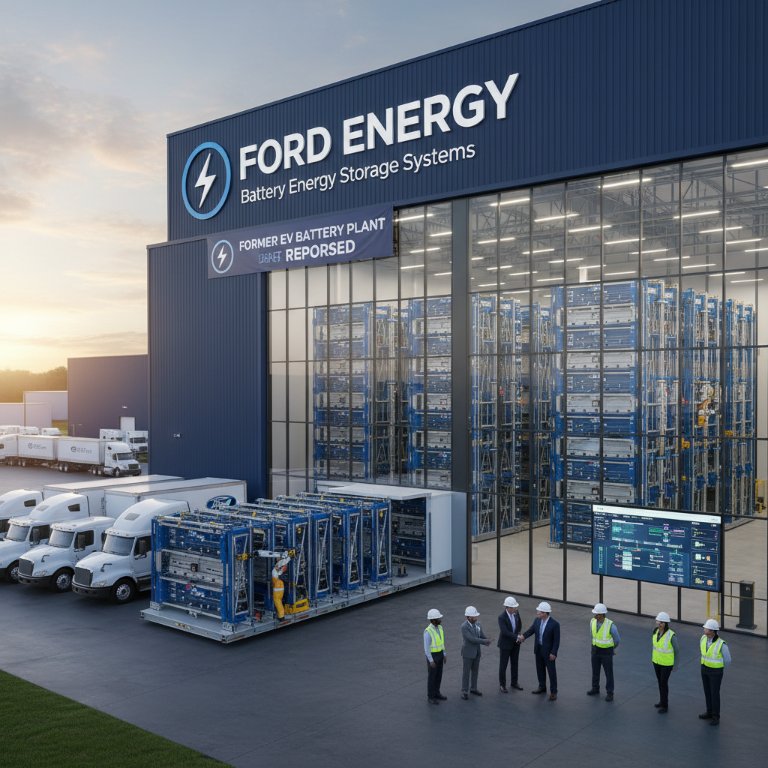
Ford Motor Company, a titan in the automotive world, has just made a strategic declaration that signals a profound shift in its future trajectory beyond merely producing electric vehicles. The Dearborn giant officially announced the formation of Ford Energy, a dedicated subsidiary poised to manufacture and sell sophisticated Battery Energy Storage Systems (BESS) to a formidable clientele including utilities, data centers, and large industrial and commercial entities. This isn't just a new division; it's a bold reorientation, highlighted by the immediate repurposing of a significant battery manufacturing facility in Glendale, Kentucky, originally earmarked for EV battery production. This move underscores Ford's agile response to evolving market dynamics and its determination to leverage its considerable battery production expertise far beyond passenger vehicles.
The Glendale Pivot: From EV Cells to Grid Powerhouses
For many EV enthusiasts, the Glendale, Kentucky plant represented a cornerstone of Ford's ambitious electric vehicle expansion. Its initial purpose was clear: churn out advanced battery cells to power Ford's next generation of EVs, a critical component in the company's multi-billion-dollar investment into electrification. However, in a decisive strategic pivot, that same facility will now become the manufacturing heart of Ford Energy's BESS operations. This repurposing isn't a sign of hesitation in Ford's EV commitment, but rather a pragmatic decision to maximize asset utilization and tap into a burgeoning market.
- Original Intent: Production of EV battery cells for Ford’s electric vehicle lineup.
- New Mandate: Manufacturing of large-scale Battery Energy Storage Systems (BESS).
- Key Customers: Utilities, data centers, and major industrial/commercial enterprises.
- Strategic Advantage: Leverages Ford's established manufacturing scale and supply chain for battery components.
This shift demonstrates Ford’s keen understanding that the electrification revolution extends beyond individual cars to encompass the very infrastructure that powers our modern world. By converting its EV battery production capabilities to BESS, Ford aims to capture a significant share of the rapidly expanding energy storage market, a critical component for grid stability, renewable energy integration, and robust power solutions for mission-critical operations.
Why This Matters: Ford's Bold New Energy Frontier
Ford Energy's launch and the Glendale plant's transformation are far more than mere corporate restructuring; they represent a significant strategic play with wide-ranging implications for the automotive sector, the energy industry, and Ford's long-term financial health. This move signals a conscious diversification of Ford’s revenue streams, de-risking its massive EV investments by creating an additional, high-growth avenue for its battery technology and manufacturing prowess.
- Diversified Revenue Streams: Ford is no longer solely reliant on vehicle sales for its battery division's profitability, tapping into the high-demand BESS market. This mirrors moves by competitors like Tesla, which has successfully established a robust energy division alongside its automotive business.
- Asset Maximization: Repurposing the Glendale plant showcases Ford's commitment to optimizing its investments. Instead of a potentially underutilized EV battery plant if EV demand fluctuates, it becomes a dual-purpose asset ready to serve both the automotive and stationary energy storage markets.
- New Competitive Landscape: Ford Energy enters a competitive but rapidly expanding BESS market, putting it in direct contention with established players such as Fluence, Tesla Energy, and LG Chem. Ford's manufacturing scale and brand recognition could quickly make it a formidable challenger.
- A Broader Energy Play: This move positions Ford as a serious contender in the larger energy transition, not just a car manufacturer adapting to electrification. It signals a long-term vision where Ford plays a role in powering homes, businesses, and grids, creating a more resilient and sustainable energy ecosystem.
- Impact on the EV Enthusiast: While the plant isn't making EV batteries for cars anymore, this strategic flexibility could ultimately strengthen Ford's overall financial position, allowing for continued investment and innovation in its core EV automotive products in the long run.
Ford's foray into large-scale energy storage solutions with Ford Energy is a testament to its pragmatic adaptability in a rapidly changing global economy. By leveraging its core competencies in manufacturing and battery technology, Ford is not just building cars; it's building a future-proof energy business. This strategic pivot solidifies Ford's position as a forward-thinking player in the broader energy landscape, ready to capture value from both the mobility and stationary energy storage revolutions.
This initiative marks a crucial inflection point, not just for Ford, but for the entire automotive industry, demonstrating how traditional manufacturers can creatively adapt and expand their business models to thrive in the era of electrification and renewable energy. The coming years will reveal the full impact of Ford Energy, but its inception is undoubtedly a powerful signal of a diversified, resilient future for the Blue Oval.